The Vermont Fish and Wildlife Department is urging Mighty Earth and mountain lion advocates to slow their reintroduction campaign, citing insufficient research on habitat impacts, public safety, and regional coordination needed before responsibly proceeding with bringing mountain lions back to Vermont.
Wildlife
The Utah Division of Wildlife Resources confirmed highly pathogenic avian influenza has been detected in wild birds around the Great Salt Lake and several Utah counties since October. DWR Veterinarian Ginger Stout reported 49 wild bird carcasses tested positive, with eared grebes and California gulls most impacted. Since 2022, the virus has affected 242 wild birds and other animals across 19 Utah counties.
Montana Fish, Wildlife & Parks and the Crow Tribe Fish & Game captured 99 elk on the Crow Reservation in late January, with all blood samples testing negative for brucellosis. Thirty elk were fitted with GPS collars to track seasonal ranges and migration routes, supporting collaborative disease surveillance efforts with the Department of Livestock.
Montana Fish, Wildlife & Parks biologists are conducting aerial surveys of mule deer and planning winter elk surveys across southwestern Montana, with ongoing research captures of elk, bighorn sheep, mountain goats, and wolves. These essential monitoring efforts use fixed-wing aircraft and helicopters to collect population health data and inform wildlife management decisions.
Black-tailed prairie dogs are ecosystem engineers that create habitat and shelter for other species while serving as prey for endangered black-footed ferrets. Amanda Hall, a nongame wildlife biologist with FWP, notes they are integral to environmental processes and essential for potential ferret reintroduction. FWP is partnering with landowners on conservation contracts in southeast Montana to preserve prairie dog habitat.
Montana's wildlife employ diverse survival strategies during winter, including migration, hibernation, brumation, torpor, color changes, and food storage. Animals like bears, bats, frogs, and birds utilize biological adaptations such as antifreeze-like compounds, thickened fur coats, and metabolic slowdowns to endure cold temperatures and snow.
Late January through early March marks coyote mating season. Prevent conflicts by supervising pets on leashes, removing human-associated food sources like garbage and pet food, and aggressively hazing coyotes using noise, visual intimidation, and physical pursuit to deter them from yards and neighborhoods.
Arkansas Game and Fish Commission biologists conducted late January aerial waterfowl surveys across the state, estimating 337,479 mallards and 694,286 total ducks in the Delta before winter storms arrived. Drought conditions throughout the season resulted in significantly lower duck populations compared to 2025 estimates and long-term averages, with Brett Leach noting 99 percent of the state experienced moderate to exceptional drought.
The Michigan Department of Natural Resources, Keweenaw Bay Indian Community, and Northern Michigan University are launching a second moose capture to study why the Upper Peninsula population remains stagnant at approximately 300 animals. Researchers will capture and collar up to 43 moose to investigate factors including disease, predation, vehicle collisions, and winter ticks affecting population growth.
Idaho Fish and Game's Panhandle Region will deploy approximately 30 GPS collars on elk calves in Game Management Unit 3 during 2026. The data collected helps biologists understand elk survival, movement patterns, and population trends to support science-based management and hunting season decisions.
TFT-funded research led by Dr. Nicholas Bakner tracked 15 Rio Grande hens in Texas to study nesting behavior and land management impacts. Key findings include spring dispersal patterns, re-nesting capabilities, predator management effects on nesting location selection, and the importance of hens foraging away from nest sites for greater success.
Idaho Fish and Game conservation officers in the Magic Valley Region reported a fatal coyote attack on a dog in Sun Valley's Elkhorn area and multiple aggressive encounters with coyotes. The agency recommends residents keep pets under close control, remove attractants, and take precautions during coyote breeding and pupping seasons.
The U.S. Fish and Wildlife Service approved Utah's new Wildlife Action Plan on January 6, developed over three years with 35 conservation partners. The 10-year plan identifies 256 species of greatest conservation need and guides the Utah Division of Wildlife Resources and partners like Utah Wildlife Federation and Utah Hogle Zoo in addressing threats to native species through 2035.
The Florida Fish and Wildlife Conservation Commission is reminding the public about cold weather impacts on wildlife during winter storm Fern.
The Ohio Department of Natural Resources Division of Wildlife counted 715 bald eagles during a midwinter citizen survey from January 7-21, receiving 391 separate reports. Ohio's bald eagle population has dramatically increased, with 964 active nests found in 2025 compared to 707 nests in 2020.
North Dakota Game and Fish Department's January midwinter waterfowl survey counted approximately 135,000 Canada geese and 9,500 mallards. Biologist Mason Ryckman noted that partial ice-free conditions on Lake Sakakawea allowed for 39,000-plus geese to be counted, though late November snow likely pushed some birds south before conditions improved.
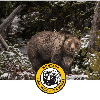
By December, most of our bears have begun to hibernate. In Montana, many grizzly bears will select a den site on a steeper slope at higher elevations. Bears seem to prefer to dig dens below the roots of a tree.
Nine months after two cougar kittens were documented in the Upper Peninsula, a new trail camera photo indicates the elusive animals are still alive and living with their mother. The Michigan Department of Natural Resources verified the Dec. 6 photo of an adult cougar being followed by two kittens down a snowy trail in central Ontonagon County.
Avian influenza is suspected to have caused the deaths of hundreds of snow geese found at a Northampton County quarry. The Pennsylvania Game Commission is coordinating a response to this incident that includes safe removal, testing and disposal of these birds.
Winter is already tough for deer, elk, and other big game animals, and being near busy roads and highways can be deadly, so Idaho drivers are asked to keep a sharp eye out and avoid costly and potentially dangerous collisions.