Benelli's M2-G1 Tactical shotgun has been named Guns & Ammo's 2026 Shotgun of the Year, recognizing its innovative Rear Piston Operated gas system and refined design. The award follows extensive evaluation by Guns & Ammo editors and a 4.54-out-of-5 Gold Standard rating from the National Tactical Officers Association.
Hook & Barrel Magazine® is excited to announce the third annual Hook & Barrel Top Shelf Awards, celebrating the best-in-class brands, products and personalities in the outdoor industry. From top-tier firearms, archery equipment and fishing tackle to outdoor lifestyle brands, personalities and more, the awards celebrate the very best of the outdoor world.
Nebraska Game and Parks has opened a new 9.5-mile water trail at Gallagher Canyon State Recreation Area south of Cozad, developed by park superintendent Caden Picquet. The scenic paddling route winds through backwaters and fingers of Gallagher Canyon, with a second 4.5-mile trail through the canal system to Plum Creek Wildlife Management Area, offering wildlife viewing and fishing opportunities.
The Second Amendment Foundation and partners including the National Shooting Sports Foundation and National Rifle Association filed a motion for preliminary injunction in NSSF v. Torrez, challenging New Mexico's House Bill 129 waiting period law. Despite a previous Tenth Circuit ruling that HB129 was unconstitutional, New Mexico continues enforcing it against residents not named in the Ortega case.
NSSF filed a preliminary injunction motion with the U.S. District Court for the District of New Mexico to block enforcement of Governor Michelle Lujan Grisham's seven-day waiting period law for firearm purchases. This follows a Tenth Circuit ruling that deemed the law unconstitutional, yet New Mexico continues to appeal and enforce it.
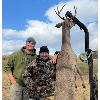
Combat veteran Kyle Tripp was honored through the SCIF Combat Veterans Hunt with a three-day axis deer hunt at Union Hill Ranch in Texas. SCI Foundation's Veterans Programs recognize military service through meaningful outdoor opportunities, with applications for the program due November 1, 2026.
The Arizona Game and Fish Department (AZGFD) has released 2027 spring hunt draw results. Applicants must check their AZGFD portal account to view results and bonus points. Hunt permit-tags will be mailed by November 25, or delivered electronically through the Arizona E-Tag mobile app for eligible users.
Hunters should follow safety precautions when harvesting and handling birds this season as bird flu has become an annual occurrence among wild bird populations. Nebraska Game and Parks recommends wearing gloves, avoiding sick birds, cooking meat thoroughly, and reporting abnormal wildlife through OutdoorNebraska.gov.
AGM Global Vision announced the appointment of Svetlana Richter as Vice President of International Sales. Richter brings over 20 years of experience in thermal imaging and night vision, most recently serving as Chief Sales Officer at Yukon Advanced Optics Worldwide. She will lead AGM's international expansion and strengthen global distribution partnerships.
The Congressional Sportsmen's Foundation is hiring a Senior Coordinator for the South Central States region covering Arkansas, Oklahoma, and Texas. The role supports policy, advocacy, and development efforts while liaising with state legislators, wildlife agencies, and conservation partners. Candidates should have a bachelor's degree and 2-3 years of relevant policy experience.
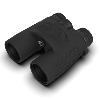
Sightmark announced the Latitude XD LRF 10x42 Binoculars, featuring integrated laser rangefinding up to 3,280 yards, premium ED glass, and OLED display. CEO James Sellers highlighted the product's advanced technology and rugged design for long-range shooters and hunters, with availability beginning November 2025.
ZeroTech Optics USA introduces the Thrive X 3-9x40 hunting riflescope with four reticle options: Zeroplex, G4, PHR 3, and PHR 4. The scope features a 40mm objective, 30mm aluminum tube, weights starting at 18.4 ounces, and an Adjustable BDC Turret included with select models.
Off Grid Suppressors, a Minnesota company, launched five new suppressor models engineered with additive manufacturing using aerospace-grade titanium and Inconel. The SCORPIUS achieved the quietest .22 LR suppressor rating at 115.4 dBA at the 2025 Thunder Beast Arms Silencer Summit.
Bear Creek Arsenal is launching the Bear Bolt Pro Series, featuring new bolt action AR complete upper assemblies. The line debuts with 308 Winchester, with additional AR10 and AR15 calibers coming soon, all compatible with mill-spec lowers.
Blocker Outdoors introduces the Scent Shield X-Factor lineup, a complete scent-control system built on technology from the original 1985 Scent Shield formula. The system includes laundry detergent, body soap, shampoo, and fall blend sprays, each designed to eliminate odors through multiple mechanisms for hunters pursuing whitetail, elk, and mule deer.
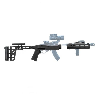
Samson Manufacturing introduces SAS/22 Charger folding chassis systems for both the 10/22® Charger and 10/22® Charger Takedown models. The chassis features an integrated SAS-K folding stock, adjustable length of pull and cheek riser, and a forward rail section for optics compatibility.
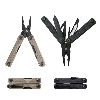
BLACKHAWK introduces the Mini EDC Pocket Multi-Tool, a lightweight everyday carry option featuring eight essential tools including pliers, tanto-style knife, and screwdrivers in a compact 3.15-inch closed length. The tool retails for $64.99 and is available through Bear & Son Cutlery.
Iron Valley Supply has launched its Fall E-Show with over 1,200 items marked at their lowest seasonal prices, including guns, ammo, optics, and accessories available at IronValleySupply.com.
Steiner eOptics will exhibit at SOFEX Jordan 2026, October 27–29, in Aqaba, Jordan, showcasing advanced optical technologies including tactical lasers and the ATLAS system at booth #H100 to international defense professionals and military representatives.
Liberty Ammunition announced a sponsorship with Armed American Radio, hosted by Mark Walters. The featured segments explored Liberty Ammo's lightweight carry benefits and terminal ballistics performance for self-defense and law enforcement applications.
The Indiana DNR Division of Law Enforcement held graduation ceremonies at the Indiana Government Center, with 23 new conservation officers officially joining the division. Conservation Officer Tyler Brock, the 2025 James D. Pitzer Officer of the Year, administered the oath of office to recruits assigned to various counties statewide.
The Arkansas Department of Parks, Heritage and Tourism, Central Arkansas Water, and Maumelle Pinnacles Conservation Area Partners announced the opening of 13.5 miles of new trails at Lake Maumelle, including the South Lake Trail connecting Blue Mountain, Rattlesnake Ridge, and Pinnacle Mountain. Point Remove Brewing Company and Apple Seeds nonprofit will operate new visitor services at Pinnacle Mountain State Park.
The High Road with Keith Warren features voice-over artist Mark Peeples and his family hunting whitetail at The Refuge Whitetails of Oklahoma using Tank Blinds. The episode includes a music video for "Antlers on The Wall" by country singer Aaron Loy, owner of Tank Blinds.
Ralph, Vicki, RJ, and Aubrey Cianciarulo invite viewers to tune into season 26 of The Choice on Pursuit Channel, airing Monday September 21st at 11:30PM EST. The crew continues chasing Illinois whitetails with hopes of filling more tags as bucks remain active.
Montana Fish, Wildlife & Parks biologist Sonja Andersen explains mule deer management through aerial surveys, fawn recruitment, harvest data, and habitat analysis. The video provides context for FWP's Mule Deer Management Plan and how field research informs hunting season recommendations.
There is always a sense of optimism at the annual National Association of Sporting Goods Wholesalers (NASGW) Expo. Looking ahead is an inherent part of doing business at this show.
The NASGW Expo is a small show, especially compared to the NRA Show—and certainly compared to SHOT Show.
But it has an outsize impact on those other two shows and the industry as a whole.
The expo is the point in the sales year when the market resets, starting with manufacturers and their distributor customers. This year, those two groups met to review, adjust, and plan for 2027.
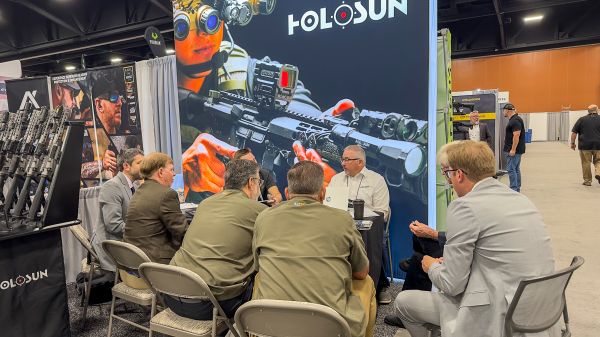
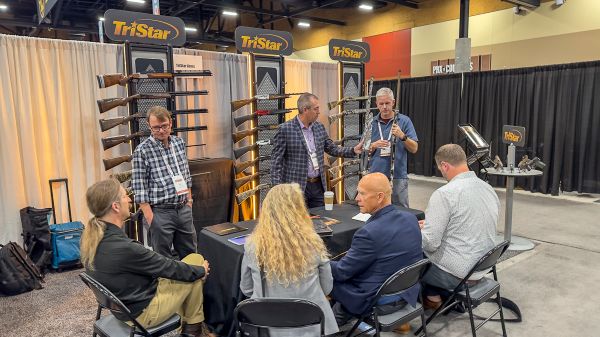
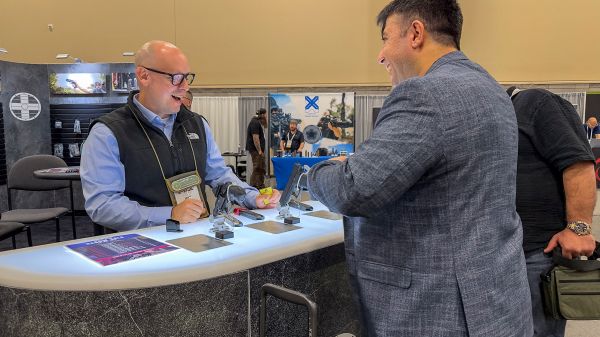
The NASGW Expo is a true trade show with meetings between exhibiting manufacturers and their distribution customers scheduled through the show. Photo: P. Erhardt
It’s when 2026 officially makes its appearance in the rearview mirror.
Many of the decisions about which products will be available at retail in 2027 were made a little over a week ago on the floor of the Phoenix Convention Center.
During the two-and-a-half-day show, held October 13–15, exhibiting manufacturers met with their distribution partners to discuss what worked—and what didn’t—in the 2026 plans they agreed to at last year’s expo in Texas.
Last year, the biggest news coming out of the expo centered on the Beretta versus Ruger battle over control of Ruger. Ruger’s board of directors introduced a "poison pill" to slow Beretta’s acquisition of Ruger stock, which had already given Beretta a 9.0% ownership stake.
A year later, Beretta announced that its tender offer for Ruger shares was oversubscribed, bringing its expected ownership stake to 25%.
While that is big news, it was Ruger’s own announcement that it was suspending production of several “lower-volume and legacy product families” drew more attention.
The announcement set off plenty of panicked conversations and the requisite speculation about what it all meant.
On the show floor, the reaction was far more subdued.
Distributors have a long and deep relationship with Ruger and have seen these kinds of production suspensions before. While those looking in from the outside read this as the discontinuation of products, those familiar with Ruger know that Ruger doesn’t discontinue products.
Ruger can wait until it has something new to introduce to a dormant product line or a distribution partner places a significant order. Then it works that production into the schedule and turns on the machines.
The upside to Ruger’s announcement was the immediate spike in demand from dealers and consumers gripped by FOMO—the fear of missing out. By now, distributors have likely cleared out a good bit of the inventory they had been sitting on.
Optimism Abounds–Suppressors
Then there are suppressors. The year began with the elimination of the $200 tax, driving a surge in sales and bringing new manufacturers into the market.
Then the U.S. District Court for the Northern District of Texas issued a ruling striking down National Firearms Act (NFA) registration, application, and approval requirements for suppressors, SBRs and SBSs.
That set off a buying frenzy for those covered by the ruling.
And then…all hell broke loose. The Department of Justice opted not to appeal the ruling, and the ATF issued guidance on the issue. What had been just your run-of-the-mill frenzy was turned up to 11 and distributors quickly sold out of inventory.
Optimism Abounds–Beyond Suppressors
The surge in suppressor sales is unprecedented. But according to those on the show floor, the rest of the firearms market is also rebounding from the post-pandemic slowdown.
At the 2025 NASGW Expo in Texas, the optimism heading into 2026 came with a dose of caution.
Those we spoke to in Phoenix expect 2027 to be an even better year.
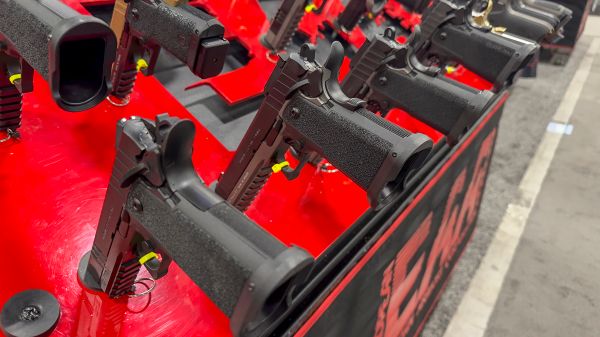
Importer EAA has seen continued demand for its double-stack 1911s with its Girsan Witness 2311 XXX models delivering bang-for-the-buck value to consumers. The sales rep I spoke to also pointed to EAA’s Liberador series as continuing to meet demand among a more specific segment of consumers.
EAA continues to see strong demand for their double-stack pistols. Photo: P. Erhardt
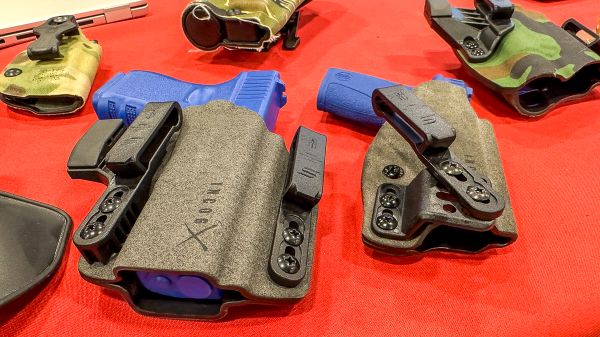
At the Safariland booth, company representatives confirmed that holster sales have not lagged. Their Incog X and Incog XS concealed-carry holsters remain top-selling items with retailers catering to CCW holders.
Safariland, which has long dominated the law enforcement market, has a hit in the consumer concealed-carry segment with the Incog X series holsters. Photo: P. Erhardt
They also reported strong sales to customers who don’t need a duty holster but want an OWB holster with retention that accommodates a light/laser, an optic, or both. These customers are spending money—and more than you might think—on top-of-the-line gear and training.
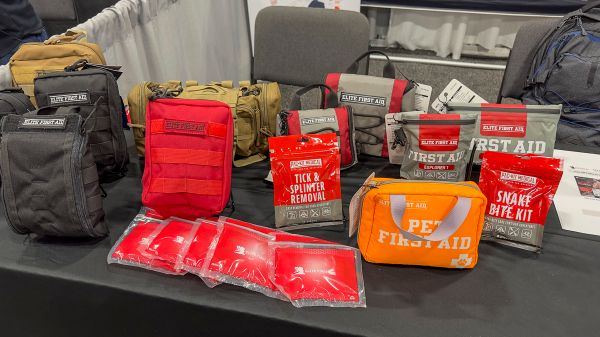
Elite First Aid is growing, too. The company makes first aid kits for hiking, camping, boating, and, of course, tactical and range use. It expanded its business with the acquisition of My Medic this past January.
Once you find yourself in a situation where you really need a first aid kit, you make sure you going forward you have what you need on-hand. Photo: P. Erhardt
First aid kits can be a slow sell—until a customer needs one. After that, going without one loses its appeal. I bought pre-packed kits for the family cars, and I’ve found that the urge to be prepared only grows.
For retailers, that means an ongoing sales opportunity with hunters, shooters, anglers, and anybody else hitting the great outdoors.
On the accessories side, I stopped by the Shield Arms and TAPCO booths. Both reported solid sales in 2026, with Shield Arms noting it was “better than 2025.” That’s another sign we’re emerging from—or simply adjusting to—the slowdown.
2026 was an improvement over 2025 for Shield Arms, and the outlook for 2026 is one of growth. Photo: P. Erhardt
Even if firearms sales are slower than we’ve become accustomed to, accessory sales remain strong. At Shield Arms, that definitely includes expanded-capacity magazines. Customers might not have the cash to pick up a new gun, but they can always use an extra magazine.
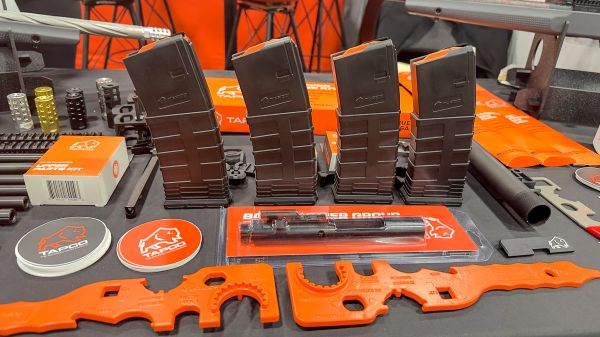
TAPCO, meanwhile, is in the latter stages of its rebranding effort. I’ve made it a point to check in with them at NASGW, SHOT and NRA to track their progress.
TAPCO's product line provides options for its longtime customers as well as those new to the brand. This combination is help deliver growing sales. Photo: P. Erhardt
The new logo and color scheme are only part of that effort. TAPCO has been keeping key products available for its longtime customers while broadening the line for today’s market. Along the way, those products have been moving into new packaging.
That’s not as easy as it might seem, but it pays dividends with distributors and dealers looking for products relevant to today’s gun shop customer.
With Election Day just around the corner—FOR THE LOVE OF GOD, GO VOTE—there’s still plenty that could shape the outlook for 2027. Based on the conversations in Phoenix, the industry sees room for growth not only in suppressors but also in firearms, optics, and accessories.
The companies that exhibited at the NASGW Expo are well positioned to take advantage of that growth, thanks in part to smart production plans and strong relationships with their distribution partners.
We’ll find out in January at SHOT whether that optimism extends to the rest of the industry.
– Paul Erhardt, Managing Editor, the Outdoor Wire Digital Network