
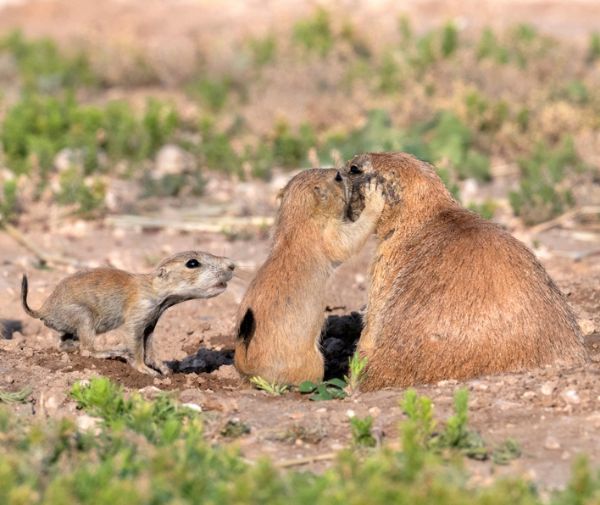
Black-tailed prairie dogs make good neighbors. They create friendly habitat, build shelters for future occupation by other species and provide an alarm system for the presence of predators. They also serve as the favorite meal for many predators, including the black-footed ferret, a species on the endangered species list.
"The long and short of it is that they are ecosystem engineers that are integral to a number of environmental processes and ecosystem health," said Amanda Hall, a nongame wildlife biologist with FWP. "They are the only way we can potentially get ferrets back on landscapes."
Black-tailed prairie dogs are found across much of the central and eastern parts of Montana. Typically, they prefer open grasslands and shrub with low, sparse vegetation. Their habitats are most frequently dominated by western wheatgrass, blue grama and big sagebrush.
Although black-tailed prairie dogs do not migrate, young males disperse from the burrow in which they were born in May or June. The males also disperse from their breeding territory every two years, most likely to avoid inbreeding with their offspring. Most dispersal will occur within the colony, but individuals are known to move up to 6 miles away.
Black-footed ferrets and other predators are not their only challenge. Colonies are also threatened by sylvatic plague, human-wildlife conflict and recreational shooting.
FWP is working with partners on conservation efforts. In southeast Montana, they've worked with landowners on a conservation contract. The goal of this 10-year contract is to preserve prairie dog habitat suitable for potential black-footed ferret reintroduction.