
HELENA – This hasn't been a typical winter, but when the temperatures dip and the snow falls, it reminds us how amazing it is that animals survive the winter months. You could spend a whole winter just learning about the intricacy and variety of adaptations that Montana's wildlife have developed.
Some animals leave for warmer places, some sleep through it and others stay active by utilizing blankets of fur, underground hide-outs or a kind of internal antifreeze to survive this cold season.
Looking at the sky lately, it's hard not to notice the sporadic V formations of geese migrating to find warmer locales closer to the equator. But not all migrations are cross-country; deer, elk and antelope may move a short distance to lower elevations or open fields to feed.
Many animals hibernate, slowing their activities so they use less energy. Bears are well-known hibernators, getting stocked up on body fat to survive while they den. They breed in spring, but the fertilized eggs don't implant until after denning, once a female has adequate fat stores to support cubs. Once in the den, bears lower their heart rates, body temperatures, breathing and metabolism to save energy for the long, cold months. In yet another amazing adaptation, their bodies absorb their waste while they sleep, and they birth and suckle their cubs while in the den. Bats hibernate, too, hanging around until it's warm enough for their tasty insect prey to hatch again.
In reptiles and amphibians, they call this dormant state brumation. Frogs rely on a kind of biological antifreeze that keeps the cold from destroying their cells. They may freeze nearly solid, with no heart rate or breathing, then revive when the weather warms. Some insects have similar protections, or they over-winter as eggs, larvae or pupae. Fish slow their metabolism way down and stay in deeper, unfrozen water where temperatures are more stable.
Birds like the common poorwill, chickadee and hummingbird enter a lighter state of dormancy called torpor, which is similar to hibernation but usually lasts hours to days. This is to conserve energy during cold snaps or overnight when food is scarce. Smaller mammals like mice, chipmunks and squirrels also experience torpor. Air pockets in birds' feathers create warmth, and some species cluster for warmth.
Ruffed grouse dive under snow for insulation. Many species of wildlife know all too well that dens, burrows, tree cavities, lodges and thick forests also provide protection from wind, snow and extreme cold.
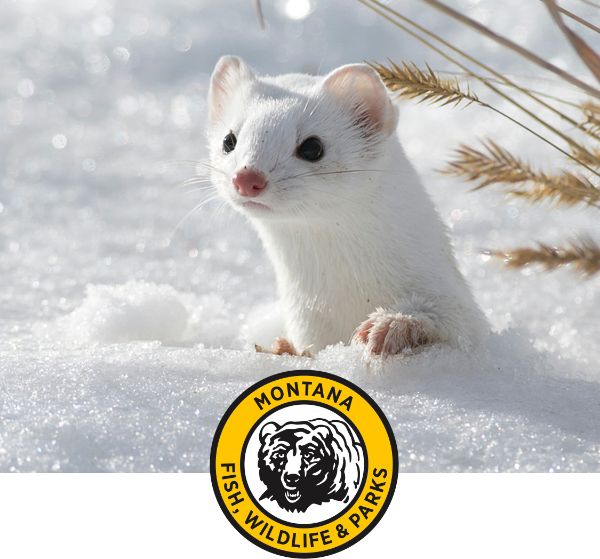
Some animals master the art of camouflage by changing color in winter. Snowshoe hares turn white to blend easily into snow. Short-tailed weasels (ermine) and white-tailed ptarmigans do the same. This helps them blend into Montana's snowy forests, mountains and grasslands, which reduces the chance of being spotted by predators like lynxes, foxes, owls and coyotes. The weasel is a predator in its own right, and turning white improves its hunting success by allowing it to approach prey unnoticed.
These color changes are paired with thicker winter coats that provide insulation against Montana's cold temperatures and strong winds. The snowshoe hare, common in western forests, also has large, fur-covered feet that act like snowshoes. The ptarmigan grows feathers on its feet in winter for added warmth and traction. Shorter periods of daylight, rather than temperature, trigger these seasonal color shifts.
Animals also shift their food sources or store food to tide them over until spring. Elk and deer change their diets to twigs and woody plants and live off fat stores when all the good green stuff goes away. Squirrels, chickadees and beavers accumulate caches of food and hide it away.
A lot of small animals survive in what's called the subnivean zone – the insulated space between the ground and the snowpack. This hidden layer stays surprisingly warmer than the air above, giving mice, voles and other small critters a place to travel, hide and find food all winter.
Winter may look quiet on the surface, but underneath the snow and ice it's full of strategy, survival and adaptation. Nature never stops working.