
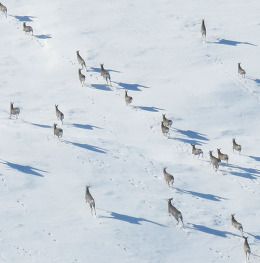
Wildlife biologists with Montana Fish, Wildlife & Parks are currently conducting aerial surveys of mule deer and will soon begin winter elk surveys across southwestern Montana. Research captures of elk, bighorn sheep, mountain goats and wolves are also ongoing or planned in the region.
These surveys are a long-standing and essential tool used to monitor herd health and inform wildlife management decisions.
FWP staff use fixed-wing aircraft and helicopters, depending on survey objectives, terrain, and weather conditions. Flights often occur at low altitudes to allow observers to accurately count animals and assess herd composition. As a result, deer and elk may temporarily move or disperse when aircraft pass overhead. While these disturbances can be noticeable, decades of research and experience show that the surveys have minimal, short-term impacts on wildlife and do not affect long-term population health.
Aerial surveys have been conducted for many decades and play a critical role in collecting data used to evaluate population health, measure trends over time, and guide management actions. Information gathered during these surveys is used by biologists to understand the factors influencing mule deer and elk populations and to develop and adjust hunting regulations based on herd health and management objectives.
Research captures include darting or netting individual animals from a helicopter, then outfitting the animal with a GPS or radio collar. Wildlife movement data gathered from these collars provide a variety of insights, including habitat use, travel corridors, herd segmentation, mortality causes, and other factors that inform management objectives and transportation infrastructure.
Post-hunting-season mule deer surveys are conducted in long-term trend areas to collect data on buck composition and fawn recruitment. These surveys must be completed within a relatively small window of time before bucks shed their antlers, making winter conditions and timing especially important. Mule deer surveys are currently wrapping up across the region.
As winter progresses and elk begin to congregate on their winter ranges, biologists will transition to winter elk surveys. Using the same aircraft, biologists conduct minimum counts to estimate elk population size relative to management objectives. These surveys also provide important information on calf recruitment, which helps assess overall herd health and estimate future population trends. Winter elk surveys may occur anytime from late January through late March, depending on weather and snow conditions.
FWP appreciates the public's understanding and cooperation during these important monitoring efforts.
For more information about wildlife research and management, click here.