
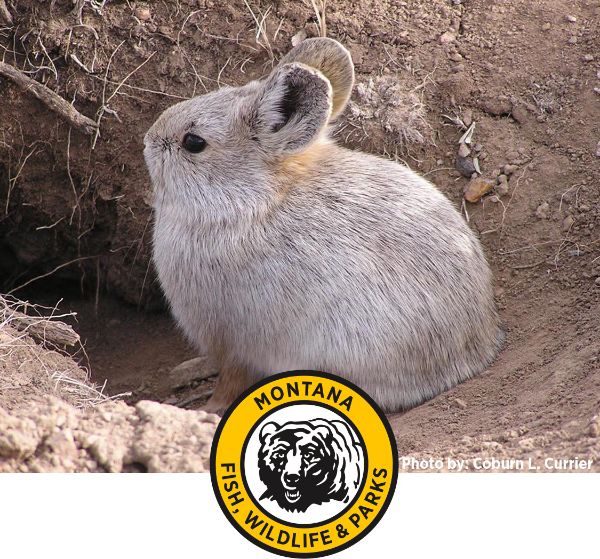
Pygmy rabbits, one of seven native leporid species in Montana, are the smallest rabbit in the world with adults weighing less than 1 pound. These tiny mammals can be found year-round in the sagebrush steppe ecosystem of southwestern Montana. Sagebrush is essential to the survival of pygmy rabbits as it comprises most of their diet throughout the year – 99 percent in the winter and 60 percent during spring and summer – and is their best defense against predation.
Unlike other rabbits in Montana, pygmy rabbits often dig their own burrow systems that will be used year after year. They construct these burrows in deep, loamy soils with entrances at the base of a sagebrush. It is most common for a burrow system to have two to four entrances that open to runways covered by dense sagebrush. Extensive burrows and cover runways help protect pygmy rabbits from predators such as weasels, coyotes, red foxes and birds of prey.
Due to pygmy rabbits' size, they have relatively small home ranges; however, their movements fluctuate depending on season and resource availability. They often stay within 100 meters of their burrow systems, with research suggesting that range drops to an average 30 meters in the winter. Despite their small home ranges, juvenal pygmy rabbits have been reported to disperse on average 1.2 (male) and 4.8 (female) kilometers using clumps of sagebrush while crossing unsuitable habitat in search of a new home territory. That's a long way for a rabbit that can fit in the palm of your hand!
What is FWP doing to conserve pygmy rabbits?
Pygmy rabbits are a species of greatest conservation need in Montana's State Wildlife Action Plan (SWAP), a resource produced to identify threats to the species and provide guidance on actions that could be implemented by FWP or other partner organizations to prevent or mitigate negative impacts. Their status is a result of their limited distribution in southwest Montana and threats to sagebrush habitat.
In 2024, pygmy rabbits were petitioned for listing under the Endangered Species Act, and the U.S. Fish & Wildlife Service found the petition warranted and are currently conducting a status review. Similar to Montana's SWAP plan, the petition is largely a result of habitat loss caused by converting sagebrush landscapes into agriculture and grazing lands, fire suppression, and invasive grass species.
FWP began conducting pygmy rabbit surveys throughout their Montana range in winter 2023. These efforts aim to improve our understanding of current pygmy rabbit distribution in Montana and create a baseline occupancy estimate that can be used to detect changes in the future. Developing an understanding of their current status will allow FWP to improve their management approach for the species.
What can you do to help?
- Prevent the spread of invasive plants, such as cheatgrass (Bromus tectorum), which facilitates changing fire regimes.
- Promote grazing practice that minimizes damage of sagebrush cover (altering intensity, timing, duration)
- Participate in active conifer management efforts in collaboration with organizations like Southwest Montana Sagebrush Partnership
Pygmy rabbit Fun Facts:
- Pygmy rabbits will climb to the top of sagebrush to munch on the green leaves, making them the only arboreal rabbit species.
- Pygmy rabbits often weigh less than a standard loaf of bread (1 pound).
- Sagebrush is toxic to many animals, but pygmy rabbits have evolved to where sagebrush is 99 percent of their winter diet.
- Their closest relatives in Montana are cottontail rabbits, but they can be distinguished by their small size, round ears and brown tail