
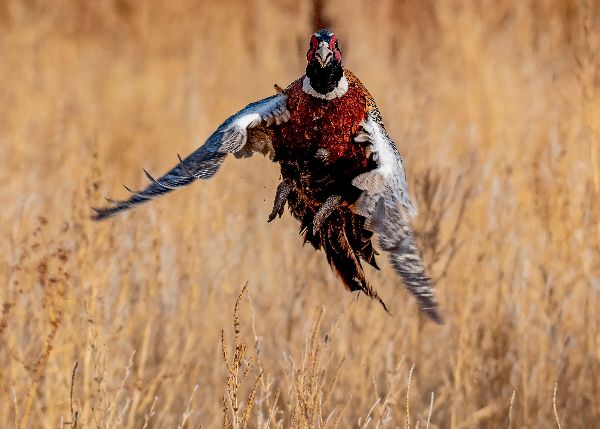
SALT LAKE CITY — Many migratory upland game bird and waterfowl hunts are already underway across Utah. The general-season pheasant and quail hunts open Saturday, Nov. 7. If you are planning to target either of these birds this fall, here are some important things to know.
Pheasant (ring-necked)
Utah's general pheasant hunting season runs from Nov. 7 to Dec. 6.
The number of wild pheasants in Utah — and where they can be found — will depend on where you are hunting within the state. Statewide, there should be similar pheasant hunting conditions as last year. Expect adult-heavy harvest, as smaller and fewer broods have been observed this year, due to dry conditions. If dry conditions persist this year, there will likely be a decline in pheasant populations in Utah.
"We release pen-reared pheasants on various wildlife management areas and Walk-in Access properties around the state each week during the general-season hunt to provide additional opportunities for hunters," Utah Division of Wildlife Resources Upland Game Coordinator Heather Talley said. "If you do choose to hunt on one of our WMAs, be willing to hike a long way away from parking areas and other hunters to increase your chances of finding birds. Also note that release sites within the WMAs vary from week to week."
Visit the DWR website to see the release locations across Utah for the 2026 hunts, and note that each location is listed as either a youth hunt release site, a general-season release site or a site where birds will be released during both hunts. Biologists will be releasing pheasants at different times of day and on different days of the week.
"We want to remind hunters to use safe hunting practices while we are releasing birds in these areas," Talley said. "We have experienced unsafe conditions while releasing pheasants in the past, including individuals shooting near our biologists as they release birds. Please wait until we have finished releasing the pheasants and have left the area before you target those birds."
Hunters should note that several of the WMAs require nontoxic shot (for example, steel shot) when hunting. Lead shot may not be used. To locate Walk-in Access areas near you and to obtain a free authorization number in order to use these properties, visit the DWR website.
Tips for hunting pheasants
In general, pheasants can be found in areas near fields of wheat, corn or other plants that provide feed for them. Pheasants also prefer habitat with stemmed grass that provides nesting cover, as well as areas with dense woody vegetation such as red cedar or chokecherry. During snowy conditions, you can often find them sheltering in wetlands with thick cattails and bulrush. These birds easily camouflage in brush, so hunting with a well-trained dog will increase your chances of success.
"If you don't have a dog, you can still be successful by walking slowly, which can cause pheasants to flush," Talley said. "Many times, they will flush if you stand near them for a few moments because they think they've been spotted."
Walking along ditch banks or fence lines is also a good hunting strategy. Pheasants typically prefer to run rather than fly away, so if you walk along these areas, you are more likely to drive them out into the open, where they will flush.
To learn more about pheasants and their management in Utah, including the change in population numbers, visit the DWR website or listen to the Wild podcast.
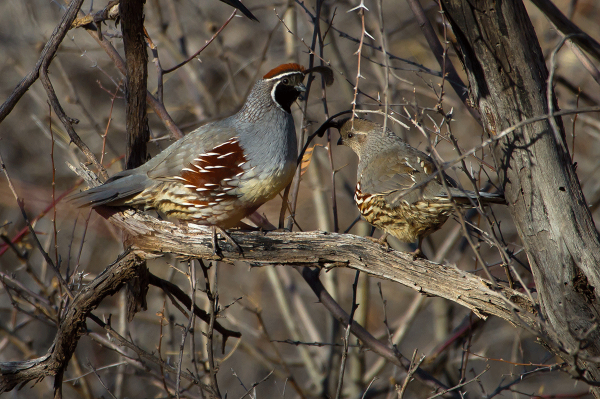
Quail (California and Gambel's)
Utah's general quail hunting season runs from Nov. 7 to Dec. 31. Hunting quail also differs in each area of the state. Gambel's quail have declined in southern Utah this year, due to dry conditions not providing adequate forage for chick survival.
"We recommend dispersing hunting pressure and refraining from harvesting an entire covey to fill your bag limit, so that small populations of Gambel's quail can persist into the breeding season," Talley said. "However, California quail have produced decent numbers of broods and brood sizes this year, likely since they are often tied to private property with more consistent water sources."
Tips for hunting quail
California and Gambel's quail are hunted using similar methods — just in different habitats. When hunting Gambel's quail, look for brushy foothills, Joshua trees, dry washes and draws with black brush or desert almond. California quail may be spotted in washes full of water and brushy cover, and both species will eat flowers from grasses, trees and shrubs, as well as seeds and leaves.
"It's best to hunt quail with a trained hunting dog, since quail would rather hunker down and hide than fly away," Talley said. "A dog on point will enable you to get close enough to flush the birds and get a shot. If you don't have a dog, you can still hunt quail successfully. If you get close enough to quail as they are sprinting before taking flight, you can still get a good shot."
A lot of quail habitat in various parts of the state is located on private land, so make sure to obtain documented permission from the landowner prior to hunting in those areas.
Youth and beginner hunts
The statewide youth pheasant hunt will take place from Oct. 31 to Nov. 5, and pheasants will be released just before the hunt. The statewide youth quail hunt will take place from Oct. 31 to Nov. 2.
If you were 17 years of age or younger on July 31, and you've completed Hunter Education, you can participate in the hunts. If you haven't yet finished Hunter Education — and you're at least 12 years old — you still might be able to participate through Utah's Trial Hunting program. You must also have a hunting license and follow all of the state's upland game hunting rules. Find all the youth hunting opportunities in Utah on the DWR website.
Upland Game Slam
To add an extra challenge to your hunts this fall, consider participating in the Upland Game Slam. Similar to the Utah Waterfowl Slam, it encourages hunters to harvest a variety of upland game species, while generating money to help fund habitat and upland game-related projects across the state.
Hunters complete a slam by harvesting the required amount of the target species. Each slam is designed to give you an extra challenge while you're hunting, as well as the opportunity to earn a commemorative, collectible coin. The entry fee is $20 for hunters 18 years of age or older, or $10 for hunters 17 years of age or younger.
The "Appetizer Slam" includes some of Utah's smaller game birds, including California quail, Gambel's quail and mourning dove. To complete the slam, hunters must harvest one of each of the three species within a single hunting season. Learn more about how to participate in any of the eight upland game slams on the DWR website.
"The Upland Game Slam is just one source of funding for upland game in Utah," Talley said. "The DWR Habitat Council has also funded upland game habitat work for several years. In 2026, the council allocated over $2,000 for upland game habitat projects."
Check the 2026-27 Waterfowl, Upland Game and Turkey Guidebook for details on the regulations and legal weapons for hunting pheasants, quail and other upland game species in Utah this fall.