
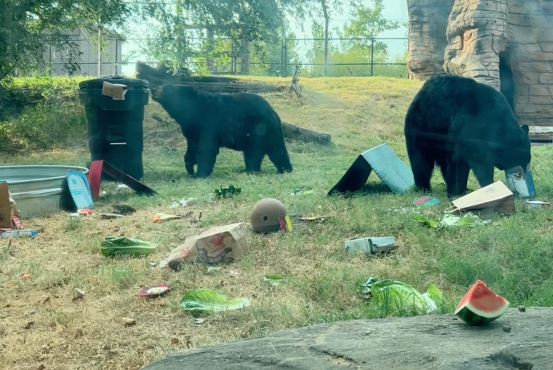
In September, Woody and Maynard, two American black bears at the Oklahoma City Zoo, demonstrated how quickly they could find food in an imitation campsite and offered a valuable lesson for coexisting with wildlife. When visiting or living in bear country, anything that might tempt a bear — from pet food or this week's trash to a full-blown picnic — should be properly stored at campsites and other outdoor spaces.
In a special enrichment exercise, the OKC Zoo staged a mock campsite in the bear's Oklahoma Trails habitat before turning Woody and Maynard out for the day.
Within 20 seconds of entering the habitat, Woody was nose-deep in a cereal box. Before the first minute had passed, Maynard had pulled snacks from the unlocked bear-safe trash container and put it on its side. The container was later spun around and more fully opened and explored. Five minutes in, and the bears had fully "camped out," using their paws to scrape food from just outside of their resting spot and lounging in the pool after eating a few fish.
The bear's ability to sniff out easily available food and quickly get comfortable in a human space was familiar to the Wildlife Department's Matt Hensley.
"These bears knew exactly what to do when they walked in the camp," Hensley said. "This is what you would typically see from a wild bear as far as behavior around unsecured trash."
Hensley is a senior wildlife biologist and the state's black bear project leader. In addition to managing Oklahoma's bear season and harvest, he also responds to a lot of the bear calls the Wildlife Department receives in summer and early fall. This year's extended hot and dry summer was hard on the native grape and berry crop, and the drop in natural food resources has generated about three times as many human-bear conflicts as in previous years.
For Hensley, the zoo's demonstration with Woody and Maynard drives home the importance of understanding how to live with bears.
"It's very important to use BearWise tactics whenever you're camping in the woods. Once a bear has moved in and raided a campsite, and has gotten a food reward from that raid, habituation and food conditioning has already occurred," Hensley said. "It's very difficult to reverse that in the bear's mind."
BearWise Camp Tips
- Find out if your campsite has rules for food storage. If a storage locker or bear box isn't available, plan to keep food in your locked vehicle or personal bear-resistant container (hint: not an ice chest) or hang a food bag from a tree or pole.
- Trail mix and other snacks are a staple for many camping trips, just keep it out of your tent. It's easier to get up and grab a snack from the vehicle than it is to deal with a bear smelling good 'ole raisins and peanuts in your tent.
- Before setting the picnic table, have a plan for quickly gathering and storing your food should a bear enter your campsite — because the bear will definitely have a plan. Human safety is the priority, but leaving food on the table will only reward the bear and may train it to look for food in other human spaces.
BearWise Backyard Tips
- Taking out the trash isn't the most fun chore, but putting your trash in a bear-resistant can or dumpster can save you the even less fun chore of cleaning up after a bear. Leaving a bag of trash in the bed of the truck or just outside your door can be an open invitation for bears and other wildlife to hang out in your space.
- Fido may be used to getting his chow on the porch all day, but pet food can also attract a bear or other wildlife. Consider feeding your pet indoors and never leave an extra helping where a bear can find it.