
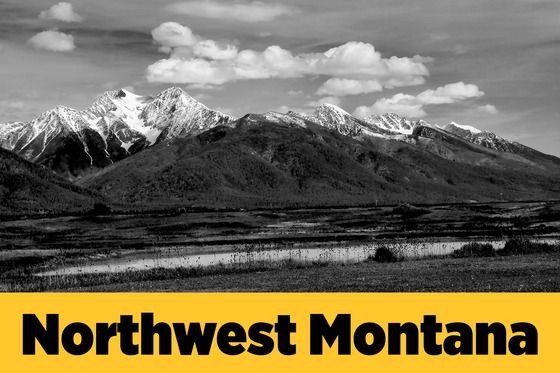
KALISPELL – Big game survival and recruitment in northwest Montana was good the last 3 winters with good recruitment in elk and deer. Winter temperatures and snow conditions were generally mild and the high harvest on wolves and lions resulted in favorable conditions for fawn and calf survival.
Four big game check stations will be open in Region 1 on weekends during the general season — Highway 2 west of Kalispell, Highway 83 north of Swan Lake, Highway 200 on the west end of Thompson Falls and Highway 93 near Olney. In the Libby area, there is a CWD sampling station located on the south end of Libby (mile marker 35 on Highway 2). Hunters are required to stop at game check stations. Stopping at the Libby CWD sampling station is voluntary but submission of CWD samples for testing is encouraged.
Elk
Calf survival and recruitment in the Clark Fork Drainage (Thompson Falls to Noxon area) averaged 32 calves per 100 cows in 2026 spring surveys. This is similar to what was observed last year and indicative of a moderately increasing elk population. Only half of the surveys were conducted in HD 123 south of Thompson Falls due to helicopter availability, but calf recruitment from that flight was considered good. Helicopter availability also restricted abilities to conduct surveys in HD 103 (the Lost Trail area). Ground surveys resulted in 414 elk observed but classification of calves was difficult due to large groups of elk. That herd is believed to be stable to slightly increasing. Although calf recruitment was up this year (27 calves per 100 cows) in the Bob Marshall Wilderness Area, the elk herd is still experiencing low elk numbers. Overall, hunters should expect elk populations to be similar to slightly better than last year.
White-tailed deer
White-tailed deer numbers in northwest Montana should continue to increase this year due to a mild winter and good fawn survival and recruitment observed during spring surveys. Wildlife biologists observed whitetail recruitment, ranging from 29 to 54 fawns per 100 adults during the 2026 spring surveys across the region. We have experienced an overall stable to increasing trend in buck harvest within the region over the last four years and expect to see that trend continue this season. We also expect the availability of older age bucks (> 3 years old) to have increased as well with higher recruitment over the last several years.
Reminder: CWD testing is required for anyone possessing a 199-20 either-sex B license (valid only in the Libby CWD Management Zone) and a 170-20 either-sex B license (valid only in the Kalispell CWD management zone). Hunters are encouraged to consult the FWP website or contact the Kalispell regional office for more details.
Mule deer
The mild winter of 2025/26 resulted in good fawn survival based on aerial surveys in HD 103 (Fisher River) and ground surveys in HD 101 (Galton Range). These surveys resulted in 41 fawns per 100 adults and 39 fawns per 100 adults in HDs 103 and 101, respectively. We expect stable to slightly increasing populations in much of the region, with buck numbers similar to last season. Only antlered bucks (i.e. a deer with an antler or antlers at least 4 inches long as measured from the top of the skull) may be harvested in Region 1. No antlerless harvest opportunity exists in the region. The North Fisher area in HD 103 requires a permit to hunt mule deer (HD 103-50), and CWD testing is required for any deer harvested with this permit. Permits are also required to hunt mule deer bucks in last half of the season in HD 101.
Moose
Moose populations in the region appear to be stable in much of northwest Montana, based on past research and hunter harvest metrics. Overall numbers are below historic highs, and the moose population looks to have stabilized at the current level. The number of moose licenses decreased from 10 to 8 in HD 111 (Talley Lake) for the 2026 season to address declining harvest rates in that district.