
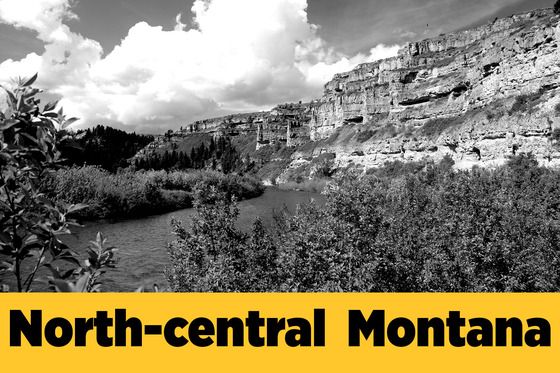
GREAT FALLS – Big game species across most of FWP's Region 4 came out of the 2025–26 winter in good condition, with strong overwinter survival rates for not only adults but also the fawns and calves born in 2025. During the winter and spring much of the region experienced a continuance of the moderate to severe drought that reduced habitat quality, but timely and abundant rainfall in late spring and early summer rapidly and significantly improved forage and overall habitat conditions. As a result, elk, deer and pronghorn are entering the critical fall and winter period of 2026 in very good body condition for the first time in the past several years. This turnaround gives wildlife managers optimism, and barring a particularly harsh winter, they anticipate strong fawn and calf production next year – setting the stage for improved hunter success and big game populations in the seasons ahead.
Access in Region 4 consists of large areas of state and federal land that provide big game hunting opportunities that are open to everyone, although hunters who are willing to hike away from roads and access points and concentrate on less accessible terrain generally have better chances of locating animals. Region 4 also has well over a million acres of private land enrolled in the state's Block Management Program, which allows public access to private land. Other private lands may also offer some hunting access, especially to hunters willing to harvest antlerless animals. As always, hunters should contact landowners well in advance of the season to secure hunting permission.
Elk
Elk numbers in Region 4 are very strong and generally meet or exceed population objectives in all districts, but the distribution of elk on the landscape varies widely. Many elk concentrate in large numbers on private lands which offer limited or no public access, while nearby public lands may hold relatively few animals.
Access to private-land elk hunting in Region 4 varies considerably, both among districts and among individual landowners. Some landowners allow hunting only for antlerless elk, while others permit either-sex harvest. Opportunities to hunt bulls differs widely depending upon the district, and in many districts, hunters with a general elk license may pursue bulls. But in several districts, especially island mountain ranges, the Missouri River Breaks and certain state-owned wildlife management areas bull hunting is limited to hunters who drew a limited entry permit.
Several hunting districts in Region 4 have shoulder seasons, which offer hunting for antlerless elk outside of the general archery and rifle seasons. Hunters should read their regulations carefully before hunting, and consider taking advantage of these special opportunities to harvest antlerless elk.
Mule Deer
Hunters can expect to find that mule deer numbers will vary widely across Region 4 this year, due in large part to the great diversity of landscape and habitat types found in the region. In some areas, especially those with substantial agricultural ground, hunters can expect moderate to strong populations. However other areas, especially along the northern Rocky Mountain Front and also the Missouri Breaks, mule deer populations are much lower and have struggled to recover from multi-year droughts coupled with consecutive severe winters in 2022 and 2023. As a result, opportunities to hunt antlerless mule deer are extremely limited across much of Region 4, especially on public land.
A few areas, especially in the southern and central parts of the region have stronger populations and should offer good hunting. Hunters should also note that a few hunting districts in the region have shorter seasons for those holding a general license, while other districts are only open to those who have already drawn a limited entry permit for the district. With several changes enacted this year, hunters should carefully review the regulations for the districts where they intend to hunt.
Hunting access opportunities for mule deer are generally similar to access for white-tailed deer, although some landowners are more restrictive regarding mule deer hunting on their property.
White-tailed Deer
Whitetail populations remain strong across most of Region 4. Although in a few localized areas, outbreaks of epizootic hemorrhagic disease (EHD) in late summer of 2025 had moderate to severe impacts on whitetail populations, and deer numbers in those areas have not yet recovered. As of late summer 2026, EHD has not been reported anywhere in Region 4.
Access to whitetails is generally good across much of the region, although traditionally whitetails are found in greatest numbers in agricultural areas where access is often via private land. All hunters may purchase a single-region antlerless whitetail license, which is valid anywhere in the region except HD 455. Hunters should check for additional whitetail B licenses that may be available surplus after drawings. Hunters willing to harvest antlerless deer may find more landowners willing to grant them permission to hunt private property.
Pronghorn
Primarily due to several years of severe drought conditions, pronghorn populations in western parts of Region 4 entered last winter in less-than-ideal body condition, which led to poor fawn production in the spring of 2026 and low fawn numbers at the present time. As a result of data gathered during aerial surveys conducted in July, biologists have raised pronghorn quotas in a few districts in eastern Region 4, while lowering quotas in other hunting districts in western and northwestern parts of the region. Southern areas near White Sulphur Springs have seen some improvement in pronghorn numbers after several years of severe winters although quotas there remain unchanged for this season. The green-up from the abundant spring rains will mean that pronghorn can be expected to be widely disbursed across the landscape this fall, but as is typically the case, hunters who put in some effort can expect to enjoy high success rates.
Access for pronghorn is generally good across much of the region on public lands, private lands enrolled in the Block Management Program and on other private lands as well.