
Vermont's black bear population is estimated at 7,500 to 8,900 bears based on 2025 data, the most recent available, according to the Vermont Department of Fish & Wildlife. This marks the fifth consecutive year that the bear population estimate is above the state's objective of 3,500 to 5,500 bears.
The department uses a statistical model based on several parameters to generate its bear population estimate each year. These include hunter harvest data on the overall number, age and sex of harvested bears, as well as the number of bears killed outside of hunting season, including in vehicle collisions and severe human-wildlife conflicts.
"Our model shows the bear population has remained above our goal of 3,500 to 5,500 bears since 2021," said Jaclyn Comeau, the department's lead bear biologist. "Increasing frequency and severity of human-bear conflicts during this time also support the model results of a growing bear population."
To better understand the drivers of this trend, the department launched a new research study on black bear reproduction last year. Initial results of this study are not anticipated until 2031, but once available, will complement the department's approach to estimating Vermont's bear population trends.
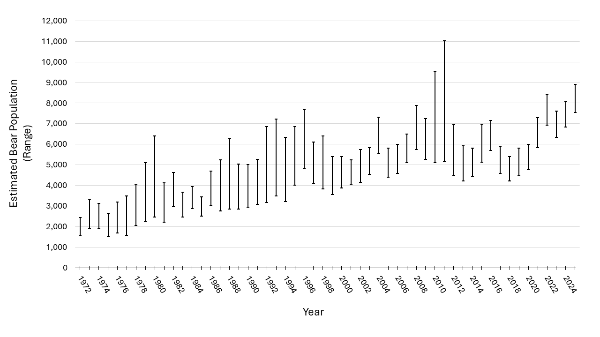
"With all signs pointing to sustained growth in Vermont's black bear population and the number of severe human-bear conflicts reported to our department each year also increasing, we implore Vermonters to redouble their efforts at proactive coexistence with our bears," said Comeau. "Keeping trash secured where bears cannot get it, protecting backyard chickens with an electric fence, keeping birdfeeders down until there is consistent snow on the ground and following bear-aware composting guidelines are the basic responsibilities of living in bear country. Advice on how to put these coexistence measures in place is available on our website and from our partners at BearWise.org."
In addition to proactive coexistence, Vermont's bear management strategy relies on habitat conservation and a sustainable, regulated bear hunt. This year's bear season runs September 1 through November 22. Despite harvests above the 10-year average for the past six consecutive years—including record harvests over 1,000 bears in both 2024 and 2025—Vermont's bear population continues to grow.
To generate a modest increase in bear harvest, the Fish & Wildlife Board is considering proposals to increase the length of bear season through the end of regulated deer hunting in mid-December and to allow hunters in certain parts of the state with high bear numbers to harvest two bears each season. Public comment on the proposed changes will be accepted through September 4, 2026.