
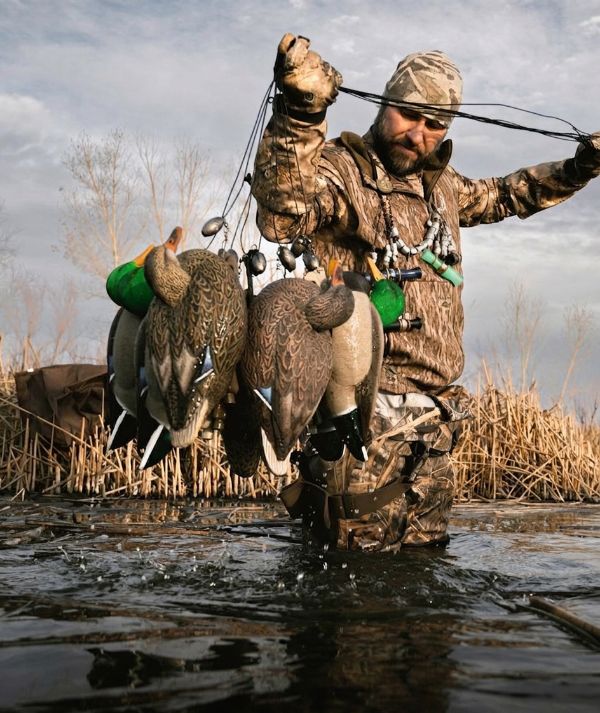
Ask a non-hunter to name a duck, and there's a good chance they say mallard before anything else. Green head, curled tail feather, that unmistakable quack. Mallards are the species the whole sport gets introduced through, and for most waterfowlers, they're still the bird the season gets measured against.
They've earned that spot. Mallards are the most widely distributed puddle duck on the continent, breeding from the prairie potholes of the Dakotas and southern Canada all the way north into the boreal forest and west into Alaska. They winter across nearly every flyway in the Lower 48, which means whether you're hunting timber in Arkansas, a cornfield in South Dakota, or a coastal marsh on either coast, mallards are probably part of the conversation.
Where the Numbers Stand for 2026
The latest data backs up mallards' status as the anchor species of North American waterfowling, even in a year that's holding steady rather than surging.
The 2026 U.S. Fish and Wildlife Service Waterfowl Population Status Report puts the continental mallard breeding population at 6.55 million birds, essentially flat with 2025 but still running 17 percent below the long-term average. That's still roughly one in five of all breeding ducks in North America. Total breeding ducks across the survey area came in at just under 34 million, also unchanged year over year.
There's some movement worth noting underneath those numbers. More mallards settled into the Canadian prairies this spring than they did in 2025, a shift from the year before, when a larger share pushed into the Yukon and Northwest Canada. In the Atlantic Flyway, the Eastern Survey Area logged 1.14 million mallards, essentially unchanged from 2024.
None of that points to a boom. But it doesn't point to a bust, either, and it's part of why the 2026 season is carrying the same liberal framework hunters have grown used to. Mallards remain steady, plentiful, and everywhere.
One Species, Two Jobs
Every mallard spread has two jobs to do at once. It must hold up and look alive from three hundred feet in the air and must look completely at ease once birds get close enough to study it.
Hardcore built a decoy for each job, but both belong in the same spread. Each one runs on the WhaleTail™ Keel, so whether a bird's sitting upright or tipped down feeding, it's carrying that same subtle, lifelike motion on the water. That shared foundation is what lets the two styles blend instead of looking like two different product lines thrown side by side.
The Rugged Series Standard Mallard Decoys are the anchor, a mixed-pose set built to carry the bulk of the spread. Field Series Mallard Feeder Butt Duck Decoys are the accent, a pair that floats tipped down in a natural feeding position, the exact posture that tells cruising birds everything's calm down there.
Here's a closer look at both.
Rugged Series Standard Mallard Decoy
At Hardcore, dedication knows no bounds, and the Rugged Series line epitomizes the passion, persistence, and sheer perseverance the brand pours into every product. Built on Hardcore's ultra-durable FowlFlex™ Technology, these decoys are built to endure the toughest conditions hunters can throw at them — hauled through mud, tossed in a boat, left to soak, and still ready to work the next morning.
What sets this decoy apart is the finish. True-to-life paint schemes give it a texture and depth that plastic alone can't fake, the kind of detail that closes the deal on birds that have circled a few decoy spreads this season. Add in the WhaleTail™ Keel, and the whole set comes alive with subtle, realistic movement even when the water's barely moving.
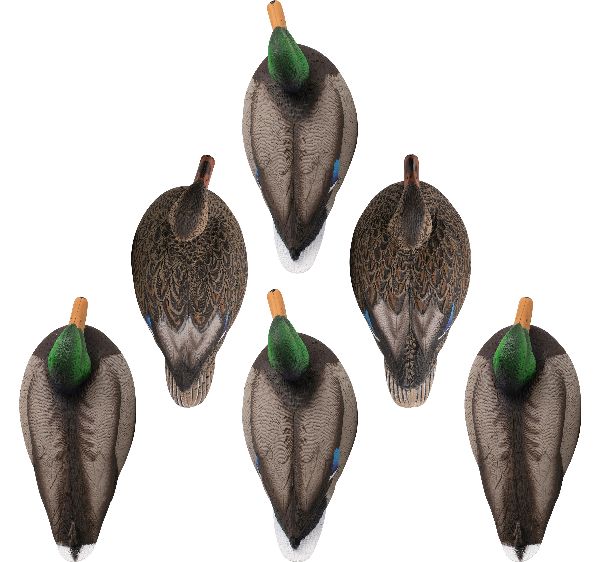
"True-to-life paint schemes make or break a decoy like this," said Doug Veldhuizen, Merchandise Manager for Hardcore Waterfowl. "We spent a lot of time getting the color and pattern right on both the drakes and hens, so birds see what they expect to see. That's what closes the deal on ducks that have already worked a few spreads."
The set includes six decoys in a deliberately varied mix: two active drakes, two resting drakes, one relaxed hen, and one resting hen. That range of postures is what separates a realistic spread from a row of identical plastic ducks, as real mallards don't all hold the same position on the water, and now neither does the spread.
"A spread where every bird looks the same is a spread that looks fake," Veldhuizen said. "We built this set with active birds, resting birds, drakes, and hens, because that's what an actual raft of mallards looks like. Variety is what sells it."
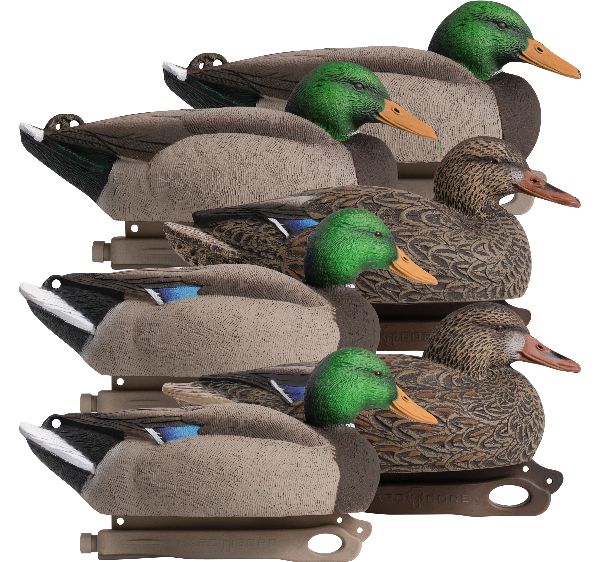
RUGGED SERIES STANDARD MALLARD FEATURES:
- Hardcore's Ultra-Durable FowlFlex™ Technology
- True-To-Life Drake and Hen Paint Schemes
- WhaleTail™ Keel Creates Lifelike Movement With Little Current
- INCLUDES: 2 Active Drakes, 2 Resting Drakes, 1 Relaxed Hen, 1 Resting Hen
- MEASUREMENTS: 15.75" L x 8" W
MSRP $89.99
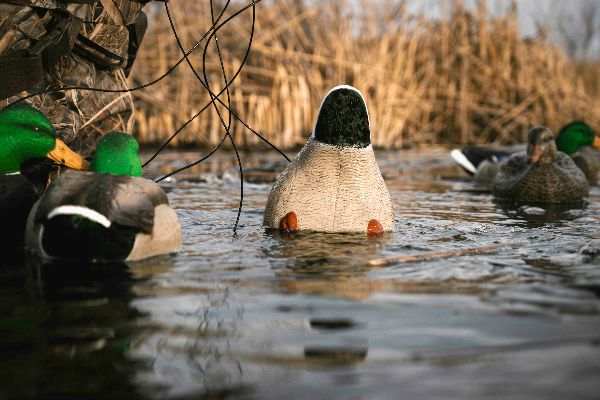
Field Series Mallard Feeder Butt Duck Decoy
Where the Rugged Series floater carries the bulk of the spread, the Field Series Mallard Feeder Butt Duck Decoy handles the finishing touch. This two-pack — one drake, one hen — floats tipped forward in the water, head down, tail up, one of the most convincing postures a decoy can hold.
It's a small detail with an outsized effect on approaching birds. A spread full of upright, alert-looking decoys can put cruising mallards on edge. A couple of feeder-butt decoys mixed in says this is a safe spot, birds are already comfortable enough to tip down and feed.
Built with true-to-life drake and hen paint schemes and a durable plastic blend meant to hold up season after season, the Feeder Butts also carry Hardcore's WhaleTail™ Keel, which makes them a strong option for hunters who like to work them into a jerk rig for a little added motion across the spread.
"Feeding posture is one of those details hunters underestimate," Veldhuizen said. "A spread that's all heads-up can actually work against you. Mixing in a couple of birds that look like they're already feeding tells incoming ducks everything's fine down there."
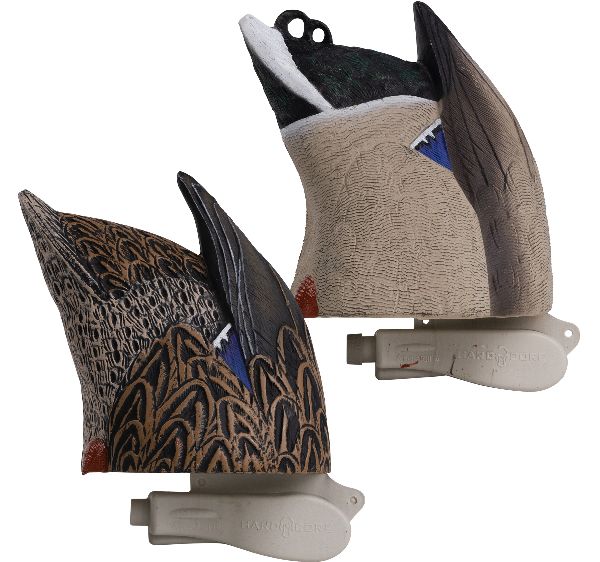
FIELD SERIES MALLARD FEEDER BUTT FEATURES:
- WhaleTail™ Keel Creates Lifelike Movement
- True-To-Life Drake and Hen Paint Schemes
- Durable Plastic Blend for Years of Use
- Great Option for Use with Jerk Rigs
- INCLUDES: 1 Drake & 1 Hen
MSRP $29.99
Built for the Bird That Built the Sport
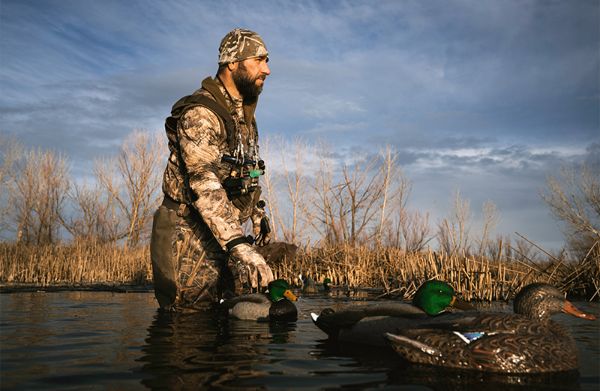
A mallard hunt doesn't hinge on decoy count. It hinges on believability, and believability comes from variety. Real rafts of mallards aren't lined up at attention. Some birds are alert and upright, working the edges. Others have their heads down, comfortable enough to feed, telling every other duck in the sky that the water's safe.
That's the gap Hardcore built these two decoys to close together. The Rugged Series Standard Mallard Decoy brings the pose variety and paint detail that anchors a spread — active birds, resting birds, drakes and hens, all carrying the WhaleTail™ Keel's subtle motion. The Field Series Feeder Butts bring the one posture a lot of spreads are missing entirely: birds tipped down and feeding, the detail that turns a good-looking spread into one that finishes.