
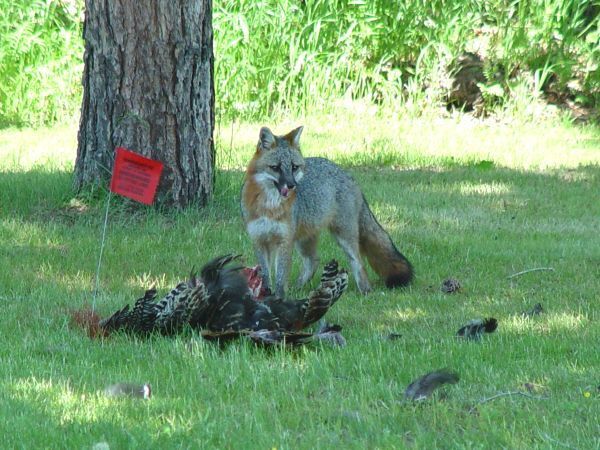
Fur trappers have long been important partners in managing Michigan's furbearer populations and collecting data that supports wildlife research and monitoring. Because trappers are among the people most likely to encounter a gray fox, we would like to hear from you if you've seen or trapped one.
Trapper harvest survey data in Michigan, and several surrounding midwestern states, have indicated declining trends in gray fox populations. As a result, the Department of Natural Resources recently partnered with Northern Michigan University, Keweenaw Bay Indian Community, Sault Tribe of Chippewa Indians and The Little River Band of Ottawa Indians to study Michigan's red and gray foxes. Early findings suggest gray foxes may be much rarer in Michigan than previously thought. Wildlife biologists are now working to better understand where gray foxes occur across the state, and observations from experienced trappers are an important piece of that effort.
If you've seen or trapped a gray fox, whether this season or years ago, we would like to hear from you. Photos and location information are especially valuable because they help researchers confirm sightings and gain more clarity on where gray foxes are living in Michigan today.
Your observations will help wildlife biologists better understand the current distribution of gray foxes in Michigan and guide future research on this unique species.
Thank you for helping improve our understanding of Michigan's wildlife.