
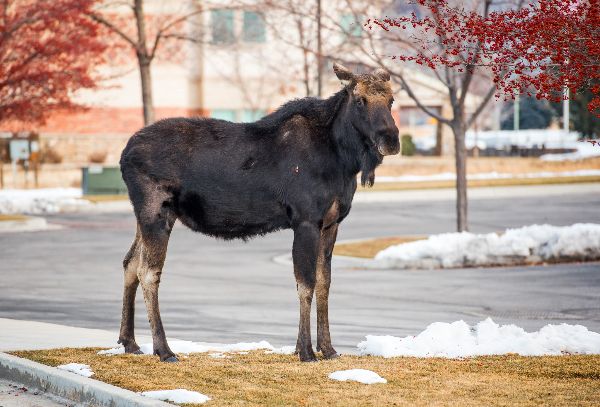
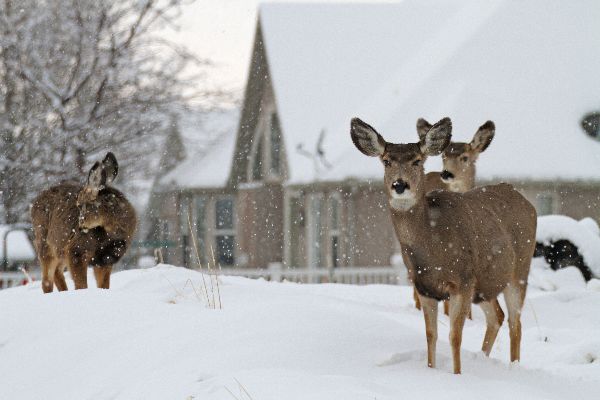
SALT LAKE CITY — Due to the extreme drought conditions this year, wildlife may migrate into neighborhoods this summer in search of food and water. Whether you want to keep the deer from eating all your garden vegetables and flowers or you're interested in ways to help wildlife during hot, dry conditions, here are a few things you should know.
If you want to try to save your plants — and also minimize any property damage from wildlife visiting your yard or garden — here are a few tips:
- Building an 8-foot fence around your garden or yard is the most effective method, and is often the only reliable way to keep deer out of your garden.
- Another fairly effective technique is to install a motion-activated sprinkler.
- You can also try planting unpalatable vegetation around the perimeter of your garden to deter deer from eating additional plants.
Visit the DWR website for deer-friendly landscaping ideas and wildlife-friendly fencing tips if you live in an area frequented by big game animals.
Help wildlife by not feeding them
While some people may want to prevent deer and other wildlife from eating their lawns or gardens, others may be looking for ways they can help hungry and thirsty animals this summer. While it may be tempting to provide feed or water for these animals, it can lead to unsafe situations for the animals and people.
It is not illegal to feed wildlife — except in certain cities that have enacted no-feeding ordinances — but there are several reasons that it is highly discouraged, including:
- Public safety concerns
- The spread of chronic wasting disease among deer, elk and moose
- Potential harm to wildlife from introducing foods not in their diets
"The best way you can help wildlife is by letting animals stay wild," Utah Division of Wildlife Resources Big Game Coordinator Mike Wardle said. "Don't approach them, and don't try to feed them. Often people's good intentions wind up doing more harm than good for the wildlife. It can also be really dangerous when deer, moose or bears become habituated and lose their fear of people."
When to report wildlife sightings
- If you notice deer or elk that look sickly, are injured or are acting aggressively, you should report it to the nearest DWR office.
- You should report a moose that has wandered into lower-elevation areas and is within city limits or a heavily populated community.
- If you encounter a cougar that has killed something in a neighborhood or yard — or it is exhibiting aggressive or threatening behavior — you should report it.
- If you see a bear in a residential area within the foothills or canyons, you should only contact the DWR if the animal is being aggressive or if it is getting into trash, fruit trees or causing damage. You should definitely report a bear that has wandered into a campground or a lower-elevation area and is within city limits or in a heavily populated community.