
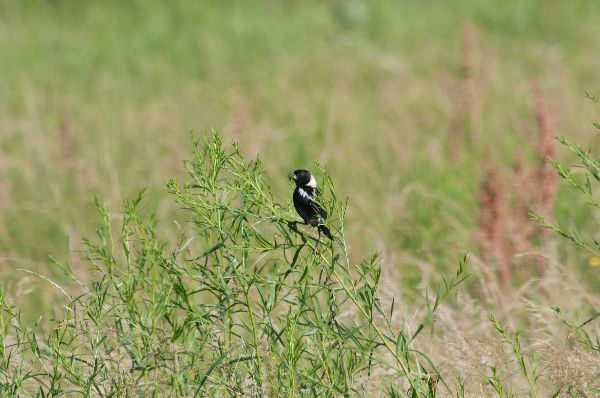
Bobolinks, Savannah sparrows and eastern meadowlarks enrich our summers with their songs, but their populations continue to suffer long-term declines due to the loss in quantity and quality of their grassland habitat.
Across North America, birds that use grassland habitat have experienced the steepest population decline among all bird groups in the past five decades. Over that time 95 percent of our native grasslands, largely in the Midwest, have disappeared. Vermont has a unique opportunity to support grassland birds due to our diverse landscape with a long history of agricultural use that remains today.
Landowners can make a difference by altering the times of year they mow their fields, according to the Vermont Fish and Wildlife Department. "Landowners can help grassland species by waiting to mow their fields, giving the birds a chance to rear their young," said Jillian Kilborn, biologist for Vermont Fish and Wildlife.
"People maintain open, grassy fields in Vermont for a variety of reasons, from producing hay to providing pasture for grazing, to simply maintaining scenic beauty," said Kilborn. "For those who can afford it, the timing of mowing or brush hogging can be adjusted to allow grassland birds to successfully raise young."
Bobolinks, Savannah sparrows, eastern meadowlarks and wild turkeys build their nests right on the ground, among the grasses and wildflowers. Deer fawns and other animals take refuge in grass fields, and other birds such as bluebirds, kestrels, whip-poor-wills, and northern harriers rely on grass fields for food.
According to Kilborn, landowners who do not need to mow for animal forage can accommodate nesting birds by cutting late in the summer, preferably after August 1. When you do mow, Kilborn advises to keep an eye out for unwanted plants.
People concerned about invasive plants such as parsnip, bedstraw or chervil may choose to rotate mowing earlier and more frequently on a portion of their field each year, to keep these plants in check.
"The birds don't like fields dominated by invasives any more than we do," says Kilborn. "Mowing before unwanted plants go to seed can help prevent them from spreading. Although this means temporarily sacrificing some nesting habitat, it will help maintain the entire field over the long term."
Landowners who face a loss of income from delaying mowing can apply for assistance through the Natural Resources Conservation Service EQIP program or The Bobolink Project.
You can learn more about conserving Vermont's grasslands on Vermont Fish and Wildlife's website. You can also help grassland bird conservation in Vermont with a donation to the Nongame Wildlife Fund. Every dollar donated leverages up to three dollars of federal funds to help protect wildlife species at risk, including birds, bats, orchids, and bumblebees.