
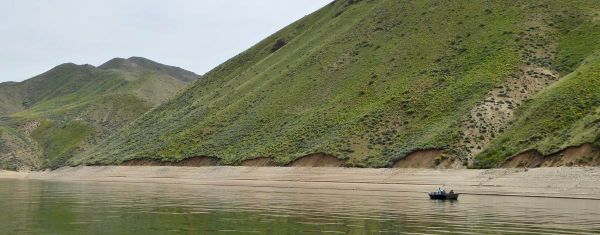
Anglers can expect to lose some fishing opportunities this summer.
With severe drought in Idaho and summer heat on the way, it's likely anglers will lose some fishing opportunities, but Idaho Fish and Game will work to mitigate if it will provide benefits.
"Drought affects many aspects of Idaho life, including fisheries, and we're concerned," Fish and Game Fisheries Bureau Chief Lance Hebdon said. "We will be watching them carefully, but there may be little we can do in some places where there won't be enough water to support fish."
It's likely there will be some fish die-offs, and there may be pressure from anglers to translocate those fish before it happens, but there may be little benefit to moving fish to other waters if it won't improve fishing there. That decision isn't taken lightly. Biologists have experience and scientific research to guide them. If there's a reservoir, lake, or pond that's destined to be drained or overheated, a manager has several options:
- Allow anglers to take as many as they can through salvage fishing regulations
- Trap and relocate fish
- Let the situation resolve itself, knowing some (or all) fish may die
- A combination of the above
"Our staff works hard to provide and maintain fishing opportunities, so it's tough to see a year like this," Hebdon said. "Some anglers may think we're reluctant to trap and relocate fish, but under the right circumstances, we can and will do it."
Salvage harvest vs. relocation
When a body of water is about to be drained or become uninhabitable to game fish, fisheries managers face a couple of key questions.
First, can the fish be effectively and efficiently captured and transported. There must be access to open water, and the fish can't be too stressed to be transported and released safely. There must also be personnel and resources available to do the job.
Next is the most important question: Will translocating fish significantly improve the fishery in the receiving water? It's not a wise use of resources to translocate fish if there's no benefit to anglers.
"We face a cost/benefit decision, and there may be other projects that provide more benefits," State Fish Manager Joe Kozfkay said. "But we also know how hard it is for anglers to see fish die-offs."
Giving anglers the opportunity to harvest fish through salvage fishing is often a better alternative, even though the uncaught fish are likely to die.
Water is a vital and finite resource
It's also common for anglers to get frustrated when their favorite fishery loses its water, but consider this: Most Idaho reservoirs were built to store irrigation water.
Game fish exist there because water owners and managers have worked with Fish and Game to provide fishing. But an irrigation company's main obligation is to deliver irrigation water, and during droughts, they can't always meet demand.
Fisheries managers know they may periodically lose fish populations in these reservoirs, and in most cases, it's a short-term setback. When the drought ends, and reservoirs refill, Fish and Game can often restock catchable trout and immediately resume fishing opportunity.
In other cases, it may take longer, such as translocating warmwater fish like bass and panfish. The goal with warmwater fish is to stock adults in the spring and let those fish spawn, then the next generation grows up and provides fishing opportunity. That process may take several years, assuming the water conditions remain favorable.
Low, warm water can have a much greater impact on sturgeon populations. Fish and Game temporarily shut down sturgeon fishing in recent years in portions of the Snake River after getting reports of sturgeon dying, and they may have to do it again. Even with the fishing shut down, some sturgeon may die, and those can take decades to replace due to their slow growth.
Rivers and trout are more resilient, but not immune
Many of Idaho's rivers have a variety of elevations, habitat and environments. When rivers warm in summer, fish can usually migrate to cooler water, such as higher elevations, or cool, shady tributary streams.
But even if fish escape summer, some fish mortality may be delayed because die-offs also occur during winter, and stressed fish are more susceptible.
Anglers can help protect fish without realizing it
During the hottest days of summer, we tend to be less active, and so are the fish, particularly trout, which makes them less likely to get caught by anglers.
When fishing is slow due to hot weather and lethargic trout, fewer anglers fish, they spend less time fishing, and tend to catch fewer fish.
Those factors mean angling pressure is generally self-regulating and catch rates decrease to the point that they are unlikely to affect trout populations, so Fish and Game rarely has to alter fishing seasons to protect trout in rivers.
Fish die-offs don't necessarily mean long-term population decline
Trout populations are resilient for reasons that anglers may find counterintuitive: They're typically stable because there's a constant turnover of fish.
It's common for a third to two-thirds of the trout population in Idaho streams to die each year. One might think that would lead to drastic swings in populations, but the high turnover can actually make the population more stable.
There is a core group of adult fish – the ones anglers are typically targeting – and then there is a larger population of younger, smaller fish. A portion of the adult population is lost each year, which allows some of those younger fish to grow and fill the gaps.
The best long-term protection for trout is healthy rivers and the ability of fish to move freely upstream and downstream and have a variety of habitats to live, spawn and escape warm water.
Nearly all fish populations are cyclical
Whether in a lake, reservoir, pond or river, fish populations have good years and bad years.
Fisheries managers use science and experience to know when it's time to step in and protect the fishery, which they won't hesitate to do if needed.
Idaho fisheries have experienced drought many times in the past, and it remains to be seen how bad this one will affect fisheries. Fish and Game will monitor the weather and water conditions, respond when management changes can mitigate damages, and then work to re-establish lost fishing opportunities after water conditions improve.