
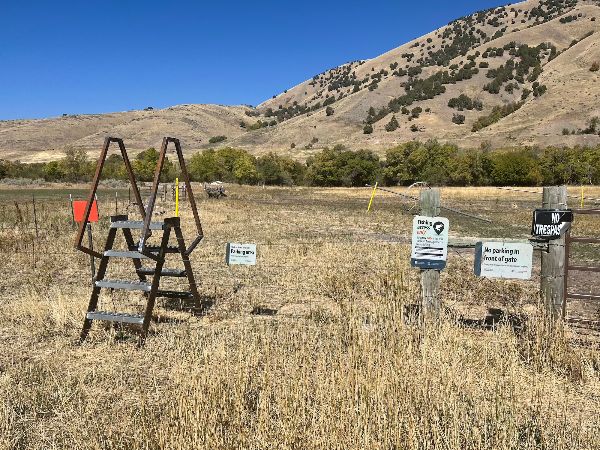
The Walk-in Access Program was launched in Utah in 2005 as a way to provide public access on private land for additional hunting and fishing opportunities. Now, more than 20 years later, the program has expanded, and in 2025, it offered public access to 49,597 acres of private land for hunting and fishing.
Through the Walk-In Access Program, the Utah Division of Wildlife Resources leases certain hunting, trapping or fishing privileges on private land to allow public access on the properties for those specific activities. The program was initially started as a three-year pilot program, but it quickly expanded as more landowners enrolled.
"Typically, hunting opportunities are limited to state and federally-owned lands for most hunters," DWR Walk-In Access Coordinator Aaron Sisson said. "This program creates an important partnership between our agency and private landowners who are willing to open their lands for public use. These landowners are passionate about hunting and fishing and want to provide additional opportunities for these activities for future generations. We are grateful for their participation in and support of this important program."
In 2025, 49,597 acres were enrolled in the Walk-In Access Program, including 39.4 miles of stream and 221 acres of flat water. A total of 116 properties enrolled in the program, with the majority located in northern Utah.
Hunters and anglers can gain access to these properties by obtaining a free Walk-in Access Authorization number. The number is required when individuals are on the property, and must be obtained annually. Individuals can find the properties enrolled in the program on the DWR website and should be aware of the specific activities allowed on each property before visiting.
"This is a great program, and we strongly encourage hunters and anglers to be respectful when they are recreating on these private properties, so the landowners want to continue to participate and provide access into the future," Sisson said.
For more information on the program, listen to the Wild podcast.