
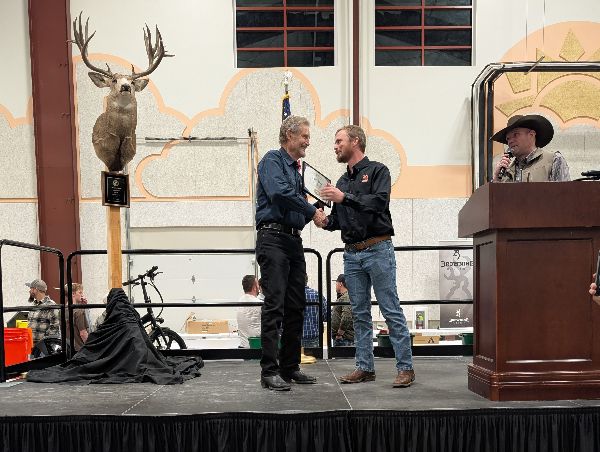
As part of an ongoing initiative to grow more mule deer, the Utah Division of Wildlife Resources recently recognized eight Utahns with a new award to highlight their contributions in helping deer.
The Legacy of Land Award is a new recognition awarded by the DWR. The award is given to private landowners who consistently go above and beyond to accommodate wildlife — particularly deer and elk — on their private properties, which often results in personal loss or extra effort without the individual seeking compensation or mitigation.
"Private land often includes the most productive wildlife habitat in Utah," DWR Private Lands/Public Wildlife Coordinator Darren DeBloois said. "Large numbers of deer rely on these areas during certain parts of the year. The DWR offers programs to address conflicts between wildlife and private landowners, but some landowners enjoy the deer and go above and beyond to nurture these herds and contribute to growing the deer and elk populations that the public then enjoys on public lands."
Eight individuals were recognized with the award at various conservation group banquets between January and April. This year's recipients include:
- Chad Olson for central Utah: Olson owns over 1,000 acres in Sanpete County and allows hundreds of deer and elk to spend the winter months on his property, without requesting compensation for damages.
- Clint Kearl for northern Utah: Kearl owns 2,200 acres in Cache and Rich counties, which helps support a large number of deer, elk, moose, beavers and grouse in the area. He also volunteered to help with the emergency deer-feeding efforts in Rich County during the extreme winter of 2022-23.
- Stephen Ellis for northeastern Utah: Ellis owns over 5,600 acres in Duchesne County. Both his rangeland and cropland support a large number of deer and elk each year, and he frequently allows DWR employees access to his property for wildlife-related work.
- Breck Crystal for southern Utah: Crystal actively manages his properties in southern Utah to provide winter feed for deer by leaving stubble or planting a final crop. He has also personally invested in improving fencing on his properties to be more wildlife-friendly and is assisting Wildlands Network with a fence-improvement project in the Boulder area to allow deer movement and migration.
- Lee Thayn for southeastern Utah: Thayn grows corn, alfalfa and watermelon on about 2,000 acres in the Green River Valley and is always tolerant of deer on his property, without requesting compensation or removals.
- Chris Robinson for a statewide award: Robinson owns more than 1 million acres across Utah, Idaho and Wyoming and manages his properties with an emphasis on landscape health, responsible use of natural resources and meaningful benefits to wildlife and conservation. He has also served in various roles focused on benefiting wildlife and natural resources over several decades, including his position as a current member of the Utah Wildlife Board.
- David and Robin Bradshaw for a statewide award: The Bradshaws own roughly 500 acres of irrigated farmland in Beaver County and allow hundreds of deer to use their property for the majority of the year.
The recipients for the award fell into several categories, including:
- Showing tolerance and coexistence with deer and other wildlife on their property.
- Participating in active conservation and stewardship, and managing their land in a way to specifically benefit wildlife, including building wildlife-friendly fencing, providing winter feed for deer and improving habitat for wildlife.
- Being a partner and advocate for wildlife by collaborating with the DWR and granting access to their private land for critical conservation work, while also encouraging community cooperation for wildlife management initiatives.
- Providing leadership for innovative wildlife and resource management across vast properties in Utah and dedicating decades of service to benefit wildlife.
"We are so grateful to these incredibly dedicated individuals for their passion for wildlife and for their partnership in helping deer and other big game animals in Utah," DeBloois said. "With the continued growth of Utah's population and ongoing urbanization, it takes collaboration and effort to preserve available habitat for wildlife populations, and we are increasingly thankful for residents who continue to use their land to provide for the future of deer throughout the state."