
HELENA – The snow is melting, the meadowlarks are singing, and bugs are smashing against our windshields again. All this can only mean one thing … spring is here! Plants are growing, and before long wildflowers will be popping up across Montana.
With our climate variability across a variety of habitats, Montana has a robust plant catalog with plenty of wildflower-viewing options. Wildflowers are all across the state – from mountain tops and river bottoms through the forests and even deep in the sage-brush sea.
Have you taken a moment to stop and admire the flowers? Have you ever been on an early spring walk and wondered what kind of flower you're looking at? Have you gone somewhere new to see something you've never seen before? Take a moment, get outside this spring, and see if you can find some of Montana's early risers. Our state parks are waiting for you.
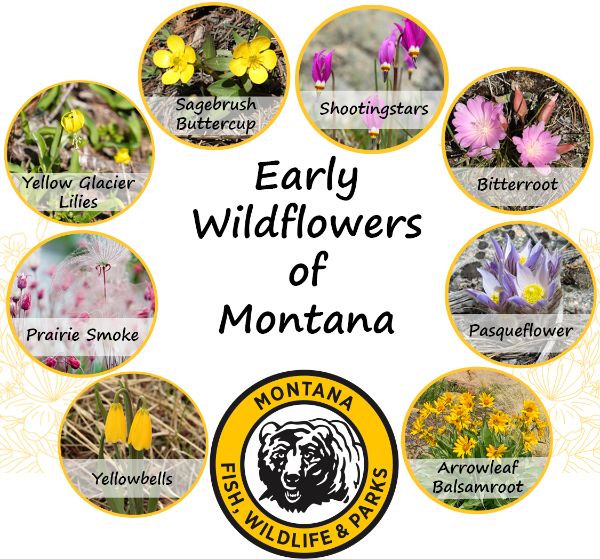
Yellow Glacier Lilies (Erythronium grandiflorum): 7-30 centimeters (cm) tall. Blooms April to August. Flowers are bright yellow with six petals that curve upward, stamens project downward, typically one pair of leaves on the plant close to the ground. Located in moist, rich alpine to montane areas of western and south-central Montana.
Yellowbells (Fritillaria pudica): 10-30 cm tall. Blooms April to June, usually a single bell-shaped yellow downturned flower with six petals. One flower per plant is common. Located in somewhat dry open or wooded grassy sites – plains to montane areas across the state.
Pasqueflower (Anemone patens) also known as prairie crocus: 10-40 cm tall. Blooms March to August from a woody base. Stems, flowers and leaves are hairy. The flower is made of blue to purple modified sepals – five to eight per flower. They are found in grasslands, steppe, open forest, plains, valleys and occasionally above the tree-line areas across the state.
Prairie Smoke (Geum triflorum) also known as old man's whiskers: 10-50 cm tall. Blooms April to August. Stems are reddish and slightly hairy, in clumps. Leaves are fernlike. Flowers are dark pink, urn-shaped in loose clusters of three. They are found in dry to moist open sites including grasslands, meadows, woodlands, plains, valleys and alpine areas across the state.
Sagebrush Buttercup (Ranunculus glaberrimus): 5-15 cm tall. One of our earliest blooming wildflowers. Typically blooms March to May but sometimes as early as February. Low growing plant. Flowers are bright yellow with five or more petals and a large half-sphere shaped center. They are found in dry, open to wooded sites in areas all across the state but are more common in western Montana.
Bitterroot (Lewisia rediviva): Montana's state flower is 1-3 cm tall. Blooms: May to June. Bitterroot is a small low-growing species with fleshy leaves. Flowers are 4-6 cm across with 12-18 white to pink lance-shaped petals. They are found in the gravelly or sandy, well-drained, sparsely vegetated soil of grasslands in central and western Montana.
Arrowleaf Balsamroot (Balsamorhiza sagittate): Blooms: April to July, 15-80 cm tall. Velvety grey-green plant with a woody base. Groups of flowers grow from a single base. Leaves are large and arrowhead shaped. Flowers are yellow disk-shaped 5-11 cm across with 12-22 ray florets per flower. Found in low elevation grasslands and open, often stony, ponderosa pine woodlands across Montana.
Shootingstar (Dodecatheon conjugens): Blooms April to June, 5-40 cm tall. Leaves are spoon shaped 3-20 cm long. Flowers tend to point down and have magenta to lavender-colored lobes swept up from a white to yellow ring with five fused anthers peeking out below the mouth of the flower. Found in moist sites, plains to alpine areas across Montana.
Resources: USFS, "Plants of the Rocky Mountains" book by Kershaw, MacKinnon, and Pojar, Montana Natural Heritage Program website.