
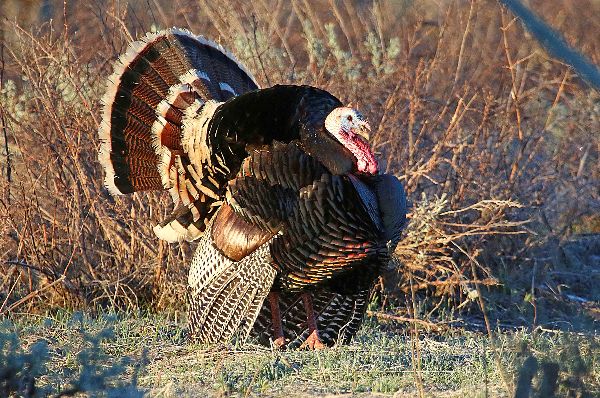
SALT LAKE CITY — Utah's spring general-season turkey hunts are underway, and if you like the idea of getting outdoors and harvesting your own delicious bird, now's the time to buy a permit and research an area to hunt.
Utah's youth turkey hunt runs from May 1-3, and the spring general-season turkey hunt runs from May 4-31. Youth can continue hunting during the general-season hunt if they don't harvest during the youth hunt.
"Turkey hunting is a great way to get outdoors in Utah during the spring," Utah Division of Wildlife Resources Upland Game Coordinator Heather Talley said. "It's also a great species to target for anyone who is new or just getting into hunting."
Buying a turkey permit
Permits for Utah's statewide spring general-season turkey hunt went on sale on March 10. You can buy a permit for the statewide general season anytime before the hunt ends on May 31. These permits are available online or at a variety of license agent locations and Utah Division of Wildlife Resources offices.
For more information on turkey hunting regulations and other details, check the 2025-26 Utah Upland Game & Turkey Guidebook. Hunters should note that rimfire firearms and air rifles are not legal for the spring turkey seasons. The free guidebook is available on the DWR website and in the Utah Hunting & Fishing app.
Utah turkey populations
There are two turkey subspecies that live in Utah: Rio Grande and Merriam's. There are currently between 33,000 to 38,000 wild turkeys throughout the state.
"Winter conditions were pretty mild this year, and we haven't seen any evidence of winter kill in Utah," Talley said. "With mild winters the last two years, we've seen an increase in turkey numbers in most parts of Utah. However, the dry conditions led to a decline in population in southwestern Utah. But overall, hunters can expect to see a decent amount of turkeys during this spring's hunts."
Where to hunt
Rio Grande turkeys are usually found at lower elevations. River bottoms scattered with cottonwood trees and areas composed of mostly oak and pinyon-juniper woodlands are some of their favorite spots. However, some Rio Grande populations in Utah have adapted to behave differently from Rio Grande turkeys in other states, and may travel to higher elevations between ranges of typical Rio habits and where Merriam's reside. Merriam's turkeys are typically found in ponderosa pine forests at higher elevations.
Visit the Hunt Planner for other detailed information on where turkeys can be found throughout Utah.
General tips
If you're planning to hunt, try to get out and scout a few days before your hunt begins. Becoming familiar with the area and locating where the turkeys are is key to a successful hunt. You should spend time observing the turkeys' daily patterns so that during the hunt, you can set up in an area where the birds will be active. Typically, more turkeys are harvested between 10 a.m. and 2 p.m. than during any other time of day.
"Turkeys are often found on private property, so be aware of the land ownership in the area you're hunting and remember that you must get documented permission from the landowner before you can hunt on their property," Talley said. "Also, calls and decoys can greatly increase your success, so take time to practice with those beforehand. And lastly, while turkeys can't smell you, they do have incredible eyesight, so be sure to wear camo that matches the terrain and sit very still prior to taking a shot."