
The Utah Division of Wildlife Resources is releasing its proposed big game hunting permit numbers for 2026 and is asking for the public's feedback on the recommendations, as well as on a variety of other proposals.
What impacts deer populations in Utah
There are many factors that impact deer populations in Utah and can cause them to increase or decrease. Some of those factors include:
- Weather and precipitation (either extreme, ongoing drought or really heavy snowfall during the winter)
- Predator balance
- The quality and quantity of available habitat (which can be impacted by weather as well)
- Adult doe survival
- Fawn survival
- Fawn production
"It should be noted that harvesting buck deer does not drive deer populations," DWR Big Game Coordinator Mike Wardle said. "That is a common misconception we hear when we make permit number recommendations each year. The most important factors that drive population size are the survival rates of adult does (since bucks don't have babies), fawn production and fawn survival. The way we hunt buck deer in Utah doesn't drive deer populations, but what happens with deer populations drives how we hunt buck deer."
How deer permit recommendations are made
The DWR manages deer, elk and other wildlife in accordance with approved management plans to help maintain healthy wildlife populations across the state. The current Utah Mule Deer Statewide Management Plan was approved by the Utah Wildlife Board in December 2024 and is in effect until 2030. The deer management plan includes:
- Implementing data-driven, automatic adjustments to buck deer permits when changes are within 20% of the previous year's permit numbers. Permit changes within 20% of last year's numbers will be implemented automatically, and recommended changes that exceed 20% will go through the public process of the Regional Advisory Council and Utah Wildlife Board meetings for approval.
- Managing more general-season units for a post-season buck-to-doe ratio of 15-17 bucks per 100 does and fewer units for 18-20 bucks per 100 does.
- Updating the post-season buck-to-doe ratios for both the premium limited-entry and limited-entry hunts/units to 40-45 and 25-30, respectively.
"Utah has 31 general-season buck deer hunting units," Wardle said. "Of those, 28 units fell within the 20% threshold from last year's numbers, so permits for those units will be automatically allocated. Three general-season hunting units exceeded the 20% threshold — the Beaver West; Kamas; and the Wasatch Mtns, West — and a net increase of 1,300 permits is being recommended across those three units to help reach the buck-to-doe ratio objectives for each unit."
Along with using the management plans, DWR biologists also weigh additional factors and data in recommending hunting permit numbers for deer:
- Buck-to-doe ratio objectives established in the management plans for each area of the state (including the current estimates, three-year averages and overall trends). The buck-to-doe ratios are a good way to manage social preferences for hunting deer and to allow for consistent management across differently sized units.
- Current population estimates and demographics. (This data is collected through yearly surveys and classifications of deer herds.)
- Survival data from GPS collar studies — as well as the condition of deer (measured during annual capture efforts) — help biologists estimate deer survival for the current winter.
- Hunter harvest rates from the prior hunting season (which can help with estimates for successful harvest in the upcoming year).
- Habitat and environmental conditions across the state.
DWR biologists are recommending a total of 86,625 general-season deer hunting permits, which is a 6,425-permit increase from the previous year.
"Our biologists look closely at each hunting unit and individual situation when they make permit recommendations," Wardle said. "We use the best available data and our management plans to make proactive recommendations for the herd health of our wildlife. We have seen benefits to our deer populations from habitat improvement projects, predator management and other work done to directly benefit mule deer. Our deer populations have responded positively to conditions over the last year, and changes to our statewide deer management plan have enabled us to offer more hunting opportunities for the 2026 seasons."
Elk permit recommendations
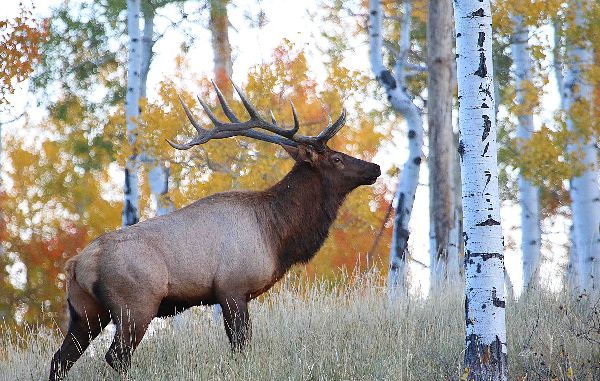
The current statewide elk management plan includes an objective to have 80,600 elk across Utah — there are currently an estimated 83,020 elk in the state. DWR biologists are recommending a slight decrease in public draw limited-entry bull elk permits for the 2026 hunts. They're also recommending an increase in antlerless elk permits in order to manage the overall elk population numbers to meet management objectives.
Big game permit recommendations
The table below shows the big game permit recommendations for 2026, including those for the deer,elk and pronghorn hunts, the once-in-a-lifetime hunts and the antlerless hunts:
| Hunt | 2025 permits | 2026 recommended permits |
| General-season buck deer | 80,200 | 86,625 |
| Limited-entry deer | 1,547 | 1,708 |
| Antlerless deer | 340 | 345 |
| General-season any bull elk |
|
|
| General-season spike bull elk | 15,000 (sold over the counter, with a cap of 4,500 multiseason permits) | 15,000 (sold over the counter, with a cap of 4,500 multiseason permits) |
| Antlerless elk | 20,483 | 21,650 |
| Youth draw-only any bull /hunter's choice elk | 750 | 750 |
| Limited-entry bull elk | 3,533 | 3,497 |
| Buck pronghorn | 1,739 | 1,827 |
| Doe pronghorn | 505 | 475 |
| Bull moose | 106 | 113 |
| Antlerless moose | 15 | 15 |
| Bison | 133 | 135 |
| Desert bighorn sheep | 88 | 85 |
| Rocky Mountain bighorn sheep | 52 | 51 |
| Rocky Mountain bighorn sheep ewe | 5 | 5 |
| Mountain goat | 103 | 112 |
Antlerless permit recommendations
The DWR issues antlerless permits for big game species in Utah for several reasons:
- To manage population size to the approved population objectives
- To improve the health of the habitat (and to avoid overgrazing)
- To reduce conflicts on private property, including depredation issues
"Because reducing the number of female animals in a herd can reduce the overall population, all of Utah's recommended doe deer hunts are designed to be very targeted to address localized areas of specific concern, conflicts or public safety considerations," Wardle said. "Currently, there are no doe deer hunts in Utah that are aimed at reducing the overall deer population on a hunting unit."
CWMU antlerless permit number recommendations
The DWR oversees the Cooperative Wildlife Management Unit program, which allocates hunting permits to private landowners who then provide hunting opportunities to public and private hunters for a variety of wildlife species. The CWMU program in Utah has opened more than 2 million acres of private land to the public for hunting.
The DWR is recommending a total of 228 public and 62 private antlerless big game CWMU permits for 2026. These recommendations are for nine CWMUs that either new, renewed operations, or are changing antlerless permits for 2026.
Aquatic rule change proposals
The New Zealand mud snail was discovered in Utah in the 1990s and was classified as a prohibited species in an effort to protect native fish and spring snail populations. However, after 25 years of monitoring and data, it has been determined that New Zealand mud snails have not had a detectable impact on Utah's fish populations, although they do remain a threat to native spring snails.
The DWR is proposing to reclassify the New Zealand mud snail as a controlled species, rather than a prohibited one, as well as make a few other rule updates.
"This change will allow private hatcheries with New Zealand mud snails to stock private fish ponds, as long as the hatcheries have a certificate of registration," DWR Aquatic Section Assistant Chief over Native Species Randy Oplinger said. "This will expand the availability of fish for stocking onto private property and increase opportunities for private fish growers, while maintaining the necessary safeguards that will prevent the federal listing of Utah's native spring snail species."
Give feedback
The public meetings for the recommendations can either be viewed virtually or attended in person. You can view the biologists' presentations before the meetings and share your feedback about them on the DWR website. The presentations are also available on the DWR YouTube channel, but comments can only be submitted through the forms on the DWR website.
The public comment period opened on April 1 for each of the five Regional Advisory Council meetings and for the Utah Wildlife Board meeting. Public comments submitted within the online-comment timeframes listed below will be shared with the RAC and wildlife board members at each respective meeting. Members of the public can choose to either watch the meetings online or attend them in person. If you wish to comment during the meeting, you must attend in person. Online comments will only be accepted until the deadlines listed below.
The meetings will be held on the following dates and times:
- Central Utah RAC meeting: April 14 at 6 p.m. at the DWR Springville office at 1115 N. Main St. in Springville. (Online comments must be submitted by April 9 at 11:59 p.m.)
- Northern Utah RAC meeting: April 15 at 6 p.m. at the Weber County Commission Chambers at 2380 Washington Blvd. #240 in Ogden. (Online comments must be submitted by April 9 at 11:59 p.m.)
- Southern Utah RAC meeting: April 21 at 6 p.m. in the Charles R. Hunter Room of the Hunter Conference Center at Southern Utah University at 351 W. University Blvd. in Cedar City. (Online comments must be submitted by April 16 at 11:59 p.m.)
- Southeastern Utah RAC meeting: April 22 at 6 p.m. at the John Wesley Powell Museum at 1765 E. Main St. in Green River. (Online comments must be submitted by April 16 at 11:59 p.m.)
- Northeastern Utah RAC meeting: April 23 at 6 p.m. at the DWR Vernal office at 318 N. Vernal Ave. (Online comments must be submitted by April 16 at 11:59 p.m.)
- Utah Wildlife Board meeting: April 30 at 9 a.m. at the Eccles Wildlife Education Center at 1157 South Waterfowl Way in Farmington. (Online comments must be submitted by April 22 at 11:59 p.m.)