
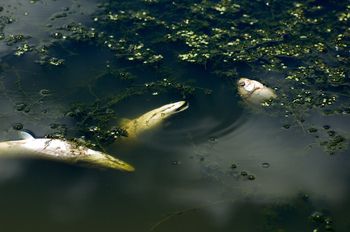
After a winter with variable temperatures and lots of snow, you may see dead fish or other aquatic animals in Michigan lakes and streams as water warms up and ice and snow cover melt. The Department of Natural Resources reminds everyone that, while such sights can be startling, it is normal for winter conditions to cause the death of some fish and other creatures such as turtles, frogs, toads and crayfish.
"Winterkill is the most common type of fish mortality event," said Aaron Switzer, DNR fish production program manager. "It can be particularly common in shallow lakes, ponds, streams and canals during seasonal changes. It's a natural phenomenon, and these events are localized. They typically do not affect the overall health of fish populations or fishing quality."
Shallow lakes with a large amount of aquatic vegetation and soft bottoms are more prone to winterkill, particularly when thick ice and deep snowpack reduce sunlight for the plants. Canals in urban areas also are quite susceptible, due to the large amounts of nutrient runoff and pollution from roads, lawns and septic systems that flow into these areas, especially after large storm events.
Fish also may be affected by rapid changes in water temperature due to unseasonably warm or rapidly warming temperatures, leading to stress and, sometimes, mortality. Fish can become easily stressed in winter due to low energy reserves because feeding is at a minimum in winter. They are then less able to handle low oxygen and temperature swings. That could be the case this year, with record or near-record cold temperatures and the large snowfalls Michigan experienced and the potential for rapid warming in the coming months.
Dissolved oxygen is required by fish and all other forms of aquatic life. When daylight is greatly reduced by ice and snow cover, aquatic plants stop producing oxygen, and many die. The bacteria that decompose organic materials on the bottom of the lake use the remaining oxygen in the water. With oxygen reduced, other aquatic animals die and start decomposing, and the rate that oxygen is used for decomposition is additionally increased — leading dissolved oxygen levels in the water to decrease even further, creating a cycle of increasing winterkill.
Fish and other aquatic life that die in late winter may not be noticed until well after the ice leaves lakes, as the animals may be temporarily preserved by the cold water.
"If you see dead fish as a result of winterkill, the fish may appear fuzzy. This is because of secondary infection by fungus, but the fungus was not the cause of death," said Switzer. "The fish actually suffocated from a lack of dissolved oxygen from decaying plants and dead aquatic animals under the ice."
Visit the DNR website for more information on fish kills in Michigan.
You can report fish kills at Michigan.gov/EyesInTheField; these reports are valuable to the DNR's management of aquatic resources in Michigan. If you suspect a fish kill is due to non-natural causes, call the nearest DNR office or Michigan's Pollution Emergency Alert System at 800-292-4706.