
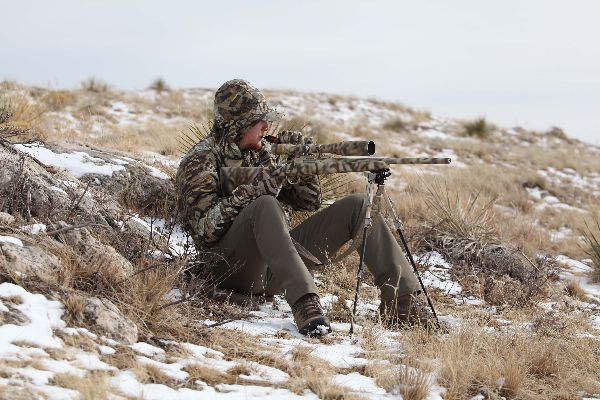
Coyotes are highly vocal and territorial, and consequently they are very responsive to calls. In addition, food is often hard to come by, which forces these otherwise nocturnal predators to move about during daylight hours in search of food. These factors are a big advantage to the hunter come late winter.
There are potential caveats, however, not the least of which are weather conditions. In some areas, coyotes will have been pressured for months by hunters, and the coyote's ability to avoid humans is uncanny. In Native American folklore coyotes are often referred to as the "Trickster" or "God's Dog" due to their cunning, and sometimes mischievous nature. It's a charming way of saying they're extremely intelligent, and if you leave anything to chance, you're not going to be pushing the rifle's safety off very often.
TUO Pro Trey Douglas knows coyotes and how to hunt them successfully. He primarily focuses on the Midwest and Western states, and he recently shared some of his hard-earned wisdom.
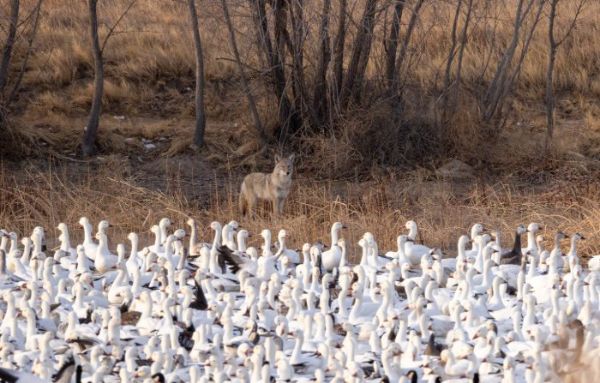
WEATHER
My favorite conditions are cold days…say teens to low 30s, and light wind, preferably either a crosswind or directly in my face for my stands. This way, they must either get to the downwind side or behind to catch human scent. If the wind is light enough, it can swirl and even change directions, so keeping an eye on the wind direction and speed is very important. Bad conditions would be blowing hard, and/or unbearable cold, as the coyotes will typically just lie down and wait-it-out.
SIGN
If you have snow, you can look for tracks on your way in. This gives you a good idea if there are coyotes in the area, but you have to be careful not to put too much confidence in those tracks. What I mean is, if you see tracks – whether they're fresh or not – doesn't always mean coyotes are there at that time. On the other hand, if you don't see tracks, it doesn't necessarily mean that there aren't coyotes around. Just keep this in mind.
SET
When sitting down before even starting the first vocalization, I try to visualize where I think the coyotes are going to approach from by taking the terrain, wind, and weather into consideration. My preferred ideal range for a coyote is anywhere from 250 yards and in. While I can shoot past 250 yards, I like being able to draw them close and avoid worrying about windage.
CALLING
I mainly use an e-caller, but always have handheld, open reed calls with me for backup if the caller dies – which happens too often (lol), or when I need to switch things up. When it comes to calling this time of year, I like to go with more howls than normal and even use more female howls than male as it can draw the males in looking to pair up. If the regular go-to sequence isn't working, I try different sounds that I may not typically use for a couple of different reasons. For example, other hunters may have called in the area recently, which can educate them quickly. In addition, a little switch up of sounds to one that I would usually think "would never call one in" could be the exact thing that a coyote is waiting for to fully commit. I avoid getting stuck in the same calling routine if it's not working on a given day.
NUMBERS
The number of coyotes you can expect to see this time of the year varies. However, if the weather is cold and the wind is mild, you can expect to see anywhere from 3 to 10 coyotes. Cold is a big factor, as coyotes that are not necessarily looking to pair up, but instead are out looking for food and your calling is presenting a free meal. But of course, there will very likely still be other coyotes running around looking to pair up and with the right sounds, you can coax them into range as well.
THE IRON
My favorite rifle for coyote hunting is a custom 22-250 with a unique paint job that looks like the TUO Verse pattern, and I always have a bipod mounted to the rifle. As far as ammo goes, I use a Nosler 55 grain Ballistic Tip, and my dad and I custom load our rounds for that and a couple of other guns, so we can control the consistency and know all the specs on all of them.
CLOTHING
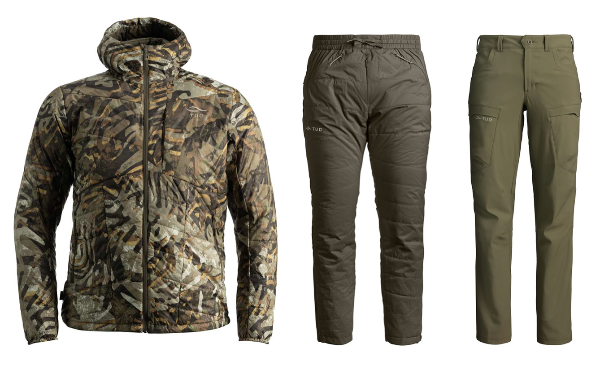
During cold hunts in January and February warmth and mobility are important. I try to go minimalistic to reduce bulk while remaining comfortable. For my bottoms I go with TUO's AMP Pants under the Clime Pants. On top, I'll wear the Kinetic Merino 350 Hoodie under the Clement Puffy Jacket. Depending on the severity of the cold, I will wear the Molten Heated Vest over the 350 hoodie and under the Clement Puffy Jacket. This combination offers excellent warmth while remaining comfortable with plenty of mobility. It's very versatile in every sense, including the Verse camouflage pattern that works in such a wide range of habitats.
CLEMENT Puffy Jacket FEATURES:
- 100% 20D nylon shell
- Paralite™ Lightweight Breathable Insulation (80g body, 60g sleeves)
- DWR treatment helps shed moisture and resist stains
- Highly wind-resistant to help cut down harsh gusts
- Internal zipper inside left lower pocket converts to a stuff sack for easy packing, carrying, and storage
- Can be worn alone or as a layering piece when temps drop
- Adjustable high neck hood for extra protection in colder temperatures
- Three zippered pockets (2 waist, 1 chest) for secure storage
- Articulated elbows for improved fit and mobility
- Adjustable waist to lock in heat and keep moisture out
- SIZES: S – 3XL
- COLORS: Verse Camo and Lichen
MSRP $229.99
- Shell – 100% Nylon Woven Ripstop, C0 DWR, UPF 50+
- Lining – 100% Nylon Ripstop, Polygiene StayFresh and Odor Crunch
- Insulation – Paralite 60 GSM
- 2 front invisible zipper hand pockets
- Invisible zipper for the CF fly
- Full-length side seam zippers
- Elastic waistband with internal drawcord that can be tied on the outside or inside of the waistband
- Rib knit bottom hem at lower back leg
- SIZES: S – 3XL
- COLORS: Deadfall and Storm
MSRP $219.99
- 93% polyester, 7% spandex material
- 278 gram fabric weight
- 4-way stretch fabric for increased mobility and comfort in any terrain
- Polygiene StayFresh™ helps reduce odor from bacteria and OdorCrunch™ captures and inhibits odors
- Super DWR treatment for water and stain resistance
- Articulated knees & inner thigh gusset for improved fit and mobility
- Side seam vent zips with mesh lining for temperature regulation
- Two waist pockets, two zippered cargo pockets, two zippered back pockets, one right-side knife pocket
- 34" inseam
- SIZES: 30 – 42
- COLORS: Verse Camo, Deadfall and Brome
MSRP $149.99