The U.S. Forest Service and Department of the Interior announced new protections for federal wildland firefighters during the 2026 fire year, including expanded N95 respirator access, required training, and standardized decontamination protocols. Deputy Chief Sarah Fisher emphasized these practical measures will reduce respiratory health risks from smoke and airborne particle exposure.
FORESTRY
Montana Fish, Wildlife & Parks is beginning the Lone Pine State Park Forest Thinning Project to improve forest health and restore ecological conditions. Foresters are flagging and marking trees this week, with field operations starting in fall to minimize impacts on summer visitors.
Morgan-Monroe State Forest is temporarily closed to public access following extensive storm damage. Additional updates will be provided as damage assessment and cleanup efforts continue.
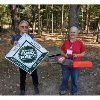
The Michigan Forest Association profiles Madelyn "Mad Dog" Kleitch, an Army veteran and new forest owner who manages 263 acres across three properties. Kleitch has enrolled her Midland County forest in the American Tree Farm System and is exploring the Forest & Water Fund administered by Michigan Forest Association for sustainable management practices including prescribed fire and tree planting.
The U.S. Forest Service announced distribution of over $52 million to 65 counties under the Bankhead-Jones Farm Tenant Act, supporting local emergency services, schools, and roads. Forest Service Chief Tom Schultz stated the funds represent 25 percent of revenue from federally administered grasslands management, with North Dakota receiving the largest allocation at $41.4 million.
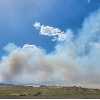
Nebraska Game and Parks has temporarily closed Fort Robinson State Park and Peterson Wildlife Management Area due to the South Fork Fire burning in the area. The wildfire, which started June 9 in the Nebraska National Forest's Pine Ridge Ranger District, is 0% contained. Park staff are evacuating guests and the facilities will remain closed to support firefighting operations and protect public safety.
Michigan's Upper Peninsula faces extreme fire danger while northern Lower Peninsula experiences very high fire danger levels. Paul Rogers, fire prevention specialist with the Michigan Department of Natural Resources, urges residents to avoid burning and exercise caution with outdoor activities due to low humidity, high temperatures, and gusty winds.
The Michigan Department of Natural Resources is urging residents to exercise extreme caution during outdoor activities due to elevated wildfire risk across northern Michigan. With high to very high fire danger ratings, limited rainfall expected, and low moisture levels in vegetation, the DNR has suspended burn permits in the northern Lower Peninsula and Upper Peninsula.
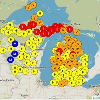
Northern Michigan faces high fire danger from the MesoWest Great Lakes Fire & Fuels map. Jeff Vasher, Michigan DNR resource protection manager for the Lower Peninsula, warns that nine out of 10 wildfires are caused by people. The DNR has suspended burning permits for yard debris in northern regions this weekend.
The Michigan Department of Natural Resources fully contained a wildfire near Tomahawk Creek Flooding in Presque Isle County that burned approximately 190 acres of state-managed land. DNR Lower Peninsula resource protection manager Jeff Vasher stated the cause remains under investigation, though a burned vehicle was ruled out. No evacuations were ordered and no structures were threatened.
The U.S. Forest Service is investing over $80 million from the Land and Water Conservation Fund to support 15 Forest Legacy projects in 2026, permanently conserving over 34,000 acres of privately owned working forests. Three projectsβCurley Creek Woodland and McNall Family Forest in Idaho, and Madrone Ridge in Oregonβare within high-risk wildfire zones.
The Michigan Department of Natural Resources contained a wildfire near Tomahawk Creek in Presque Isle County that burned approximately 190 acres of state-managed land. Cool temperatures and favorable humidity helped slow the spread. Fire supervisor Jennifer Hansen reported the fire is mostly contained with crews monitoring hot spots.
The Vermont Fish & Wildlife Department plans a prescribed burn at Sandbar Wildlife Management Area this spring to restore rare sandplain habitat. The burn, conducted by professionals from Vermont Department of Forests, Parks & Recreation, New Hampshire Division of Forests & Lands, and U.S. Forest Service, will cover 53 acres starting May 12 to support fire-dependent species.
The Michigan Department of Natural Resources has added two Fire Boss aircraft to its firefighting fleet, each capable of scooping 800 gallons of water in 15 seconds. Leased through early June and based at Gaylord Regional Airport, the planes will work alongside Michigan State Police helicopters equipped with Bambi buckets to combat wildfires intensified by debris from the 2025 ice storm.
Michigan's northern Lower Peninsula faces elevated fire danger due to dry conditions, wind, and downed trees from the March 2025 ice storm. Paul Rogers, fire prevention specialist for the Michigan Department of Natural Resources, warns that nine out of 10 wildfires are caused by human activity. Residents are urged to check Michigan.gov/BurnPermit before burning and follow fire safety guidelines.
The USDA Forest Service and state forestry agencies coordinate wildfire response across the Southeast as drought and wind-driven conditions accelerate fire growth. Since January, the Southern Area has tracked 20 active large fires and over 180,000 acres burned in Florida and Georgia, with the region at Preparedness Level 4.
Despite recent snowfalls, North Dakota outdoor enthusiasts should monitor spring wildfire risks due to increased human activity, dead vegetation, and high winds. Hunters and anglers are urged to check the National Weather Service daily rural fire danger index and local county burning restrictions.
Michigan DNR fuelwood permits are now available for $20 per household, allowing collection of up to five cords of dead and downed wood from state forest land. Permits can be purchased online at mdnr-elicense.com, in person at DNR customer service centers, or by mail application.
The Michigan Department of Natural Resources is offering approximately $500,000 in Urban and Community Forestry grants ranging from $10,000 to $75,000, with applications due May 18. Eligible applicants include local governments, tribal governments, educational institutions, and nonprofits for tree management, planting, and community engagement projects.
Michigan's Forest Legacy Program, a partnership between the U.S. Department of Agriculture's Forest Service and the Michigan Department of Natural Resources, offers funding to purchase or secure working forest conservation easements on environmentally important forest lands. Nominations are due May 8 for projects competing for fiscal year 2028 federal funding.