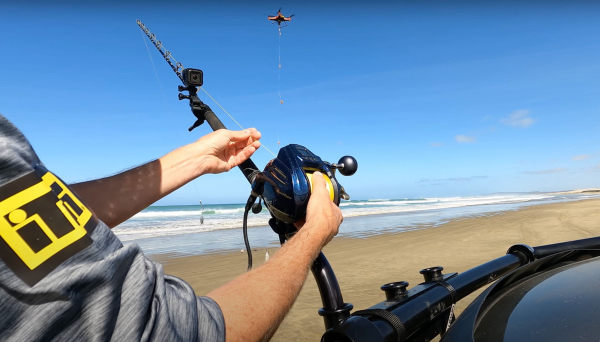
Drones launched from the beach greatly increase the reach of shorebound anglers, but laws in some states may ban their use. (SwellPro Drones)
Drones have become increasingly popular among shore-based anglers, particularly those chasing giant sharks from the beaches of the southeastern United States. These stable, easy-to-operate flying platforms are used to transport large chunks of bait hundreds of yards offshore, giving fishermen access to truly massive sharks that patrol deeper water beyond conventional casting range. In some places, the tactic has also put king mackerel, cobia, and even tuna within reach from the sand.
But as drone fishing spreads, it has triggered a growing debate over legality, ethics, and the interpretation of federal law—leaving anglers asking a simple question with a complicated answer: Is airborne bait deployment a legitimate technological advance, or a form of mechanized cheating?
Among hunters, there’s little debate. Using drones to locate or assist in the taking of game animals is nearly universally prohibited, banned by every state and by federal law. The idea of finding deer or bears with aerial assistance violates long-standing principles of wildlife management, and regulators have drawn a hard line.
For anglers, however, the regulatory landscape is far less clear. It resembles a maze of conflicting rules that shift from outright permission to strict prohibition depending on where an angler stands. In North Carolina, for example, the law is relatively straightforward: anglers are largely in the clear. State statutes explicitly exempt many fishing-related drone uses from harassment laws, allowing bait deployment and the spotting, locating, or filming of fish. North Carolina has chosen to treat drone fishing as innovation rather than intrusion.
Travel south or west, though, and the picture changes dramatically.
The debate reached a boiling point when the Texas Parks and Wildlife Department recently concluded that federal law already prohibits drone-based bait deployment and moved to ban the practice outright along Texas beaches. In Hawaii, concerns over wildlife disturbance and fragile coastal ecosystems have led to an almost total prohibition on drone use for fishing, even for the simple act of placing bait. Other major coastal states, including Florida and California, occupy a murkier middle ground, where local ordinances and shark-specific regulations vary widely. In those states, anglers must often check multiple jurisdictions before launching a drone.
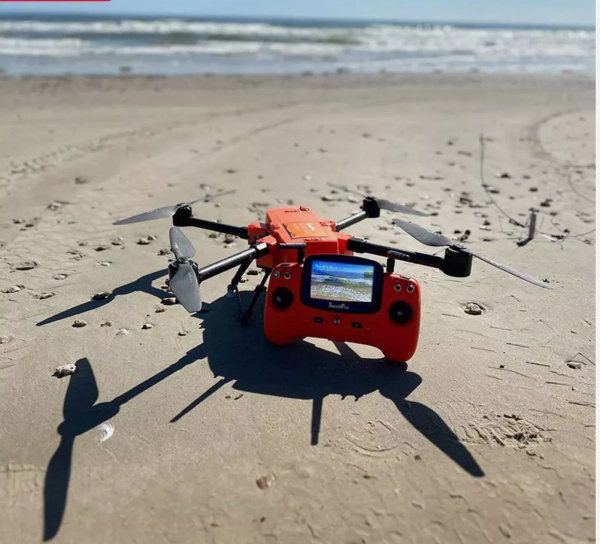
Drones can lift considerable weight and deposit it far offshore, as well as giving the user an aerial view of fish in clear water. (SwellPro Dones)
Why has this issue flared up now? It’s a familiar collision of capability and affordability. High-quality, water-resistant drones with enough payload capacity to carry heavy baits are now within reach of average anglers. Their sudden visibility—particularly among those targeting large pelagic species beyond casting distance—has drawn scrutiny from regulators, traditionalists, and conservation groups alike, forcing agencies to clarify their positions, often reactively.
The logic behind many of the bans rests on two long-standing pillars of wildlife management: conservation and the principle of “fair chase.”
Some environmental advocates oppose drone fishing outright, arguing that it makes it too easy to hook slow-growing, long-lived species such as large sharks. There is also concern that lost drones and hundreds of yards of braided line can become persistent marine debris—a lethal web capable of entangling fish, birds, and marine mammals long after the angler has left the beach.
The second objection is philosophical. Traditionalists argue that drones provide an unfair technological advantage that erodes the skill and physical commitment historically associated with shore fishing. Casting heavy sinkers hundreds of feet or paddling baits offshore by kayak demands skill, effort and risk that many see as integral to the sport. Handing that task off to airborne technology, critics say, amounts to pressing an “easy button” that disrupts the balance between angler and fish.
At the heart of the controversy lies federal law. Texas’s position—supported by interpretations cited from the U.S. Fish and Wildlife Service—is that state-level permission is irrelevant because the practice is already prohibited under the Federal Airborne Hunting Act of 1956. That law was originally written to stop hunters from shooting animals such as moose, bears, and wolves from airplanes and helicopters. Its language, however, broadly bans the use of an “aircraft” to “aid in the act of taking any fish or wildlife.”
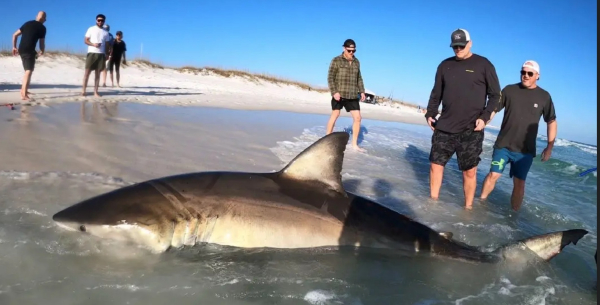
Large sharks, including even rare white sharks, now come within range for beach anglers using drones to deliver baits far offshore. (Big John Sharking Adventures)
Texas’s legal argument rests on three modern interpretations: first, that a drone is legally considered an aircraft; second, that the act’s definition of “fish or wildlife” is intentionally expansive, covering everything from mammals to crustaceans; and third, that deploying bait constitutes “aiding in the take,” triggering the federal prohibition.
That interpretation has not yet been tested definitively in federal court, but Texas has chosen to enforce it as settled law. If it ultimately prevails, the consequences could be sweeping. Permissive state statutes—like those in North Carolina—could be overridden, effectively grounding drone fishing nationwide. While the original intent of the law clearly targeted hunting, where airborne advantage can be devastating, its application to bait deployment remains hotly contested.
The larger question raised by the “Sky Hook” debate isn’t just about technology—it’s about how sport fishing is defined. For many anglers, a ban represents a serious blow to accessibility and innovation. For traditionalists and conservationists, the Federal Airborne Hunting Act offers a decades-old safety net against what they see as an erosion of sporting ethics.
Whether regulators move toward a nuanced federal exemption for bait deployment or double down on a hard-line interpretation may well define the future of shore-based angling in America.
— Frank Sargeant
Frankmako1@gmail.com