
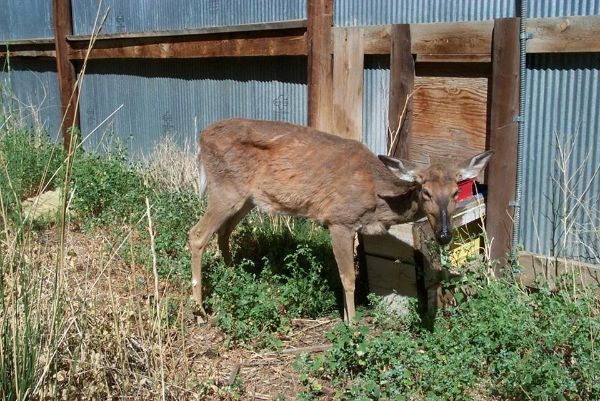
The New York Department of Environmental Conservation has announced that chronic wasting disease (CWD) was recently found in a wild deer harvested in western New York. CWD had previously been detected in captive and wild deer in New York's Oneida County in 2005.
Because of this recent finding, the Vermont Fish and Wildlife Department is reminding hunters traveling out-of-state to hunt deer, moose or elk that they need to follow a regulation designed to protect Vermont's deer and moose from CWD. CWD has not been found in Vermont to date, and it is important hunters take steps to prevent its spread.
CWD is a fatal disease that affects the brain and nervous system of deer, elk and moose. Abnormal prion proteins produce lesions in the brain that cause disorientation and emaciation in conjunction with other abnormal behaviors.
The potential exists for CWD prion proteins to be introduced to the environment through the body parts of CWD-positive deer, elk or moose and then persist in the environment for extended periods of time.
Vermont rules on importing and possession of deer, elk or moose from areas with chronic wasting disease (CWD) and captive hunt areas or farms:
It is illegal to import or possess deer, elk or moose, or parts of deer, elk or moose, from states and Canadian provinces that have had chronic wasting disease, or from any captive hunt or farm facilities regardless of location with the following exceptions:
- Meat that is cut up, packaged and labeled with hunting license information and not mixed with other deer or elk during processing;
- Meat that is boneless;
- Hides or capes with no part of the head attached;
- Clean skull-cap with antlers attached;
- Antlers with no other meat or tissue attached;
- Finished taxidermy heads;
- Upper canine teeth with no tissue attached.
Vermont's CWD importation regulation currently applies to hunters bringing in deer, elk or moose carcasses from the following states and provinces that have detected CWD in either captive or wild animals:
Alabama, Arkansas, California, Colorado, Delaware, Florida, Georgia, Idaho, Illinois, Indiana, Iowa, Kansas, Kentucky, Louisiana, Maryland, Michigan, Minnesota, Mississippi, Missouri, Montana, Nebraska, New Mexico, New York, North Carolina, North Dakota, Ohio, Oklahoma, Pennsylvania, South Dakota, Tennessee, Texas, Utah, Virginia, Washington, West Virginia, Wisconsin, Wyoming, Alberta, British Columbia, Quebec, Manitoba, Saskatchewan.
"CWD is a very persistent disease that can spread in several ways," said Vermont Director of Wildlife John Austin. "Vermont's CWD regulations are designed to help prevent CWD from infecting Vermont's deer and moose and the irreversible impacts it could have if it gets here."
"Hunters bringing deer, elk or moose from any of the CWD-listed states or provinces into Vermont must have them processed according to Vermont's regulations before doing so. This includes successful hunters returning to Vermont from nearby areas, including New York and Quebec."
A fine of up to $1,000 and loss of hunting and fishing licenses for one year are applicable for each animal imported illegally.
Vermont Fish and Wildlife is also reminding hunters that using any type of natural deer urine-based or deer body fluid attractant scents is prohibited in the state because of the CWD threat.