
KALISPELL – A walk along the Harry Horn Trail at Flathead Lake State Park Wayfarers Unit looks a little different these days – and that’s the point.
Recent improvements to the trail are making it easier for people with disabilities to enjoy one of Wayfarer’s scenic pathways. The work included clearing brush, widening and leveling portions of the trail, and removing obstacles such as rocks and roots that can make navigating a trail difficult for people using wheelchairs or other mobility devices. These improvements are just the beginning of a larger initiative, intended to make Montana’s state parks more accessible, functional and welcoming to everyone.
“Everyone in Montana deserves the opportunity to explore our state parks,” said Amy Grout. FWP’s regional recreation manager. “Accessible trails can help all sorts of people get outdoors.”
But what makes the project especially exciting isn’t just the work happening on the ground. It’s how it all came together. FWP, in collaboration with the Montana State Parks Foundation, Montana Conservation Corps, Summit Independent Living and other partners, used an approach centered around a simple principle: “nothing about us without us.”
Rather than relying solely on existing accessibility standards, the project brought people with disabilities into the planning process from the beginning. In September 2025, the Montana State Parks Foundation partnered with the University of Montana Rural Institute for Inclusive Communities to conduct a Walk Move Audit at Wayfarers. About 20 people participated, all of whom had either the experience of living with a disability or having a loved one with a disability.
Their input revealed barriers that aren’t always obvious to those designing trails without lived experience. Participants were clear that they didn’t want paved or concrete surfaces; they preferred natural, hard-packed trails that still allow safe, comfortable maneuvering. So while standards can check the box of accessibility, they don’t always reflect the experience users actually value. The Walk Move Audit highlighted opportunities to go beyond minimum requirements, shaping an approach focused not on one type of visitor, but on making outdoor spaces work better for as many people as possible.
That philosophy is already showing itself in responses from visitors. After the project was completed last week, people began using the improved trail and sharing positive feedback. One of those users was Holly Wilson, a local trail enthusiast who also experiences vision challenges. “This project is phenomenal,” Wilson said. “With the improvements on the trail, it’s easier to see and there’s no issues. I love to walk, and every time I’m at Wayfarers it’s a fabulous experience because I leave with an attitude of gratitude. I’m thankful for nature and for the staff who truly care about what’s happening in the park and who are looking out for all of us.”
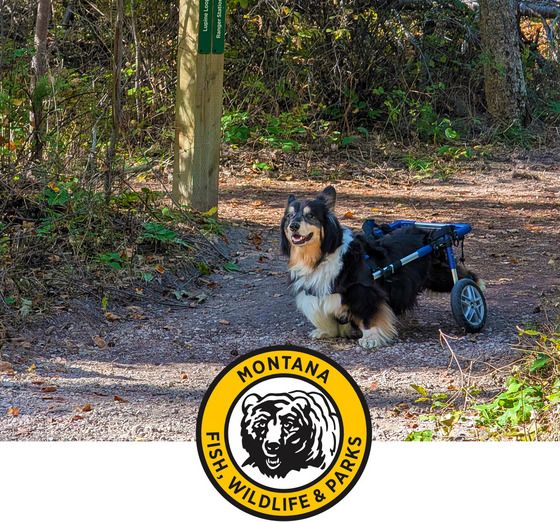
And then there’s Bosco. Bosco is a corgi with a wheelchair, and his mobility challenges can make rough, uneven trails difficult to navigate. The improved Harry Horn Trail offers an improved opportunity for Bosco and his owner to enjoy the outdoors together. In other words, improving accessibility can have a surprisingly wide reach.
“For Bosco, having a trail that is smoother and easier for him to navigate means he gets to experience nature and be included in these activities, too,” said Diane Whited, Bosco’s owner. “We love being outside together, and having places where he can safely enjoy the trail with me means so much,”
For Grout and her staff, the project demonstrates the value of bringing different partners and perspectives together to improve Montana’s outdoor spaces; and Harry Horn is only the beginning.
“The hope is that this Wayfarer’s project won’t be a one-time success story, but a model for future projects across the state,” said Grout. “By listening to the people who use our parks, considering accessibility from the beginning, and working together to remove barriers, we can create outdoor experiences that welcome more people – and more pets.”