
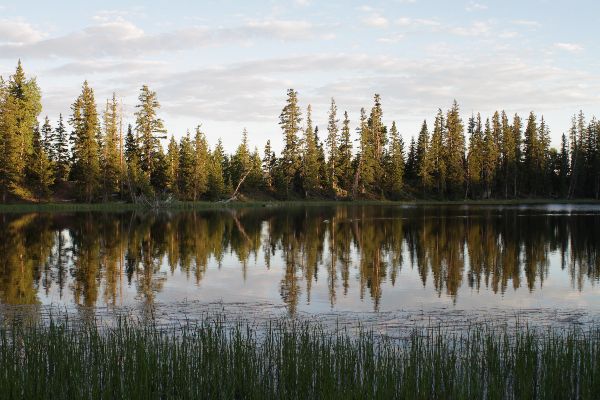
While there are a lot of great reservoirs and ponds close to home where you can fish in Utah, the Beehive State also offers some excellent high-elevation fishing options. An added bonus for heading into the mountains to fish is that you can also escape the heat! If you are planning any stream or high-elevation lake fishing to wrap up summer and kick off fall, here are a few things to know.
When to go
Utah's high-elevation streams and lakes typically provide great fishing from July until late September or early October. Before you head to these areas in the late fall, be sure to check the weather forecast so you don't get caught in any early snowstorms. You should also check for updates on any ongoing wildfires in areas you are planning to fish.
"Even though it's high elevation, anglers are still encouraged to fish early in the morning or in the evenings when it's a little cooler, in order to help the fish if you are doing catch-and-release fishing," Utah Division of Wildlife Resources Sportfish Coordinator Trina Hedrick said.
Where to go
When it comes to high-elevation fishing opportunities, Utah offers everything from really small streams to larger rivers and lakes — and the experience will vary based on the size of the water. For high-elevation fishing, here are a few good options:
- Uinta Mountains — located in the northeastern corner of Utah, with 14 drainage basins that offer lots of stream fishing opportunities
- Boulder Mountain, located in the southern part of the state
- The mountains in the Manti-La Sal National Forest in southeastern Utah
- Little and Big Cottonwood canyons, located in Salt Lake County
- American Fork Canyon, located in Utah County
Both the Uinta Mountains and Boulder Mountain are rated as Blue Ribbon Fisheries, which provide Utah's most exceptional, high-quality fishing experiences.
Species to target
Because of the water temperature at these elevations, most of the streams and lakes in these areas primarily have a variety of trout species, including Arctic grayling, cutthroat, brook, brown, rainbow and tiger trout.
"There are thousands of miles and hundreds of lakes with brook and cutthroat trout in these high-elevation areas," Hedrick said. "You can also find rainbow and brown trout in the 'lower' high country, due to their habitat needs. A few intrepid anglers may also run into a golden trout or two if they are motivated to get to some remote waterbodies."
Fishing tips
The majority of the waterbodies in the Uintas and on Boulder Mountain are smaller streams. Anglers fishing in small streams should expect to fish around a lot of brush, and as a result, shorter fishing rods are recommended for this type of fishing.
"Fishing in small streams can be difficult, but anglers can be rewarded with high catch rates of fish, though they may be smaller fish in some areas, especially in the Uintas," Hedrick said.
For trout species, here are a few good lure and bait options:
- Inline spinners
- Small spoons
- Marabou jigs
- Worms
If you prefer to fly fish, here are a few recommendations for high-elevation trout fishing:
- Elk hair caddis
- Leech imitations
- Mayfly imitations (all life stages and various colors and sizes)
- Lake nymphs
- Woolly buggers in various colors
- Terrestrials like flying ants, black ants and beetles
- Double renegade
"People typically associate streams with fly fishing, but you can have success using lures and baits, as well," Hedrick said. "Stream fishing is fun because it provides a unique game of strategy. To be successful as a stream angler, you have to be acutely aware of the habitat, what fish are eating, and how fish are behaving. When fly fishing, you also have to focus on how you present your flies to the fish so you make it as natural as possible. This makes stream fishing both an exciting mental and physical challenge."
Fishing resources
Additional information about specific high-elevation streams is available on the Fish Utah map on the DWR website. Anglers are encouraged to rate their fishing experience on Fish Utah, as well.
The Utah Cutthroat Slam website also provides additional information about stream fishing in the state.
"There are thousands of miles of publicly accessible streams in Utah, and you have the opportunity to catch not only a lot of fish, but also a diverse array of species in our streams," Hedrick said. "Utah is truly one of the best stream fishing states in the country."
Safety information and responsible recreation tips
Anglers should always be very cautious when fishing a river or stream.
"Water tends to be moving faster than it looks," Hedrick said. "Always use caution before attempting to wade in a stream when fishing. It's a good idea to take another person along when you are fishing or enjoying other recreational activities around water. If you are unable to bring a friend with you, always tell someone where you are going fishing and when you plan to return home."
Because the water in high-elevation areas can be quite cold, it's a good idea to be prepared with the proper clothing and equipment to stay warm, including various clothing layers. Make sure you have enough food and water, especially if you are hiking into the area where you are fishing.
"It's also a good idea to remain on the trail, or close to it, so you don't get disoriented or lost in these remote locations," Hedrick said. "Having an emergency beacon or satellite device is also helpful in the event you get separated from your group or the trail."
Be aware of the land ownership of the area where you are fishing. If the area is on private property, be sure to get documented permission before entering the area. You should also be respectful of the area you are fishing, and leave no trace when recreating. Always pack out everything that you packed into an area — this keeps the area pristine for future anglers and recreationalists to enjoy.