
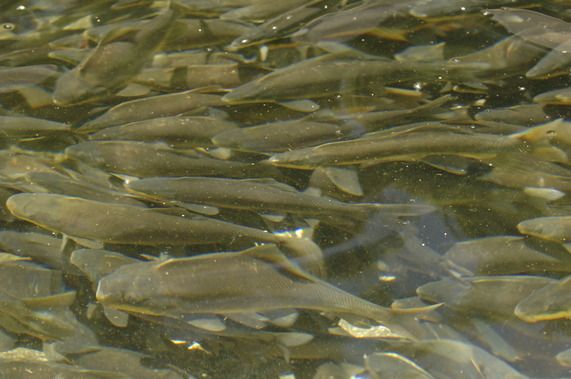
The U.S. Fish and Wildlife Service's (USFWS) final rule to downlist the razorback sucker from endangered to threatened under the Endangered Species Act (ESA) is a significant conservation achievement for fish and wildlife conservation. The action recognizes more than three decades of cooperative conservation efforts by multiple states (Arizona, California, Colorado, Nevada, New Mexico, and Utah), federal agencies, tribes and other partners that have improved the status of one of the Colorado River basin's most iconic native fishes.
The razorback sucker is one of the largest sucker species in North America and is native to warm-water portions of the Colorado River basin in the western United States. Recognizable by the bony keel behind its head, razorback suckers can grow to more than three feet long and weigh up to ten pounds. The species historically occupied large portions of the Colorado River and its tributaries, including waters in Arizona, California, Colorado, Nevada, New Mexico, and Utah. In Arizona, razorback suckers can be found in the Verde River and the Colorado River, as well as several reservoirs (Lake Mead, Lake Mohave, Lake Havasu, Lake Powell, and associated backwaters).
Listed as endangered under the ESA in 1991, razorback sucker populations declined due to a combination of factors including habitat alteration, altered river flows, reduced nursery habitat, predation and competition.
The Arizona Game and Fish Department has been a long-standing partner in razorback sucker conservation through efforts focused on propagation, stocking, monitoring, research, and management of threats facing native fish in the Colorado River basin. The Department continues to work with partners to conserve razorback sucker populations and maintain the ecological function of rivers that support this species and other native aquatic wildlife.
"Downlisting the razorback sucker from endangered to threatened is a testament to the dedication and commitment of the many conservation partners who have worked together for more than 30 years to recover this remarkable native fish," said Julie Carter, the aquatic wildlife branch chief for AZGFD. "The Department remains committed to working with its partners to conserve and recover razorback sucker populations and ensure the species continues on its path to long-term recovery."
While significant progress has been made, razorback suckers continue to face threats including altered river flows, changes in water quality and quantity, persistent drought conditions, and impacts from nonnative species. Continued collaboration among conservation partners will remain essential to maintaining and building upon the gains achieved over the past several decades.
The downlisting of razorback sucker represents a major achievement for native fish conservation and highlights the importance of long-term partnerships, science-based management, and sustained commitment to recovering Arizona's aquatic resources.