
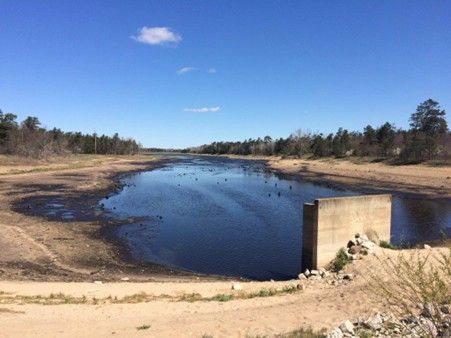
A grant project by Michigan Trout Unlimited will inform the removal process
The Michigan Department of Natural Resources is pursuing removal of Big Creek Dam (Crawford County), a 62-year-old dam with significant structural issues. To that end, the DNR recently awarded a $75,000 grant to Michigan Trout Unlimited for a study of engineering, design and construction costs that will inform the removal process for the dam.
Big Creek Dam, which impounds Middle Branch Big Creek, is managed by the DNR and is surrounded by DNR-managed lands. The dam was constructed in 1964, with the goal of providing fishing opportunities and benefits to the trout fishery downstream — the impoundment is located on a tributary of the North Branch Au Sable River, which is known for its high-profile trout fishing. The dam, however, did not meet these goals; it negatively affected trout habitat, was not shown to help maintain coldwater conditions downstream and did not provide unique fishing opportunities not found in natural lakes in the area.
The dam was drawn down in 2025 after inspections found significant damage to the concrete riser structure and headwall. The timing of the drawdown was fortunate, as this spring's high water levels and flooding would have posed a serious risk of dam failure for the compromised structure. Such a failure would have destructive effects on the downstream ecology of Middle Branch Big Creek and the North Branch Au Sable River.
Given the current condition of the structure, repairing Big Creek Dam is not feasible. If the dam were to remain in place, it would have to be completely rebuilt. The estimated cost of replacement (based on national data from the Association of State Dam Safety Officials) is $3.47 million.
DNR engineers estimate removal of the entire dam infrastructure at $900,000, based on costs to remove similar-sized structures. The cost may be much higher if upstream channel restoration is pursued.
Given that Big Creek Dam does not fulfill its intended purpose, the costs of replacement and maintenance outweigh the value of retaining it. Natural resource managers must evaluate several important factors when considering dam removal, including public safety, benefits to the resource and recreational uses, as well as wise stewardship of limited funding.
The DNR is currently responsible for over 200 dams, many of which are no longer critical to the department's mission and, as they age, require extensive maintenance and repair. Staff engineers estimate that nearly $74 million will be required over the next five years to address DNR-managed dams in need of maintenance, repair or removal. To responsibly manage these state-owned dams, the DNR is working to make the best use of all available internal and external funds for dam management.
Learn more about DNR dam management at Michigan.gov/DNRDams.