
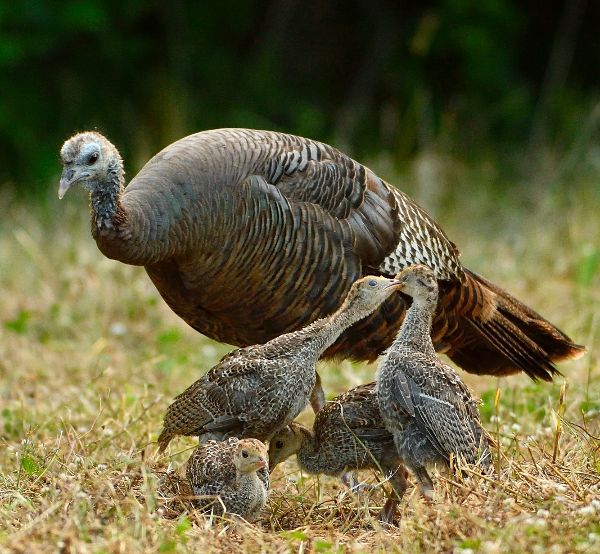
Researchers from various universities and organizations will study, once and for all, the effects of predators on wild turkey abundance.
You've hunted the same farm for 30 years. In the beginning, turkeys inhabited every available roost limb along that river bottom. You couldn't sound a barred owl's song without setting off an echo chamber of gobbling symphonies. Today, miles of winding river separate roosted gobblers.
Sadly, one of the purest sounds of America's countryside is in decline. Fewer and fewer people get to hear this sweet music, and not because they don't want to. Rather, the presence of the bird we love — the wild turkey — is fading. But why?
Are Predators to Blame for the Alarming Rates of Wild Turkey Decline?
Without question, a decline in turkey populations has spurred a response from biologists and conservation authorities. Pick any recent contemporary study in the eastern U.S. — they all show relatively low productivity. Nest success, brood survival, and hen survival are all low. Along with other factors, this indirectly (but unofficially) points to a rise in turkey predators of all shapes and sizes.
Other factors that may lead to a decline in turkey numbers include disease and a loss or decline in wild turkey habitat. There have been some disease implications detected in some areas of the country, but nothing that points to disease as a cause for the widespread declines that have been documented. Habitat loss, however, has been widespread. As the human population and associated infrastructure has increased, we have lost a tremendous amount of rural area that once supported turkeys. Associated, property sizes have decreased, and many landowners have not maintained open lands, but have allowed them to grow rank and woody, which favors many turkey predator species.
"Productivity has remained relatively low for the past 15 years," said Craig Harper with the University of Tennessee. "After peaking in several states, apparent declines in the turkey population are occurring, as we've seen harvest rates and poult-per-hen ratios decrease in many areas. Breeding Bird Survey results also have indicated a population decline in many areas."
Existing data suggest predator numbers are notably greater than 30–40 years ago. The eastern U.S. has more coyotes than ever before. They've moved in and aren't going anywhere but to a good turkey hunting property near you. Bobcats, and other toothy critters, are doing the same.
"In many areas, people are reporting more adult predators and nest predators than ever before," Harper said. "Pretty much anyone who is managing a property for wild turkeys has cameras on the property, and they are detecting increasing numbers of predators."
A Study Designed to Determine Predator Roles in Declining Wild Turkey Production
As a response to shocking decreases in wild turkey populations throughout various portions of the eastern US, TFT is leading the charge by supporting a four-year predator-prey study to assess the impact of predators on wild turkey numbers.
Leading researchers of the project include Craig Harper and David Buehler at the University of Tennessee, Marcus Lashley at the University of Florida, Will Gulsby at Auburn University, Mark Turner and Colter Chitwood at Oklahoma State University, and Dwayne Elmore at Tall Timbers.
"This predator-prey study is needed because there is a lack of credible information to suggest predator management might be needed to reverse the decline in wild turkey populations," said TFT CEO Jason Lupardus. "I feel that, with everyone coming together and trying to figure out what the issues are, we're hoping to come up with some solid solutions for the future."
"We have 11 sites in 9 states, and each site is approximately 1,500 acres," Harper said. "We are using arrays of remote cameras and automated recording units to monitor relative abundance of wild turkeys and predators — including nest predators and those that prey on adult birds."
The nine participating states include Alabama, Arkansas, Florida, Kentucky, Mississippi, Oklahoma, Pennsylvania, South Carolina, and Tennessee. There are two study sites in Tennessee and Florida and one study site in the other states.
"We're going to develop a predator index across these properties to determine the relationship between the relative abundance of certain predators and wild turkeys," Harper continued. "The team also will establish artificial nests across study sites to determine relationships between predator relative abundance and nest depredation."
According to Lupardus, ARUs will pick-up presence of the birds remotely. Remote cameras will further validate not only turkey numbers but also predator numbers.
"I think, when we start comparing these two, it might be a remarkable way to understand population dynamics," Lupardus said. "It's something that we as managers — from public and private lands — have an issue with, which is to determine even baseline population indices. All we can do is track harvest year to year, but this study should help us understand relationships between predator and turkey relative abundance."
The coalition of researchers will maintain the study with the support of TFT, but the respective landowners and managers of each property will maintain control and execution of any and all land, habitat, and wildlife management practices, representing a real-world approach that will provide useful information to anyone trying to manage their property for wild turkeys.
Pre-Study Expectations for This Wild Turkey Research
TFT and this body of researchers obviously can't speak to results until the data are analyzed. However, we are confident that the study should inform us when predator management may be necessary to reverse the decline in wild turkey numbers, and it will equip landowners and land managers with the knowledge needed to recognize predator-specific impacts on these birds, when best to trap for increased survival, and much more.
Some say all you need is habitat improvement, and not predator management, to boost turkey numbers. Harper, who is a staunch advocate of applied habitat management, says you might need both.
"I believe maintaining and improving wild turkey habitat is the most critical issue facing declining wild turkey numbers," Harper said. "However, in many areas, some level of predator management may be needed to help reverse the decline in wild turkey numbers. It is going to be very interesting to see how predator relative abundance affects turkey abundance."
"If we determine the relative effects of predator densities on wild turkey abundance, then people will have better knowledge of whether or not they should trap, how much trapping should be done, and the best time to target trapping," Harper continued.
Harper is excited about this research effort because he wants to see if we can move the needle with regard to wild turkey abundance. He emphasizes the need to study the composition of the predator community over a large geographic area.
"The hypothesis is that predators are having a negative impact on turkey production," Lupardus said. "We're hoping to demonstrate that, by monitoring birds over a number of years, we will be able to draw conclusions for wild turkey production improvement."
For now, this research effort is designed to be implemented over 4 years. However, depending on project outcomes, it might be extended. If results are promising, there is discussion of how it may be extended further.
"We're doing more at a scale that's never been done before," Lupardus said. "We're talking about a project that spans across the eastern US. It's a huge endeavor that should help guide wild turkey management into the future."
Those who love wild turkeys, enjoy hunting them, and hope to see these birds in abundance for many years to come should support this research initiative. Furthermore, support a conservation organization that tackles the biggest issues that wild turkeys face, even when bureaucracy and politics make it difficult to do so.
Support TFT
Wild turkey populations are on the decline throughout the nation. Established in 2021, TFT is new to the landscape, but it's driven by highly trained professionals with decades of conservation experience. To support TFT, and the complete body of wild turkey research and conservation it's leading, become a member today. An Adult Annual Membership is $50, multi-year Team Turkey Membership is $250, and Life Membership is $2,500. Every dollar counts in the fight for wild turkey preservation.