
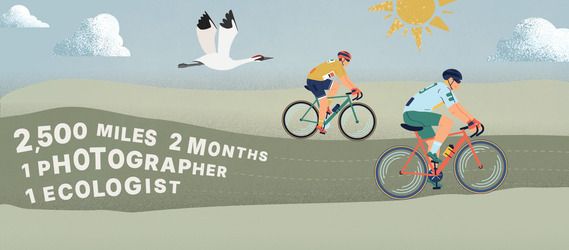
Imagine pedaling by bike, 2,500 miles through the heart of the Great Plains – following an ancient migration of one of the rarest birds in the world, powered by grit, determination, and a love for a species we almost lost.
Right now, a photographer and an ecologist are doing just that.
Nature photographer and Platte Basin Timelapse co-founder Mike Forsberg and the International Crane Foundation's Andy Caven began a 50-day bike trip to follow the whooping crane's migration path with a stopover planned at Oklahoma's Salt Plains State Park. The goal of their trip is to uplift the stories, communities, habitats, and wildlife that define this narrow yet critical migration corridor.
Whooping cranes are the rarest crane species in the world, standing five feet tall and covered in white feathers. Once abundant, they were nearly driven to extinction, with a staggering low of 15 wild birds by 1938. This population has since grown to more than 500 individuals. These cranes embark on a 2,500-mile journey twice a year, from northern Canada to the Texas Gulf Coast, using an ancient pathway known as the Central Flyway. Oklahoma sits in this flyway, and we believe this could be an exciting story to share with your audiences.
Forsberg and Caven began their 2,500-mile, 50-day bike trip May 11 on the Texas Gulf Coast. They are scheduled to enter Oklahoma on Saturday, May 23, en route to Saskatchewan. More information about the whooping crane and the cyclists' journey will be available at the Salt Plains State Park Visitor Center on May 27.
For more information, contact Pedaling the Whooper Highway project manager, Mariah Lundgren (mlundgren4@unl.edu), or visit Pedaling the Whooper Highway | Whooping Crane Chronicles.