
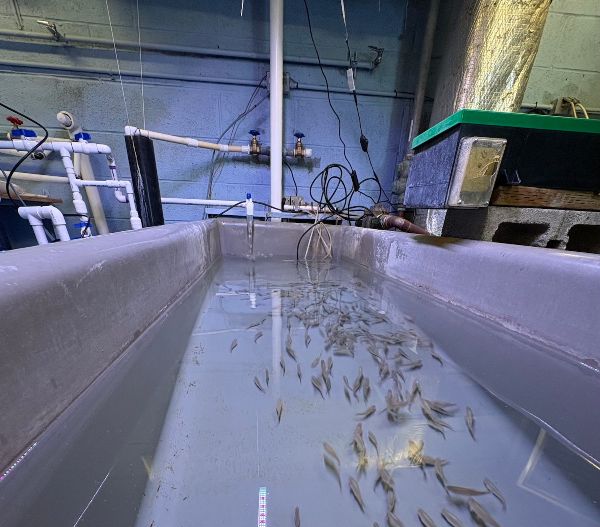
SALT LAKE CITY — Friday, May 15 is Endangered Species Day, making it a great opportunity to learn about and celebrate the recent recovery efforts of the endangered native woundfin.
The woundfin is a native minnow that is only found in a short section of the Virgin River. Woundfin are small — about 4 inches long — with large fins and a scaleless, streamlined body. These features help them survive in the swift and silty Virgin River. Due to non-native fish, drought conditions, altered streamflows, elevated water temperature, decreased turbidity, and a reduction in spawning and rearing habitat, woundfin have been listed as federally endangered under the Endangered Species Act since 1970.
As part of the efforts to help woundfin populations recover, the Virgin River Program was started in 2002 as a collaboration among local, state, federal and private partners. Along with recovering woundfin and other fish and wildlife species and their habitats, the program also works to balance those conservation efforts with enhancing water development — in accordance with state, tribal and federal laws — to meet the needs of users in the Virgin River Basin.
"From 1987 to 1989, woundfin were collected from the Virgin River near St. George and brought to the U.S. Fish and Wildlife Service's Southwestern Native Aquatic Resources and Recovery Center in New Mexico," DWR Southern Region Native Aquatics Biologist Melinda Bennion said. "Additional woundfin were collected between 2002 and 2004 to increase the captive population. Starting in 2003, reproduction from these captive woundfin produced fish that were stocked into the Virgin River as part of ongoing efforts to increase their populations."
Unfortunately, a significant loss of woundfin occurred at the hatchery during the winter of 2024-2025. When the overwinter ponds were harvested in April 2025, only 200 woundfin remained. Fortunately, these woundfin successfully reproduced, bringing numbers back up to approximately 800 fish at the facility. The DWR quickly partnered with the Utah Department of Transportation Division of Aeronautics to transport roughly 300 fish on a plane from the New Mexico hatchery to the DWR Aquatic Animal Health and Research Center in Logan, Utah.
As of May, this additional population of woundfin in the Aquatic Animal Health and Research Center have spawned, producing roughly 1,000 larval fish, with 3,000 eggs still developing.
"The fish are doing really well in our facility, and we are very excited to see their populations grow," DWR Aquatic Animal Health and Research Center Director Wade Cavender said. "At various times, we have been fighting against the extinction of this fish and this additional source population will provide added security for the future of this native species. We look forward to their continued recovery through ongoing efforts. Until woundfin populations reach a sustainable level, the continued production and stocking of woundfin will be necessary to ensure the recovery of these native fish, so continued collaboration and partnerships are imperative for recovering this species."
Endangered species in Utah
There are currently 44 animal and plant species in Utah on the federal endangered species list. Fortunately, several of these species have made remarkable progress in recent years.
"Since 2001, our agency and other partners have helped prevent 20 wildlife species from being listed as endangered or threatened through conservation efforts guided by the Utah Wildlife Action Plan," Utah Division of Wildlife Resources Recovery Programs Director Kevin Bunnell said. "The Utah Wildlife Action Plan identifies species and habitats that are in need of conservation attention, and helps prioritize funding decisions. That plan was approved earlier this year to help guide the next 10 years of conservation efforts for Utah species."
An endangered species is any species that is at serious risk of extinction in a specific area or throughout all of its natural habitat. A threatened species is any species that is likely to become an endangered species in the foreseeable future throughout much or all of its habitat. A species is classified as a species of greatest conservation need in the Utah Wildlife Action Plan if it is a threatened or endangered species, or a species that needs some level of conservation attention.
The U.S. Fish and Wildlife Service (a federal agency) has jurisdiction over species listed as threatened and endangered under the Endangered Species Act. The DWR (a state agency) works collaboratively with the U.S. Fish and Wildlife Service on the conservation of federally listed species in Utah. The DWR has jurisdiction over all other wildlife in Utah, and works to maintain healthy, sustainable populations and to keep them from becoming listed under the Endangered Species Act.
"We are extremely grateful to our many partners who coordinate with us on recovery efforts for these unique, native species," Bunnell said. "Helping keep these species on the landscape ensures they can be enjoyed by future generations and also improves the overall habitat and ecosystem, which benefits other species as well."
For more information about the ongoing efforts by the Virgin River Program to recover woundfin, listen to this DWR Wild podcast episode.