
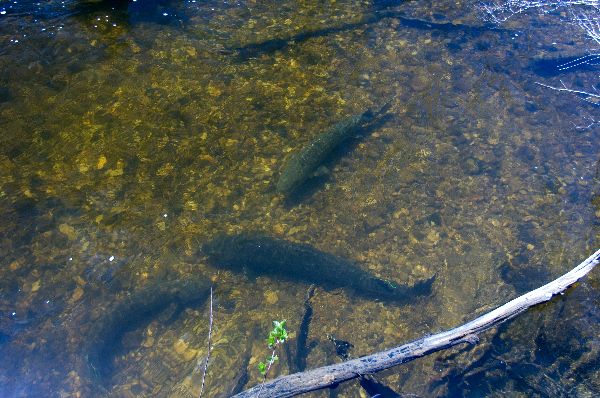
Anglers fishing Michigan's rivers this spring may unexpectedly find themselves with a lake sturgeon on the line. While encountering one of these iconic fish can be memorable and exciting, the Michigan Department of Natural Resources reminds anglers that special regulations exist for lake sturgeon, and fishing for lake sturgeon is prohibited except in a few locations in the state.
Can anglers fish for lake sturgeon?
In the Lower Peninsula, lake sturgeon may be encountered in waters such as Manistee Lake, the Manistee River, Muskegon Lake, the Muskegon River, the Grand River, the Kalamazoo River and Saginaw Bay and its tributaries. However, it is unlawful to fish for lake sturgeon in these locations, and any lake sturgeon incidentally caught while targeting other species must be immediately released.
If you unintentionally catch a lake sturgeon, follow these steps to ensure a safe release for the fish:
- Do not hold the sturgeon in a vertical position by its head, gill covers or tail.
- Do not touch the fish's eyes or gills.
- Handle the fish as little as possible and only with wet hands.
- Keep the fish in the water, if possible.
- Release the fish as quickly as possible.
Waters with sturgeon possession seasons include Lake St. Clair and the St. Clair River, Otsego Lake, the Menominee River and Black Lake. Waters with catch-and-immediate-release only sturgeon fishing seasons include the Detroit River, the St. Marys River, Portage-Torch Lakes and the Ontonagon River.
In all other waters in the state of Michigan, it is unlawful to fish for lake sturgeon (see Page 15 of the Michigan Fishing Regulations for detailed information related to lake sturgeon).
Anglers can report incidental (unintentional) capture of lake sturgeon and report illegal harvesting or targeting of lake sturgeon at Michigan.gov/EyesInTheField or by calling the DNR's Report All Poaching hotline, 800-292-7800.
What are lake sturgeon, and what makes them special?
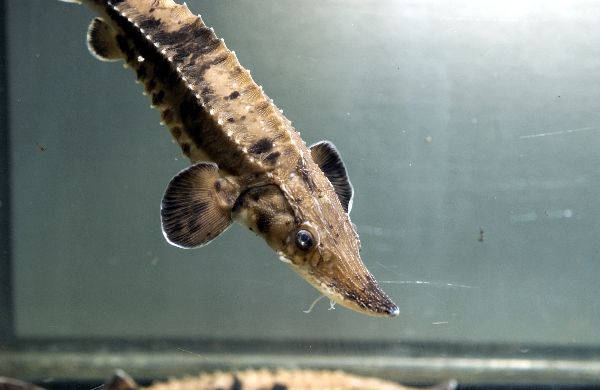
Lake sturgeon (Acipenser fulvescens) are unique in appearance and characteristics. They have five rows of bony plates, called scutes, on their backs and sides, as well as whiskerlike barbels near their mouths.
Often referred to as "living fossils" or "dinosaur fish," lake sturgeon first appeared in the fossil record in the Mesozoic Era, 100 million to 150 million years ago. These fish are long-lived, with some documented at more than 100 years old.
Lake sturgeon are freshwater fish native to Michigan and found in North America throughout the Great Lakes, Mississippi and Hudson River basins, and are the only sturgeon species found in the Great Lakes. In addition to having high ecological significance, the species is an important cultural resource in the region. Due to overfishing and habitat loss and degradation, lake sturgeon abundance remains low throughout most of its historical range.
What efforts have been made to help lake sturgeon?
The State of Michigan listed lake sturgeon as a threatened species in 1994, more than 30 years ago. Since then, the DNR has partnered with tribal and federal agencies, as well as the public, to rehabilitate lake sturgeon in the state. The goals of these efforts are to conserve lake sturgeon populations that are currently self-sustaining and to rehabilitate depressed or declining populations to self-sustaining levels so that lake sturgeon can be removed from the threatened species list.
As part of rehabilitation efforts, the DNR and partners stock lake sturgeon in several rivers and lakes in Michigan. Lake sturgeon are primarily raised in streamside rearing facilities: naturally produced eggs or larval lake sturgeon are captured in their natal (birthplace) river and brought into the rearing facilities, where they are protected from predators while still "imprinting" on their home water. This increases their survival and the chances that the sturgeon will return to the river in the spring (April through June) to reproduce as mature adults. Stocking is paired with special fishing regulations to aid rehabilitation efforts.
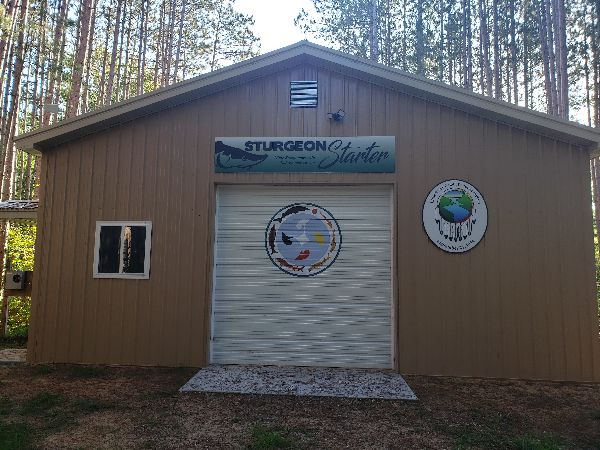
In the Manistee and Muskegon rivers — where fishing for lake sturgeon is prohibited — the Little River Band of Ottawa Indians has conducted lake sturgeon restoration activities since the early 2000s. Through streamside rearing, stocking, monitoring and research, the Little River Band of Ottawa Indians has played the lead role in lake sturgeon rehabilitation efforts in their ancestral waters.
"Bringing back the sturgeon is bringing back our cultural heritage," said Patrick Wilson in the "Little River Band of Ottawa Indians Nmé (Lake Sturgeon) Stewardship Plan for the Big Manistee River and 1836 Reservation."
"This is a long-term commitment by the Little River Band of Ottawa Indians to restore this culturally significant species and for the Anishinaabek people to reconnect with their culture," said Archie Martel, Little River Band of Ottawa Indians Fisheries Division manager.
A long-term commitment is indeed necessary: a female lake sturgeon may need 20 or more years to mature, and even then may only spawn once every three or four years — protection is critical to rehabilitation efforts. Spawning is a stressful event for fish, and if they are disturbed or harassed, it may jeopardize their ability to spawn successfully that year. "Observe, don't disturb" to allow these fish to produce the next generation of lake sturgeon in our waters.
For more information on lake sturgeon, visit Michigan.gov/Sturgeon. Report incidental capture of lake sturgeon and report illegal harvesting or targeting of lake sturgeon at Michigan.gov/EyesInTheField or by calling the DNR's Report All Poaching hotline, 800-292-7800.