
Imagine getting to keep a meaningful percentage of money raised at local conservation dinners. Fortunately, that’s the world you now live in.
CEO Jason Lupardus is pleased to announce all TFT flocks will now retain 20% of funds generated from conservation dinners. This 20% produced at their local events will be used for member-directed conservation projects at the local or regional level.
"Let's say a local flock makes $20,000 at an event. They are retaining 20% of that locally, which would be $4,000 that they get to use on projects at the local level," Lupardus said. "They have a two-year window to spend those funds. There is a plethora of projects to work on. But, if they choose to work on one of our national projects, they can also move those dollars there. The point? We're giving the ownership to people at the local level to decide for themselves.
"For example, we have folks in areas, such as in Tennessee, who are very interested in our multi-state, predator-prey research project, and they want to dedicate funds to help stand up our project sites in Tennessee," Lupardus continued. "Also, we have one of our local flocks in Kentucky that wanted to provide funds for youth programs (Poult Program) and they're able to move dollars into that arena. We have several areas where our local flocks can work locally and get more done."
This 20% empowers people to accomplish big things on the local level. Projects, outreach, private landowner cooperatives, field days, and more — it's all within reach now.
"The individuals in that flock can utilize the flock request form we've developed. They submit that form and it gives a scope of work on potential projects and what the funding is for," said TFT Director of Outreach Pete Dougherty. "Is it for a state agency or a program like National Archery in the Schools Program? Maybe it's for a specific state land or WMA. Regardless, once they complete that, they'll be able to utilize that 20% for projects at the local level that they deem necessary.
"We're putting a lot of ownership into the hands of the committee and the flock members," Daughterty continued. "We're doing this by giving them the ability to pick and choose the projects that they wish to use funding for, and from funding they helped raise at the local area."
Lupardus says this change is a proud result of the new TFT Fly Down Committee, which is comprised of individuals from local flocks across the U.S. These people came together and decided that TFT would retain the 20% value from all events held by local flocks.
"I don't know of other conservation organizations that do that," Daugherty said. "There might be some out there that I haven't heard of, but this is great for local areas, for sure."
According to Daugherty and Lupardus, most conservation organizations do not allot nearly this 20% figure for local use. Rather, most organizations earmark 5%, even as low as 1% or 2%. Without question, this 20% retention at the local level is attractive. It's raising eyebrows throughout the conservation world. Make no mistake, though — this is the new standard.
"It has been pretty challenging for people to raise funds at the local level, because they often retain less than 5%," Lupardus said. "We heard from our people that this was a concern, and so, we let them decide. We are a grassroots wild turkey conservation organization. We want our grassroots folks to help guide this organization, help turkeys, and help turkey hunters at the local level."
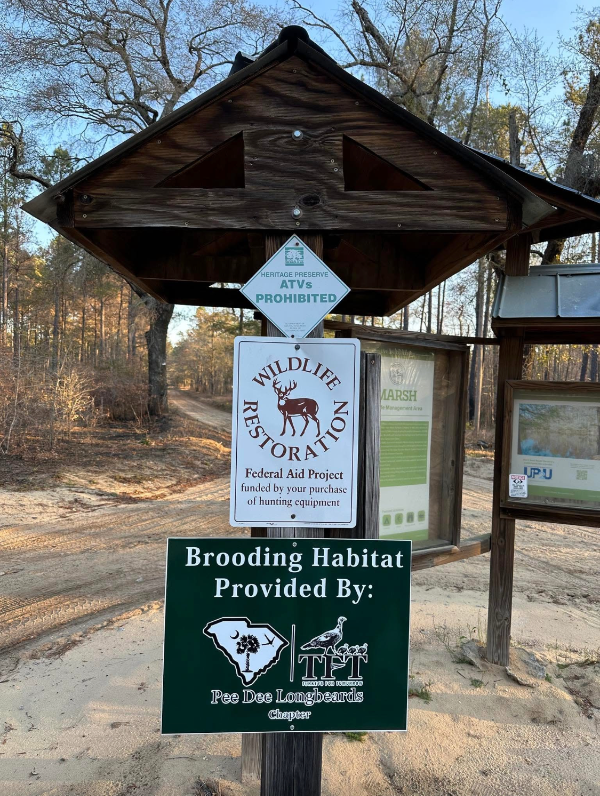
"Take the Pee Dee flock in Marion County, South Carolina, for example," Daughterty said. "They purchased a bunch of seed for a WMA there. It helped with brooding and nesting habitat, as well as some food plots. With us allowing them to have more money, they in turn affected a larger landscape-level project. That contributes to local turkeys and the local members of their flock who hunt those public lands. So, if you were previously dealing with one 1-5%, and now you're dealing at 20%, you're talking about a lot more money, and these projects aren't cheap."
Examples of potential local conservation projects:
- Habitat projects on public land.
- Improving brooding and nesting cover for turkeys.
- Funding predator-prey studies close to home.
- Youth hunting programs.
- And much more.
"We've worked with WMAs down here in Marion, South Carolina, and the overarching Pee Dee area," said TFT Pee Dee Flock President Phillip Brunson. "We're planting brooding cover for hens. There are so many predators in this area that we try to keep those poults hid well during that stage of life. That boosts survival."
Brunson is excited about the future. Their TFT flock is growing rapidly, and it draws new members every year. People are seeing the things it's accomplishing, and people are jumping on board to push the mission forward.
"We really believe that our members at the grassroots level are who drive this organization. And you can ask anybody, it's hard to come by a dollar in this day and age," Daugherty said. "So, the guys and gals who come to these events to spend that money, we want them to be directly impacted by it. Just like our namesake Turkeys for Tomorrow, it's so important that the funding goes back to help the turkeys close to home."
Support TFT
Wild turkey populations are on the decline throughout the nation. Established in 2021, TFT is new to the landscape, but it's driven by highly trained professionals with decades of conservation experience. To support TFT, and the complete body of wild turkey research and conservation it's leading, become a member today. An Adult Annual Membership is $50, multi-year Team Turkey Membership is $250, and Life Membership is $2,500. Every dollar counts in the fight for wild turkey preservation.