
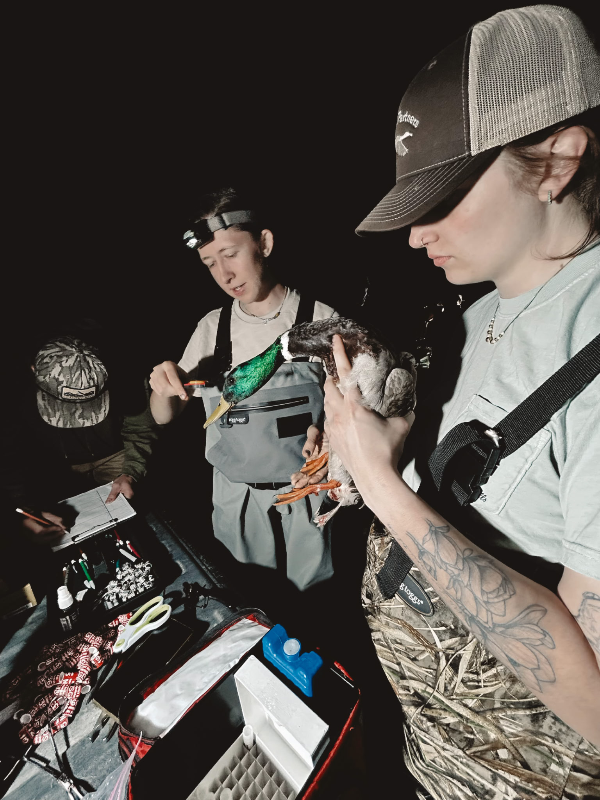
The South Carolina Waterfowl Association (SCWA) is participating in a cutting-edge study aimed at better understanding the future of mallard populations in the Atlantic Flyway.
The Mallard Research Project, launched in the summer of 2025 at the SCWA Wildlife Education Center in Pinewood, focuses on a pressing question in modern waterfowl conservation: how the increasing presence of game farm mallards and hybridization is impacting wild mallard populations.
Researchers are working to determine whether released game farm mallards in South Carolina are contributing to hybridization locally or if similar influences are coming from birds migrating from other regions. At the core of the project is a comparison of movement patterns and reproductive success between wild and game farm mallards.
"There's an undeniable trend of declining wild mallard numbers in the Atlantic Flyway," said project researcher Margaret Jensen. "The more we understand about the contributing factors, the better we can ensure that there are mallards in the future."
The study is being conducted in Pinewood, South Carolina, an area identified as a hotspot for mallard releases, making it an ideal location for examining the effects of game farm birds on wild populations.
SCWA plays a critical role in the project by providing housing, land access, logistical support, and expertise. Camp Woodie, one of SCWA's flagship education programs, also serves as a key site for research activities and data collection.
"This project aligns directly with our mission," said SCWA COO, Lou Tocci. "Not only are we contributing to meaningful conservation research, but we're also creating hands-on educational opportunities for our staff to engage with real-world wildlife science."
Researchers are utilizing advanced tracking technologies to monitor the birds, including VHF radio transmitters and GPS-enabled cellular tags. These tools allow scientists to track movement patterns, migration behavior, and survival rates in near real time.
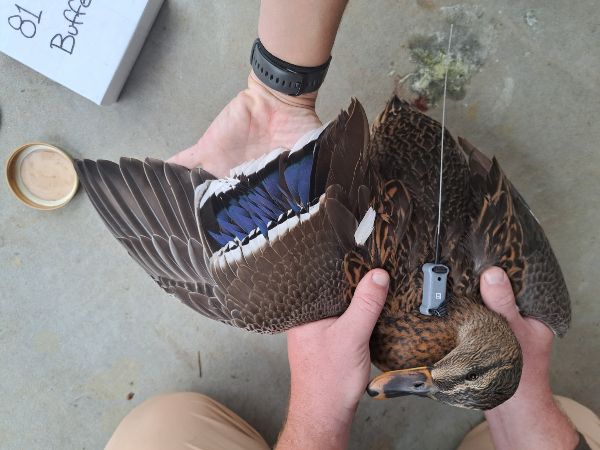
To date, nearly 100 radio-tagged mallards, several GPS-tagged birds, and 187 banded ducks have been released as part of the study. Early data collection includes both passive tracking through tower networks and manual field monitoring conducted multiple times per week.
One of the primary concerns driving the research is that hybrid mallards may be less likely to migrate and reproduce successfully, potentially making them less suited to natural environments. Understanding these differences could have significant implications for waterfowl management practices and regulations across the region.
Findings from the project are expected to inform conservation strategies not only in South Carolina but throughout the Atlantic Flyway. Hunters, land managers, and conservationists stand to benefit from improved knowledge of mallard population dynamics and the long-term impacts of game farm releases.
Initial data analysis is expected in the coming months, with additional insights to follow as tracking systems and genetic testing results are compiled. The project is currently funded through November 2026, with partners actively seeking additional support to expand the research timeline.
The project is a collaborative effort between SCWA, the Clemson Kennedy Waterfowl and Wetlands Conservation Center, the University of Texas at El Paso, and generous private donors.
As the research progresses, SCWA plans to share updates with the public and incorporate findings into its conservation education programming, furthering its mission to enhance and perpetuate South Carolina's wildlife heritage.
Supporters interested in contributing to this and other conservation efforts can learn more or donate at scwa.org.
Facebook: https://www.facebook.com/SouthCarolinaWaterfowl/
Instagram: https://www.instagram.com/southcarolinawaterfowl/?hl=en
YouTube: https://www.youtube.com/@southcarolinawaterfowlasso3303