
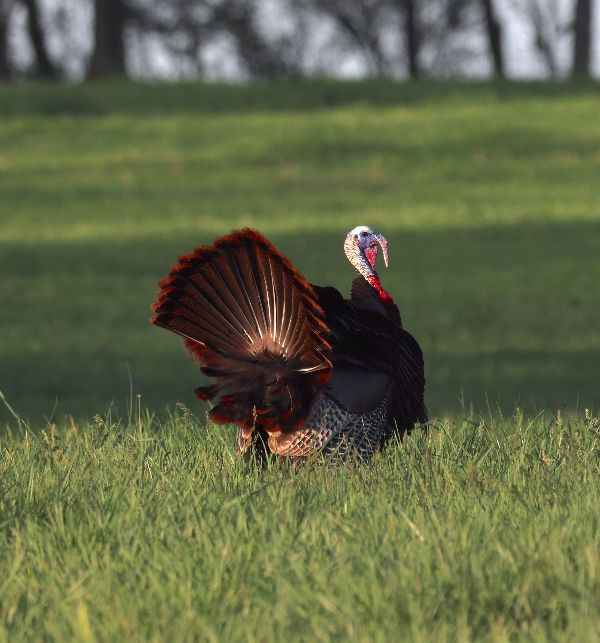
The roots of Turkeys for Tomorrow run deep, are now established, and the wild turkey is better off for it.
A gobbler sits on a limb, announcing the arrival of the rising sun. Hens tree yelp on limbs around him. A hunter patiently awaits the fly-down, and the age-old dance that follows.
That hunter is Turkeys for Tomorrow (TFT) Co-Founder Ron Jolly, whose story is one of outdoor heritage and conservation perseverance. His roots are firm, and sound, extending cavernously in the Deep South.
"When I was a kid, my father was a turkey hunter," Jolly said. "By the time I graduated college, I knew three people who turkey hunted — my dad and his two best friends.
"They didn't have anything to do with each other during turkey season," Jolly continued. "If you heard a turkey gobble, that was a success. Most years, my dad killed a turkey. His buddies sometimes killed turkeys. But they didn't share anything, because turkeys were so precious, and so few, that you didn't share spots, how you called, or anything."
Fast forward several years, and Jolly joined Primos. By then, turkeys were on the upswing, and the restoration movement was working everywhere.
"I traveled the country showing people how to call and kill them," Jolly said. "I did that through the means of videography with Primos."
In time, though, that turkey population boom turned into a significant decline. Jolly says places he loved in Arkansas, Missouri, and all over this nation, were no longer producing viable turkey populations. Eventually, it hit home in Alabama.
"My wife, Tes Jolly, has made her living for 25 years photographing wild turkeys," Jolly said. "Most of that was done on the farm we sit on right now. The winter flock dwindled from an average of 60 birds down to eight, and they weren't all killed by hunters. I know my neighbors."
Rock bottom came when a neighbor killed the lone remaining audible gobbler that could be heard from the Jolly farm. It came as a gut punch.
For weeks and months, a singular sentence floated around in Jolly's mind.
"Something is terribly wrong."
Despite what they knew to be true, Jolly and many others couldn't get the powers that be to admit it. And if you don't admit there is a problem, you'll never fix it.
Problems Facing the Wild Turkey
The modern wild turkey is up against numerous threats. Current problems facing the wild turkey include predator impacts (of multiple kinds), habitat loss, habitat degradation, and disease prevalence.
"There are a bunch of problems facing the wild turkey," said TFT CEO Jason Lupardus. "The biggest issues we see at scale are nesting and brood range habitats. Next, we have issues with mesopredators at a scale higher than ever before. Plus, there's a lack of management at the local level, which is why we are driving private land cooperatives. And currently, there's a lack of data to understand population dynamics."
Predator Impacts (on Nests): Nest predators, such as opossums, raccoons, and larger, are raiding unprecedented percentages of turkey clutches, leading to re-nesting efforts and declining turkey production.
Predator Impacts (on Nesting Hens): Hens spend weeks on the nest, providing opportunities for larger predators, such as bobcats, coyotes, and foxes, to kill nesting hens.
Predator Impacts (on Poults): After hatching, poults spend up to 14 days on the ground before taking flight, meaning hens and poults alike are susceptible to predators. Even after taking flight, and roosting in trees, they are susceptible to aerial and ground predators.
Predator Impacts (on Adult Birds): Poults aren't the only birds at risk. Adult wild turkeys are commonly predated as well, especially by bobcats, coyotes, and larger aerial birds of prey.
Habitat Loss: As more habitat is cleared for development, turkeys lose more viable ground to live on. Over time, that leads to higher predation and reduced populations.
Habitat Degradation: Even when habitat isn't lost, it's often degraded. This can occur in numerous ways, and with each, it negatively impacts nesting cover, brooding cover, escape cover, roosting areas, feeding areas, and more.
Disease Prevalence: Several diseases, including avian pox, histomoniasis (blackhead disease), lymphoproliferative disease virus (LPDV), and more, are killing wild turkeys.
With all of the challenges that face today's wild turkey, it's crucial to focus on these issues, especially those most impactful, such as predation. The wild turkey is worth saving.
Why the Wild Turkey Is Worth Saving
Without a doubt, the wild turkey is worth saving. TFT Co-founder and COO Kevin Matthews believes that as well and strongly as anyone.
"It's one of God's magnificent creations," Matthews said. "When a strutter is coming in, the sun at its back, and all feathers lit up — it's incredible. Plus, their vocabulary and the sounds they make, are extraordinary."
As hunters, we're able to see the animal, communicate with it, and observe firsthand how these birds exist within their environments.
"In Genesis chapter 2, God gave us dominion over all the birds of the air," Matthews said. "That said, we have a responsibility to ensure we protect what he's entrusted us with."
The resource is a special one. For those who are passionate about these birds, what happens next is important. We hold the ability to make a difference, but we're at the inflection point, and next steps hold sway over the future of wild turkeys.
"At TFT, we love turkeys to our core," Matthews said. "We're doing habitat work. We're conducting turkey predator projects. We're teaching people about trapping. We're leading numerous research efforts with universities and state wildlife agencies. But the biggest thing we've done is share the message that there is an issue, and that we must all work together to protect and sustain this great bird.
"We need a change of culture," Matthews continued. "It's not about how many birds you can kill. We've all been entrusted with protecting these birds. We must be good stewards and do our part."
The Birth of Turkeys for Tomorrow (TFT)
TFT was born from a lack of attention, a lack of interest, even, in addressing the modern wild turkey decline. Simply, it filled a void than many turkeys hunters had been waiting for.
"The first problem we thought we could tackle with TFT was to get people to realize there was a problem," Jolly said. "No one would admit or talk about it."
Jolly spent much of his career as a producer for Primos. He traveled the world filming turkey hunts. He witnessed firsthand the reintroduction and rebound of the wild turkey. Consequently, and eventually, he also saw the subsequent decline throughout much of America.
Throughout the decades, he made a lot of friendships. Several years ago, he started calling them up. He'd ask about some of the places they once turkey hunted together, and a common theme quickly emerged — the turkeys were gone.
Each person he called would say, "It isn't even worth going anymore."
Jolly anticipated as much. Even so, few people, if any, were sharing this message, nor addressing it, in a meaningful way. So, he convened a summit, of sorts, at White Oak plantation.
"If not you, who?" was Jolly's message to the invited.
In June of 2020, 14 people met. In August 2020, they met again. And from that, TFT was born. A total of 12 people put up $300 each, and in February 2021, TFT's 501(C)(3) non-profit status was finalized. They installed a board of directors, and it's been off to the races ever since.
How TFT Is Working to Conserve Wild Turkeys
TFT is striving to take the next step in wild turkey conservation. As an organization, and those who founded it, TFT realized the lack of research being conducted to study and determine the true reasons for wild turkey population declines. It committed itself, and its resources, to researching the reason(s) behind the sharp decrease in turkeys nationwide.
"I know that trapping is going to help," Jolly said. "But no one is listening to just me. But there's a scientific community that can do something about that."
With a determination to focus on research, the Alabama Wildlife Federation, and others, pooled money for TFT's first phase of research funding. That initial effort started the researching of three things, including wild turkey fertility rates, disease in wild turkeys, and nesting success of wild turkeys. Numerous studies have been completed, and are ongoing, resulting from that.
Jolly could point to any number of research projects that TFT has already made possible. Kentucky, Mississippi, Oklahoma, Pennsylvania, Texas, and other places in the eastern U.S., just to name a few.
Furthermore, in 2026, it will launch multiple large projects focused on the effects of trapping predators and nest predators, as well as habitat management. One is called the Delta Project, which will take place on nearly 1 million acres in Arkansas, Mississippi, and Louisiana.
"These areas are in the WRP program and planted in hardwood trees," Jolly said. "Turkeys are really suffering in the Delta. That's due to flooding, predation, and more."
Even more exciting? Another study that will span states in the Southeast, Northeast, and Midwest.
"It's the largest predator-prey study ever done," Jolly said. "It's going to involve nine states and four major universities. This four-year project will prove what common sense has shown turkey hunters for years, at least, for those who are willing to see, hear, and listen."
How You Can Help Save Wild Turkeys
Wild turkey populations are on the decline throughout the nation. Established in 2021, TFT is new to the landscape, but it's driven by highly trained professionals with decades of conservation experience. To support TFT, and the complete body of wild turkey research and conservation it's leading, become a member today. An Adult Annual Membership is $50, multi-year Team Turkey Membership is $250, and Life Membership is $2,500. Memberships, and donations, make a difference — every dollar counts in the fight for wild turkey preservation.
"TFT is here to stay," Jolly said. "There were a few years when a mistake or misstep could have brought it all down. But since our expansion, our business model, focus on research, and emphasis on common sense are driving this organization to new heights."
Landowners, turkey hunters, and all those who love this wild bird are credible sources of information. TFT champions the notion of "citizen science," which is the collective input and effort by all involved. Meaning — you now have a voice, and an organization not just willing, but hoping, to hear it.
Tom Kelly once wrote a book. He titled it, "The Tenth Legion." That's you. That's me. And that's TFT.
"I credit my dad for showing me the wonder that is the wild turkey," Jolly said. "To see where they came from, to where they were in the early 2000s, to where they are now — it's been a journey.
"It's a cherished resource that's worth preserving, sharing, and fighting for," Jolly continued. "We have to ensure it's here for the next generation."
Fortunately, if you want to start a TFT flock, or join an existing one, you can now reserve 20% of all generated funds to benefit wild turkeys at the local level. Apply these to make pivotal strides for the turkeys that serenade the rising sun right there at home. Plus, participate in the private land cooperative program
"TFT is standing up this program to bring people together," Lupardus said. "Ideally, we're looking at individuals in a local area who can combine to have 1,000-2,500 acres. This falls in line with the average home range of wild turkeys, which is 2-4 square miles.
"If these folks can come together and allow us to work with them on technical assistance, we can address habitat, predator management, local harvest, and more," Lupardus continued. "We will deliver real-world solutions to create incubators of success at the local level."
There's more energy being invested into the issue of wild turkey decline than ever before. There's more research being conducted than ever before, too. And you can move the needle, as well. Be a part of a grassroots conservation effort that's actually making a difference.
If you want to help save the wild turkey, and bring back flocks close to home near you, join an organization that puts the money where it matters most — back into the land where wild turkeys once roosted, where their thunder once sounded, and where our beloved red, white, and blue bird once thrived — where it can thrive again.