
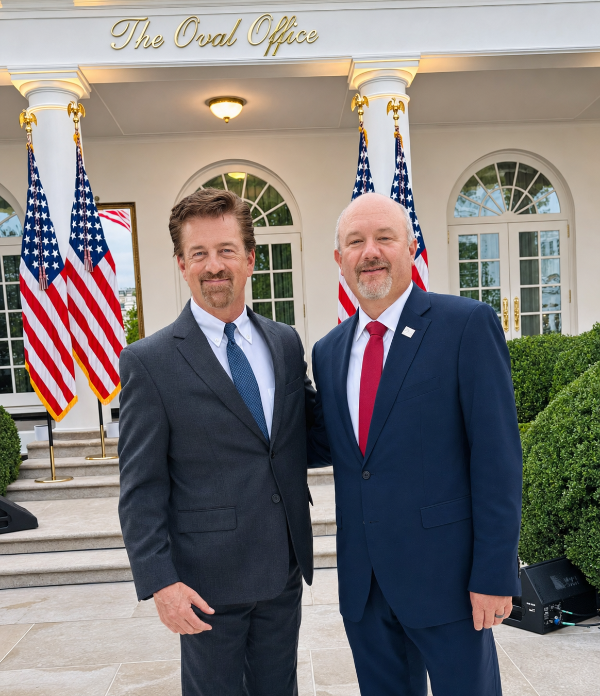
Brian Nesvik brought an unusual qualification to his Senate confirmation hearing: He knew how to put tire chains on a pickup in a snowstorm. He could also classify mule deer from a helicopter and patrol remote country on horseback. The once Wyoming game warden explained his résumé to a town that would probably commission a study before installing the chains.
There is something reassuringly positive about having that fellow run the U.S. Fish and Wildlife Service.
Before President Trump nominated him in February 2025, Nesvik’s name meant little to most Americans. In wildlife circles, however, people knew the Wyoming director who had dealt with grizzly bears, wolves, and the increasingly crowded intersection of wildlife and people. Since assuming the federal job in August 2025, he has emerged as one of the most effective recent directors for sportsmen and practical conservation.
Nesvik earned his wildlife degree at the University of Wyoming, joined Wyoming Game and Fish in 1995, and worked his way from game warden to department director. He also spent 35 years in the Army National Guard, deployed twice to the Middle East and retired as a brigadier general. After retiring from the state agency in 2024, he ranched with his wife near Glendo.
A man responsible for both wildlife and cattle has reason to think carefully about where the wolves go.
Jeff Crane, president and CEO of the Congressional Sportsmen’s Foundation, describes Nesvik as “pragmatic, solution-oriented,” with “common sense born from experience.” Crane’s assessment comes from knowing him in Wyoming and watching him work in Washington.
The Service needs that experience. It administers endangered-species protections, oversees wildlife imports and manages refuges where Americans expect to hunt and fish. A decision that looks tidy on an agency spreadsheet can become somebody else’s expensive problem.
Nesvik understands the state managers receiving those decisions from Washington. He used to be one. Cooperation with state agencies has produced changes people can actually use: federal refuge regulations better aligned with state rules, and a streamlined statewide permitting approach for conflicts.
Then there is access. An August 2026 rule added 1,488 hunting and fishing opportunities at 111 refuges and hatcheries in 32 states. Interior called it the largest expansion in Service history. Total refuge acreage available for hunting now exceeds 92 million acres. That figure includes previously opened land, but the additional opportunities are considerable.
“The Director has skillfully navigated some of the most challenging and contentious issues facing wildlife managers,” says Taylor Schmitz, the foundation’s senior vice president and chief operating officer.
Colorado supplied another test. In October 2025, Nesvik directed the state to stop obtaining wolves outside the designated Northern Rocky Mountain area, challenging Canadian sourcing for its voter-mandated reintroduction. Colorado disputed his interpretation and pointed to earlier federal guidance allowing it. The disagreement matters, but so does Nesvik’s willingness to insist that a ballot initiative answer to federal oversight.
Overseas, he understands an economic reality often missing from American arguments about African wildlife: Somebody has to pay to keep the animals and their habitat. Regulated hunting can provide income that makes retaining wildlife worthwhile. Remove that incentive and a hunting concession can become cattle country or cropland. An American import restriction can reach far into an African village.
“He understands sustainable use conservation, all aspects of the outdoors from hunting and fishing to trapping and predator control,” says Safari Club International CEO Laird Hamberlin. “He is a true advocate of all sportsmen and women in America.”
The November 6 refuge review, Rooted in Purpose, proposes 29 changes that emphasize field operations, habitat management, and fewer bureaucratic obstacles. Its implementation deserves watching.
Rocky Mountain Elk Foundation President and CEO Kyle Weaver credits Nesvik with “a strong devotion to partnerships with state wildlife agencies and private conservation organizations that invest directly in wildlife and habitat.” Weaver sees the same practical approach he knew in Wyoming continuing at the federal level.
That is where Nesvik’s promise will be measured. A refuge manager needs staff and equipment. A state biologist needs a federal counterpart who listens. A rancher needs wildlife policy that accounts for the ranch.
Nesvik has spent enough time outside Washington to understand why.
– Chris Dorsey
Chris Dorsey is a Coloradan, 30-year media veteran, biologist, outdoor television producer and natural history filmmaker whose writing has appeared in the Wall Street Journal, Newsweek, Forbes and dozens more national titles.