
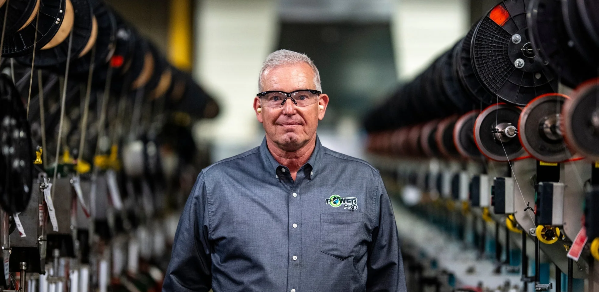
In 1992, Konrad Krauland was manufacturing line for stunt kites, not bass fishing. His company, Innovative Textiles Inc. (ITI), was using Spectra, an extraordinarily strong synthetic fiber, to produce smooth, consistent dual-line kite strings. Within five years, the technology would help produce PowerPro, a fishing line that was among the leaders in the braided line revolution.
Krauland's path into fishing tackle began with a background in textiles, not a passion for tournament fishing. After studying textile engineering at Philadelphia College of Textiles and Science, he moved to Grand Junction, Colorado, to work as industrial sales manager for Western Filament, a line and textile manufacturer. He eventually left to establish Innovative Textiles in 1992, intending to develop a variety of industrial textile products.
Fishing line had no part in the original plan.
The connection came through stunt-kite line, where smoothness and manufacturing consistency were critical. Competing products often had uneven strength and rough surfaces that could interfere with performance. By concentrating on those shortcomings, ITI developed exceptionally smooth, strong lines.
A California fishing-tackle distributor subsequently bought some of ITI's braided Spectra kite line and sold it to anglers. Capt. Russ Izor, founder of Izorline and a pioneer in high-performance fishing lines whom Krauland calls the “Father of Superlines,” also recognized the potential of advanced fibers such as Kevlar and Spectra. Izor became a trusted business partner and mentor.
Within a year, ITI had secured a substantial manufacturing contract, and all 150 of its braiding machines were producing 50-pound line. The company was buying more equipment to meet demand. A professional angler's victory in a 1993 bass tournament using 50-pound kite line provided another indication that the material could work in fishing. ITI grew from a two-person operation into a company with 100 employees and 650 braiding machines in just over a year.
The advantage of almost no stretch
Traditional nylon monofilament had long dominated recreational fishing, offering low visibility, flexibility, manageable handling and relatively low cost.
Spectra offered a different combination of properties: extremely low stretch, high strength relative to diameter and resistance to many forms of abrasion. Krauland's textile-engineering background helped him recognize what those characteristics could mean on the water.
The low-stretch material offered a more direct transmission of force, allowing anglers to feel subtle strikes and maintain better control over hooksets. That proved particularly valuable when fishing jigs and plastic worms along the bottom, where a bite might register as little more than a tap. Braid also provides the leverage needed to drive large single hooks into fish or pull bass from thick vegetation when using heavy tackle and topwater frogs.
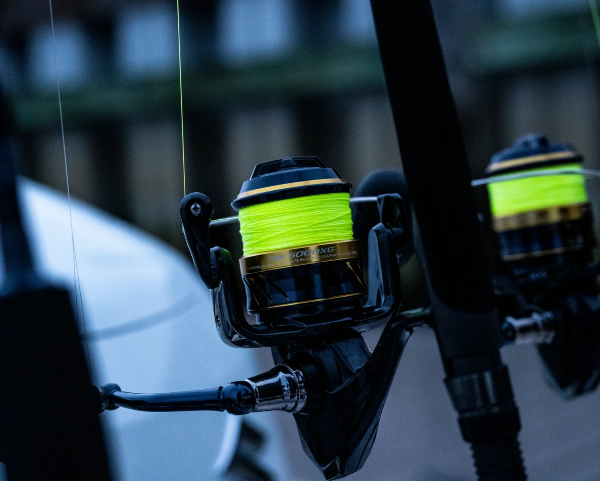
In saltwater, its strength-to-diameter advantage allows more line on a reel and helps anglers maintain contact with fish at depth. Reduced diameter also means less resistance in current, an important consideration when fishing deep structure or working vertically.
Early superlines, however, had their problems. Some were rough, difficult to handle and prone to casting troubles, particularly on spinning reels. Strength alone wasn't enough. A line that tangled or failed to leave the spool cleanly could frustrate anglers regardless of its other advantages.
ITI initially benefited from strong sales in 1993 and 1994, including manufacturing Spiderwire, now owned by PURE Fishing. Then, in 1996, the contract disappeared, wiping out approximately 90 percent of the company's business overnight.
In retrospect, Krauland regards the setback as an opportunity. With the manufacturing contract gone, he could concentrate on developing a proprietary fishing line rather than producing a product for someone else.
Two years of refinement
Krauland spent much of the summer of 1996 testing three or four prototypes each evening in a pond at his condominium complex in Grand Junction. He was looking for a braid that would overcome the handling problems of existing superlines.
The development process eventually produced PowerPro's Enhanced Body Technology, or EBT, designed to improve the line's body and handling characteristics. The company's benchmark was practical and demanding: 200 trouble-free casts with an 1/8-ounce weight on a size 500 spinning reel.
Light lures and small spinning reels expose line-handling weaknesses quickly. A braid might have enough strength to stop a trophy fish, but if it repeatedly tangled or failed to cast smoothly, it was unlikely to win widespread acceptance.
Other companies were also on the trail of “superlines” by this point. Berkley had already introduced FireLine in 1996 using thermally fused polyethylene microfibers rather than a conventional braid. PowerPro followed in 1997 with a braided Spectra line engineered to improve handling and casting, helping establish braided line as a fixture in modern fishing tackle.
PowerPro continued to refine its manufacturing methods, broaden its product range and build relationships with tackle retailers.
In late 2008, Shimano American acquired Innovative Textiles. The manufacturing operation and staff remained in Grand Junction, while Krauland joined Shimano's management team as a vice president, coordinating production and new-product development. The acquisition gave PowerPro access to Shimano's international distribution network.
Thinner, smoother and more specialized
Braided line has continued to evolve since PowerPro's introduction. Today's products offer a wider range of diameters and constructions, with improvements in smoothness, durability and handling.
PowerPro's premium eight-carrier braids use more individual strands than traditional four-carrier constructions, producing a smoother, quieter line through rod guides. Resin treatments have also improved line flow, while more durable color systems help maintain recognizable colors through extended use.
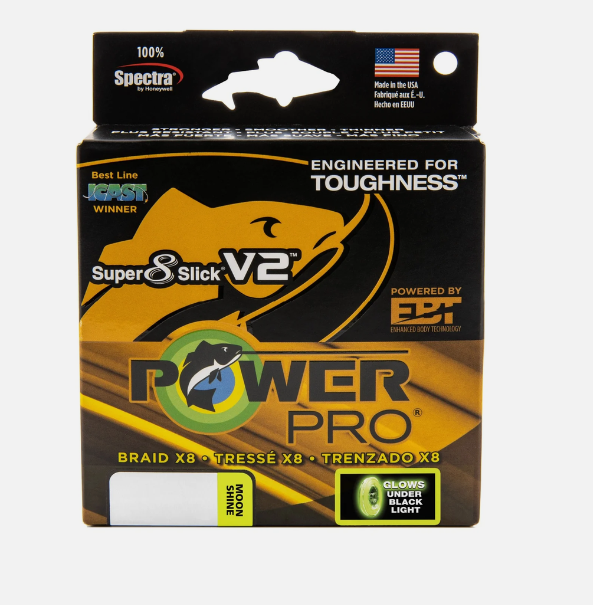
Metered lines such as PowerPro's Depth-Hunter provide changing color patterns that help anglers estimate how much line is out, useful when trolling, fishing vertically or repeating a productive presentation.
One significant advance has been Spectra HT, a higher-tenacity fiber introduced by Honeywell in 2015. According to Krauland, the material offers approximately 30 percent greater tenacity than traditional Spectra fibers, allowing lines to be made up to 25 percent thinner while maintaining equivalent strength. PowerPro's Maxcuatro was among the first fishing lines to use the new fiber.
Thinner braid allows more line on a reel and reduces resistance in the water. It can also help with casting distance, although actual performance depends on the line construction, reel, rod, lure and conditions. The continuing engineering challenge is to balance smaller diameters with reliable strength, abrasion resistance and manageable handling, Krauland says.
What comes next?
Krauland sees considerable room for further improvement.
Future advances may be increasingly specialized. A braid intended for frogging in thick vegetation has different requirements from one designed for finesse fishing on spinning tackle, deep-water jigging or offshore applications. Rather than trying to produce one line for every situation, manufacturers can tailor construction and treatment to particular techniques and species.
When PowerPro first appeared, Krauland recalls, many anglers regarded braided line as a curiosity. Today, braid is standard equipment for much of the fishing world, from spinning outfits used for light presentations to heavy baitcasting tackle and offshore reels.
Braid It not only has the advantages of great strength, low stretch and remarkable castability, but also durability—many anglers fish the same line all summer long, where before with monofilament they might have had to change lines at least once a month under heavy use. So, while braid is more expensive than mono, it can be a more affordable option in the long run.
See details on the company’s current offerings here: https://fishshop.shimano.com/pages/powerpro.
– Frank Sargeant, Editor, The Water Wire