
I only fished with Bill Dance once, for sauger below Pickwick Dam. Bill used a dark green jig, and I used an identical jig in yellow. We both added live minnow sweetners.
Bill caught 11 nice sauger, a big smallmouth and a flathead catfish that looked like it had swallowed a microwave. I caught two six-inch perch that looked embarrassed to have been caught by such a duffer.
I don't think, though, that it was the difference in our jig colors that made the difference in our catch. It was obviously Bill’s skill in knowing exactly how to drop that lure and work it in the current seams that drew the bites. (The best part of that trip was sitting in the Botel Restaurant, a creaky old barge then on the shore just below the dam, and listening to Bill hold court and keep the whole place in an uproar with a constant stream of jokes and tall tales before the trip--but I digress.)
My wife has a weakness for shoes. (That’s sort of like saying a crack addict has a weakness for cocaine.) When a manufacturer comes up with a pair she really likes, one color isn't nearly enough. If the shoes come in six colors, she “needs” six pairs. After all, they’re on sale, they're comfortable, and you absolutely have to have shades to match your outfits, the changing seasons and whatever is currently happening on YouTube.
Sometimes I have nightmares—particularly around Halloween—of all these shoes coming to life and dancing around the house sort of like the mad Fantasia dance of the brooms as Mickey Mouse tries to corral them . . . . but I digress.
The tackle industry now seems to think that anglers suffer with the same affliction when it comes to bass lures.
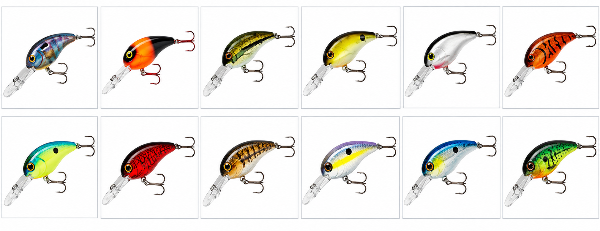
Walk the aisles of any tackle shop, flip through a lure catalog or look at the latest product announcements, and you'll find an extraordinary assortment of colors for lures that otherwise are identical. While it certainly makes sense to offer the basic natural shades—typically shad, herring, bluegill and perch, plus black, white and chartreuse, there are now enough lure colors and pattern variations to cause Van Gogh to cut off his other ear.
The question is how much difference all those colors actually make.
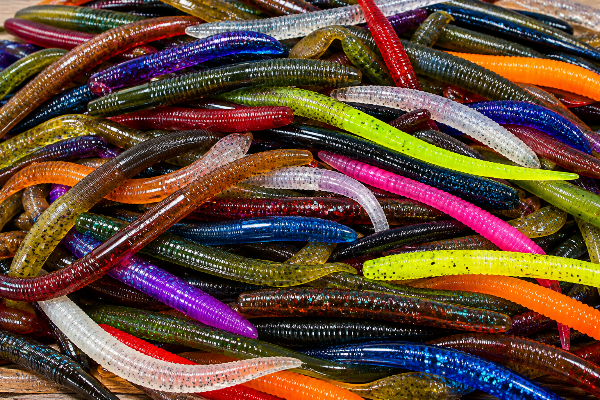
There are certainly times when color matters. A translucent baitfish imitation can be deadly in clear water, while a bright chartreuse lure may be easier for a bass to locate in stained water. Matching the local forage is always smart. And even though shades like “Guntersville Orange” may not make a lot of sense, fish eat it, so who am I to question?
But there's a considerable distance between carrying a few colors suited to different conditions and buying every new pattern a manufacturer can dream up. A crankbait that dives to the right depth, deflects off cover, casts well and has the right action is a useful fishing tool. Giving it a new paint job or scale pattern doesn't change any of those characteristics.
The same goes for a soft-plastic worm that already has the right size, shape and action. A new laminate or glitter combination might occasionally make a difference, but it won't turn a mediocre design into a great one.
Meanwhile, some of the most meaningful advances in fishing tackle have involved things anglers can't appreciate simply by looking at a display rack: improved hooks, better hook placement, more effective weight-transfer systems, new materials, more durable construction and lure designs that produce actions previously difficult to achieve. Those are the kinds of changes that can expand an angler's capabilities or put more fish in the boat. They’re worth spending money on. (Even at $15 to $20 bucks a pop for the same type of lures that used to sell for 5 bucks.)
A genuinely new lure design demands considerably more development and testing. From a marketing standpoint, the appeal of adding another color to a proven seller is obvious.
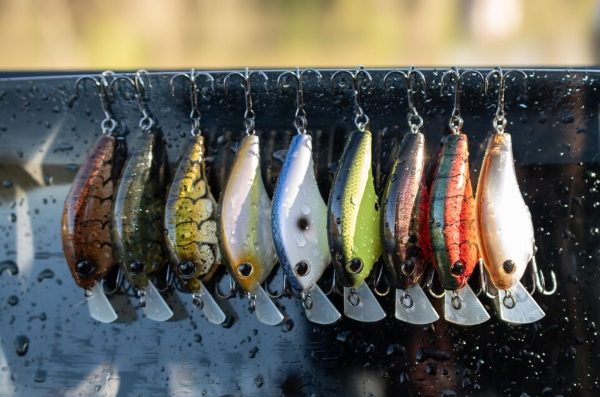
That doesn't mean lure makers are wrong to offer variety, or that anglers who enjoy collecting unusual patterns are wasting their money. Fishing is supposed to be fun, and there's nothing wrong with owning tackle simply because you like it. My wife would say the same thing about shoes.
But there's a difference between collecting lures and buying them to catch fish.
The next time a manufacturer announces eight new colors for a lure you already own in four, ask yourself a simple question: Would you catch more fish with another color, or with a lure that does something your present selection can’t?
My wife might say that six pairs of the perfect shoes are better than one. I'm not going to argue with her about that—I know what’s good for me. But if I already have a crankbait that catches bass, I'm going to need more convincing before I buy it in six more colors.
I might buy six of the same color, though . . . .
– Frank Sargeant, Editor, The Water Wire