
NOAA Fisheries has just revised recreational fishing effort and catch estimates for hundreds of species, going back to 1981, and the agency describes the change as an improvement in survey methodology.
That is certainly true, but there’s a larger question that deserves attention from anyone who has ever been told that a fishery had to be restricted because the science said so—that is, most of us who have fished federal waters along the Atlantic and Gulf Coasts.
The revised estimates are systematically lower than the historical estimates produced by NOAA's Fishing Effort Survey, or FES. The agency says the new methodology better accounts for overreporting of private-boat and shore-fishing trips and produces lower effort estimates with smaller margins of error. Because total recreational catch is calculated by combining those effort estimates with catch rates from dockside interviews, lower estimates of fishing effort generally translate into lower estimates of recreational catch.
NOAA says the revision does not immediately change catch limits, seasons or other management measures. Instead, the revised numbers will be incorporated into prioritized stock assessments beginning in late 2026, with management recommendations following through 2027 and 2028. Among the assessments scheduled for that period are South Atlantic red snapper, striped bass and Gulf vermilion snapper.
The agency's explanation is straightforward: science improves, surveys are redesigned, historical estimates are recalibrated and managers eventually use the better information. NOAA says the revised FES was independently peer reviewed and represents a substantial improvement over the previous methodology. That is a reasonable explanation for why the agency is making the change now.
It also leaves recreational anglers with a perfectly reasonable question: What happened to all the management decisions made with the old numbers that we told them all along were far too high?
Recreational catch estimates are important inputs to stock assessments, annual catch limits and management measures. When estimated recreational landings exceed an allowable catch, the consequences can include shortened seasons, reductions in catch limits and, in some fisheries, complete closures. This results not only in lost recreational opportunities, but in tens of millions in financial losses due to lost charters, lost marina, restaurant and tackle shop business and lost bookings for waterside accommodations.
That doesn't mean every restrictive regulation imposed over the past several decades was wrong. Fish populations really have declined in some places, and management decisions are based on multiple sources of information, including commercial landings, biological sampling, surveys, tagging and other data. A revision to one component of the scientific system does not automatically invalidate an entire stock assessment.
But it does raise a fundamental issue about the precision and the rigor with which recreational fishing has sometimes been regulated.
NOAA's own explanation says the revised historical estimates are "systematically lower." The agency also says the magnitude of the reduction varies among species, states, fishing modes and seasons, with the largest reductions occurring in fisheries involving private boats during periods of relatively low fishing activity.
The history of recreational fishing data makes the issue even more complicated. The FES replaced the earlier Coastal Household Telephone Survey in 2018, producing large changes in estimated fishing effort and catch. Now NOAA is revising those historical FES estimates as well, extending the new calibration back to 1981.
In other words, the scientific record used to manage recreational fishing has undergone some very substantial changes while anglers have continued to live under seasons and limits derived from it.
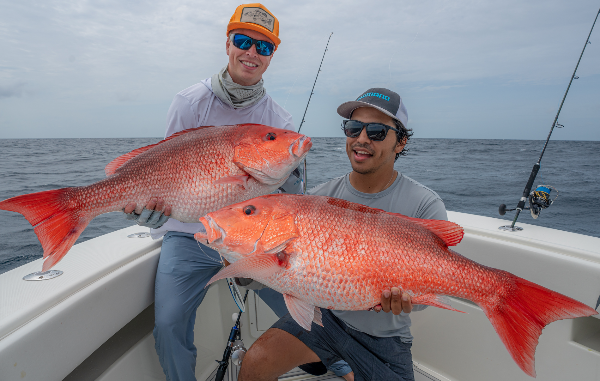
Atlantic red snapper provides an especially interesting case study. The stock has been the subject of years of controversy over recreational management, with anglers facing extremely short seasons—or none at all--despite evidence of improving abundance. NOAA's 2024 assessment update found the stock no longer overfished, and the management system has continued to struggle with uncertainty surrounding recreational landings and dead discards. Shark predation is also a growing but unaccounted-for factor as shark numbers continue to explode in U.S. waters
The upcoming South Atlantic red snapper assessment will have to determine how much the new data actually change the picture. But it should certainly provide an opportunity to revisit assumptions that have been difficult to reconcile with what anglers have observed on the water.
The same question applies elsewhere. If historical recreational catch estimates were systematically too high, how many past stock assessments showed greater recreational fishing pressure than actually existed? How many annual catch limits were set lower than they otherwise might have been? How many seasons were shortened or closed because estimated landings appeared to exceed a limit?
How many charter boat captains went out of business because too many fisheries were unnecessarily shut down?
There’s no doubt NOAA team was simply trying to do the right thing—preserve the fisheries while allowing reasonable access based on science. But the methods—and the conclusions—were wrong.
NOAA now has the opportunity to conduct a retrospective analysis showing exactly which management decisions were materially influenced by the estimates being revised, how large the revisions are for those fisheries, and whether those changes would have altered past assessments or regulations if the new methodology had been available at the time.
Scientific methods should change when better methods become available. But when a government agency discovers that a major data stream used for fishery management was systematically overestimating recreational fishing effort, the public deserves to know what that meant for the management decisions made with those numbers.
For recreational anglers who have watched seasons disappear and catch limits shrink while being told that the numbers justified those decisions, "we've improved the survey" is only the beginning of the conversation.
– Frank Sargeant, Editor, The Water Wire