
Northeast Alabama’s 69,000-acre Lake Guntersville is the quintessential bass tournament lake, and has been for many years. Many local businesses, including a half-dozen major tackle shops, boat dealerships, marinas, restaurants and accommodation rentals, have been built on the weekly comings and goings of tournament competition.
The headquarters of Bassmaster, the big daddy of them all, is just down the road in Birmingham, and the major domo of Major League Fishing, Boyd Duckett, lives on the shores of G’ville. Many well-known pros live either on the lake or just minutes away, and all these folks are pillars of the community. The widely-known and respected Alabama Bass Trail stops here every year.
But last weekend’s tournament crunch has many local anglers questioning if we are finally seeing too much of a good thing.
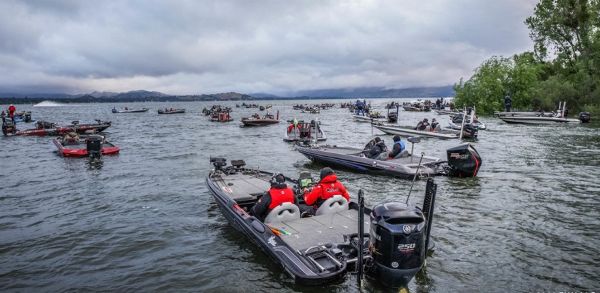
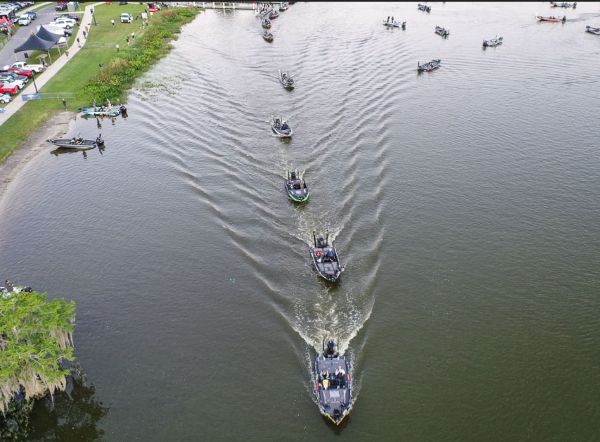
Four major tournaments hit the lake at once, putting literally hundreds of boats on the water running 70 mph at the crack of dawn from Friday through Sunday. And the majority were also here for a practice day or two prior.
Many of these visiting anglers were in a very big hurry to get to distant spots, and did so by taking the shortest route to their hopeful hotspots, even if that meant passing too close to the many pontoon boats, cruisers and ski boats on the lake at the same time.
There were also a hopefully small minority of tournament anglers who felt that, since they were fishing for money, they had more right to the known hotspots than did locals, and proceeded to push to within casting range of other boats. Not surprisingly, the local folks were not impressed.
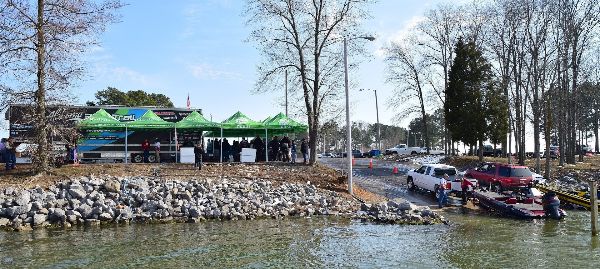
One of the events left a much larger than usual number of dead bass floating near its Brown’s Creek weigh-in site, stirring the ire of many resident fishermen.
While up to 10 percent of bass frequently die in summer and fall as a result of weigh-in-type tournaments, in which they rattle around in the livewell of a mile-a-minute boat for hours before being bagged, carried to the weigh-in and flopped into the weigh-in basket, it’s unusual for larger numbers to die—and particularly for them to be left floating near the weigh-in site.
To be sure, every angler out there has the state-rule right to harvest 10 of these bass a day over 15 inches long—but virtually no bass anglers do. Largemouths, smallmouths and spotted bass are seen largely as gamefish throughout the state, and almost everybody releases them, hopefully to fight again and to make more sportfish like them.
But the live-weigh-in-type tournament definitely does far more harm to local fish populations than the MLF’s catch-weigh-and-immediate release format, with electronic Bubba scales in every boat.
On the other hand, when there’s big money on the line—and there often is at Guntersville—the release format would make it easier to cheat unless there is live, continuous video from every boat.
There’s also the element of transferring fish populations from one part of the lake to another. Heavy catches by exceptionally good anglers, often using live sonar, mean thousands of fish are pulled from the prime habitat that grows them, and transported many miles away to weigh-in sites. The two primary beneficiaries of this at Guntersville are Goose Pond at Scottsboro and Sunset Drive/Brown’s Creek at the 69 Causeway in Guntersville.
Many other parts of the lake, including productive waters like Honeycomb, Siebold, Town Creek and South Sauty, have hundreds of quality fish pulled from their waters and transported to the weigh-in centers every weekend from February through November.
Tagging studies elsewhere have shown that bass transported more than a mile or two from their point of origin never make their way back. So while areas like the waters around Goose Pond become known as the “Miracle Mile” for amazing catches due to these released fish, many other parts of the lake continuously lose most of their quality fish.
This is nothing new—it’s been going on for decades, but the huge growth of tournaments in the last 10 years has turned it into a whole new factor in fishery management, and one that states like Alabama may need to address.
Some states already do—Minnesota, for example, requires tournaments to register with the state’s fishery department months in advance, and controls multiple large tournaments on the same lakes during the same weeks. Wisconsin, California, Maine, Oregon and others have similar rules.
While nobody around Guntersville wants to kill the goose that lays the golden egg—which most see as tournament fishing—the true golden egg is the fish population, and if we harm that significantly, we all lose.
– Frank Sargeant, Editor, The Water Wire