
AI seems to be everywhere, including politics, as companies push city and state governments to approve more data centers and lobby Congress to let the technology advance with fewer restrictions.
The pitch in support of AI is that it’s about countering China’s own AI advances, not boosting shareholder value and making ungodly sums of money.
No, it’s not that at all.
AI is also all over social media, from AI-generated content to people pitching it as the ultimate side-hustle tool.
And for those in the job market, AI is a looming threat as its leaders openly brag about how they’ll be able to replace large swaths of the human workforce.
It’s all AI, all the time, and there’s no sign of it abating.
That includes the firearms industry, where companies are finding more ways to put AI to work.
Don’t get me wrong. AI has a place. One marketing exec told me he used it to turn a product’s owner’s manual and technical specs into a training test for sales reps who would be explaining and selling the product to retailers.
That saved him a mountain of time he could put to better use elsewhere.
If you’ve seen fewer typos, better grammar and fewer cumbersome run-on sentences in my articles, AI deserves some of the credit.
I run my articles through AI and ask it to act as an editor, recommending changes one paragraph at a time so I can decide what works for me. But don’t worry. I ain’t gonna let AI take away my voice or clean up every colloquialism.
If I want dry, AI-generated copy, I’ll peruse LinkedIn, where plenty of would-be influential voices sound suspiciously alike.
But it’s not all AI drivel on LinkedIn.
Over the weekend, I read one of the best pitches for a job opening I’ve seen there.
Nick Andrews, director of marketing for Benelli USA, posted it for a Brand Experience Manager opening.

You can read Nick’s post here, and learn more about the position—or apply—here.
What caught my attention was how Nick framed the value of real-world experiences in an increasingly digital business:
“We’re entering an incredible era of AI, automation, personalization, and digital content. I’m excited about all of it. But as more of our world becomes digital, I believe tangible experiences become more valuable, not less.”
He follows that with a reminder of what draws our customers outdoors:
“Getting outside. Being present. Sharing a hunt, a camp, a sunrise, or a story with someone else. The experience is a big part of why we do it in the first place.”
Nick sees a role for AI: “Let digital make us faster. Let AI expand what’s possible.” But he also wants to give customers something they can experience firsthand:
“But let’s also create things people can walk into, touch, participate in, photograph, talk about, and remember.”
That last point matters. As Nick puts it, “An experience can become a story someone tells.”
That’s what he’s looking for someone to help create. And it’s what more companies in our segment of the outdoor market should be thinking about.
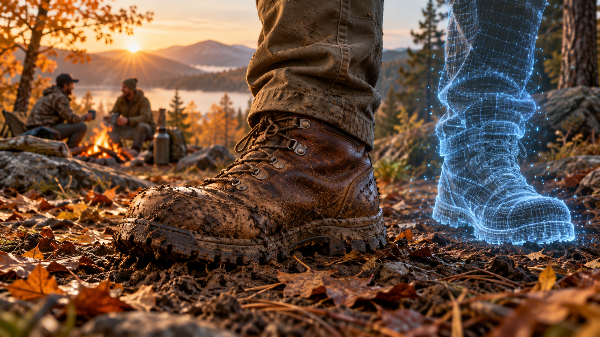
AI can accomplish a great deal. But it can’t draw on an outdoor experience of its own. It can generate a hunting story, but it has never climbed into a treestand. Never scouted for bighorn sheep. Never broken clay targets to get ready for dove or waterfowl season.
And most importantly, it won’t be sitting next to you around the fire at deer camp, sharing a story from its own time in the woods.
AI has no field experience. When it pretends otherwise, it’s a poser, borrowing from the stories of real sportsmen and women who have actually lived the outdoor life…the authentic outdoor life.
– Paul Erhardt, Managing Editor, the Outdoor Wire Digital Network