
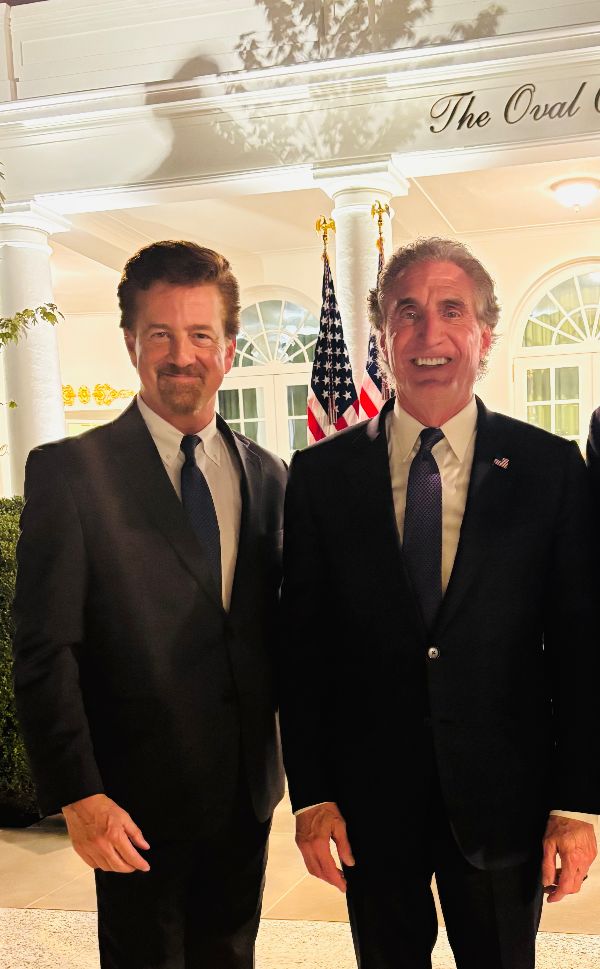
I recently posted on social media about attending a White House dinner announcing executive action on hunting and fishing and recognizing sportsmen’s contributions to American conservation. The instant replies included accusations of collusion. One reader condemned the administration’s conservation record; another asked, “why are you cooperating with these soulless fascists?” Those were the commenter’s words, not a description of any particular provision in the order. I had posted about an outdoor-policy event and found myself answering questions about the morality of accepting an invitation.
Apparently, our algorithms were delivering different news feeds. Rather than conduct another hearing before the Court of People Typing While Angry, I decided to examine the record: legislation, executive orders, agency rules and court decisions. The question was what President Trump had done concerning hunting, fishing, conservation and the Second Amendment. Attending dinner did not answer it. Neither did the comments.
Start with the Great American Outdoors Act, signed August 4, 2020. It permanently funded the Land and Water Conservation Fund at $900 million annually and authorized up to $1.9 billion annually for deferred maintenance during fiscal years 2021 through 2025. Congress passed it; Trump signed it. These were statutory funding provisions, not an honorary plaque announcing that the administration had recently discovered trees.
Trump also signed the 2019 Dingell conservation act, permanently authorizing the conservation fund and addressing public access. His signature on the 2018 Modern Fish Act enacted key recreational-fisheries management and data provisions.
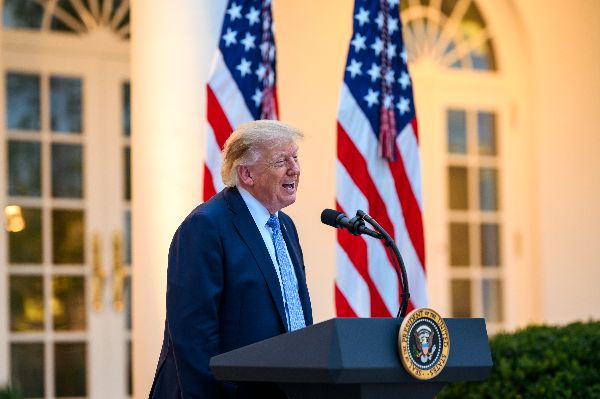
His administration’s August 2020 refuge rule opened or expanded hunting and fishing opportunities across more than 2.3 million acres. On August 13, 2026, Interior announced another final rule adding 1,488 species-and-location opportunities at 111 refuges and hatcheries. These figures measure different things: affected acreage in one instance, particular opportunities in the other. Neither means the government purchased that much new land, but it’s hard not to view them as a net positive for sportsmen.
The September 17 hunting order explicitly recognizes hunters’ conservation contributions. It directs agencies to pursue access improvements, infrastructure work and voluntary agreements concerning difficult-to-reach public lands. It addresses hunter education, youth and veterans, habitat connectivity, disease, invasive species and game-meat donations. It also directs Interior to encourage expanded Sunday hunting.
This conservation role predates the dinner: license revenue, duck stamps, excise taxes and voluntary habitat work support wildlife programs. The order recognizes that history; it did not invent the relationship between sportsmen and wildlife conservation in this country. But isn’t it nice to see the most powerful office in the land recognize the architects behind American conservation?
The companion saltwater order directs fisheries-management reviews, improved catch information and artificial-reef initiatives. Both require implementation consistent with existing law and available appropriations. A directive to improve access is not a repaired bridge. Until equipment and funding arrive, the bridge remains stubbornly resistant to executive stationery. Nevertheless, the first step to improvement starts with ink.
The public responses from hunter and angler-funded conservation groups were uniform: Safari Club International, Ducks Unlimited, Rocky Mountain Elk Foundation, Mule Deer Foundation, Boone & Crockett, Congressional Sportsmen’s Foundation, the National Shooting Sports Foundation and many other members of the camo coalition welcomed the orders’ recognition of hunters, access, science-based wildlife management and education. And why wouldn’t they?
There are newcomer organizations who profess to speak for America’s sportsmen but they seem especially shy of one key element: constituency. Certainly, an organization can explain its membership’s priorities and advocate for certain policies, but perhaps we should also know who their start-up venture funders are and what their motivations might be. Camouflage should be clothing, not something that covers fundraising appeals.
The comparison with other presidents also requires keeping the record intact. Obama signed the 2009 public-lands law locking up millions of wilderness acres and more than 1,000 river miles. Biden’s administration expanded hunting and fishing opportunities across 2.1 million acres in 2021. These actions coexist with Trump’s measures. An inauguration does not make the preceding administration’s acreage disappear.
That leaves separate questions about habitat and access. Permission to hunt, a passable route and wildlife populations are related but distinct. An access announcement alone cannot establish a population trend. A concern about habitat does not identify whether a particular gate opened. These questions require different evidence, however inconvenient that may be for a single triumphant headline.
On firearms, Trump appointed Neil Gorsuch, Brett Kavanaugh and Amy Coney Barrett. All three joined the six-justice majority in the Supreme Court’s 2022 Bruen decision, which invalidated New York’s special-need requirement for public handgun carry and established a text-and-history framework for Second Amendment challenges. That was a judicial decision with legal consequences, not a campaign photograph featuring borrowed hearing protection.
Trump’s February 2025 Second Amendment order directed review of federal firearms policies. His Justice Department sued Colorado over magazine restrictions in May 2026 and San Jose over a carry-license application fee it described as nearly $1,600 on September 16. The filings document the administration’s legal position—clearly one that aligns with the majority of gun-owning hunters, which is most of them.
Conversely, Obama advocated expanded background checks and renewed assault-weapon and magazine restrictions, despite no concrete evidence that they would deter crime. Biden signed the 2022 Bipartisan Safer Communities Act, including enhanced checks for purchasers under 21 because, of course, criminals wouldn’t think of committing crimes without first passing a background check. History has an irritating habit of refusing to fit on a bumper sticker.
After reviewing the Trump record for sportsmen, for the most part, it holds up well against his recent predecessors. Apparently, that’s an inconvenient truth for those who get a steady diet of outrage theater from groups who survive on opposition fundraising.
My dinner attendance was an account of where I went. The policy record concerns what government did. The comments concerned what readers thought of both. Those are three different subjects; however efficiently social media can scramble them into one. Out on public land, the questions remain more concrete: What is funded? What is permitted? What has changed? The answers are in the documents and the field—not the seating chart.
– Chris Dorsey
Chris Dorsey is a Coloradan, 30-year media veteran, biologist, outdoor television producer and natural history filmmaker whose writing has appeared in the Wall Street Journal, Newsweek, Forbes and dozens more national titles.