
A state highway that reels off into the distance looks like a sun-scorched gray-black ribbon laid over tawny grassy hills. Lonely locust trees here and there over much of the West favor their eastern side, getting the lesser of incessant western winds that shush the husks of shin-high grasses.
It’s wide-open country dominated by a dome of cobalt sky. The grasslands from Texas to Idaho own a soft immensity pleasing to the eye. They also possess pronghorn antelope, an animal that is singularly built to thrive here, enduring blistering heat of summer and deep winter freezes. It is an incredible animal. A pronghorn looks like an animal put together by a committee: not much larger than a big domestic dog—a barrel chest set on spindly legs—and wide-set eyes that take in a panoramic view.
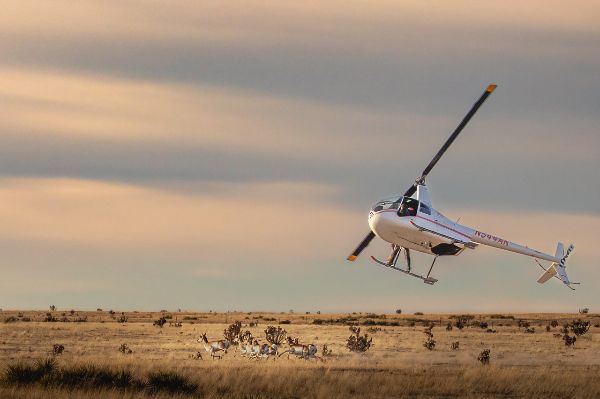
It’s not uncommon to see the gangly goat-looking creature in the West. Hunters harvest pronghorn in the late summer and early autumn. Some bow hunt as if using a level-shooting rifle wasn’t challenging enough, pitting wits against an animal with visual acuity beyond compare.
Whether you enjoy seeing pronghorn while driving along a highway, through a rifle scope, or just appreciate knowing they skitter about in the western states, they, and we, are beneficiaries of scientific wildlife management made possible by Pittman-Robertson funding.
Federal excise taxes paid by manufacturers of archery gear, firearms, and ammunition ensure that state fish and wildlife agencies have the funding needed to monitor and manage wild bird and mammal populations, pronghorn included.
Pronghorn populations suffered dearly a century ago. Plows broke native sod converting it to agricultural land uninhabitable by pronghorn. Unregulated subsistence and market harvest reduced the pronghorn to a mere prairie ghost.
With the consistent and reliable funding through Pittman-Robertson, pronghorn numbers rebounded. State agency wildlife professionals monitor and manage their numbers; they trap and transport live animals restoring them to their formerly inhabited range throughout the West.
Wildlife restoration efforts are rarely “one and done,” instead requiring continual assessments and research, the results of which inform future management actions and hunting regulations.
Idaho Pronghorn Research and Management
Biologists with Idaho Fish and Game use Pittman-Robertson funding to monitor pronghorn populations using helicopters and net guns to capture the speedsters from above; fix radio transmitters to the animals to track their movements; conduct road surveys and strategically place trail cameras all to estimate sex and age ratios.
Informed by years of data, Idaho biologists have mapped migration routes from summer to winter ranges and tracked population trends. These migration maps allow biologists to identify important areas for conservation easements and to locate barriers to movement, such as fences.
In contrast to deer, pronghorn rarely jump fences, and struggle to crawl beneath the lowest stringer if it is less than 16 inches above the ground.
Unused fences can be removed. Fences still in use can be modified to allow pronghorn passage and maintain intact migrations—movements that range up to 135 miles for some individuals each spring and fall.
Oklahoma Pronghorn Movements
Pittman-Robertson dollars funded research into diet, parasite loads, fawn survival and adult mortality rates, and movements through the seasons in the Oklahoma panhandle. Panhandle pronghorn numbers seem to have declined. Researchers seek to know why.
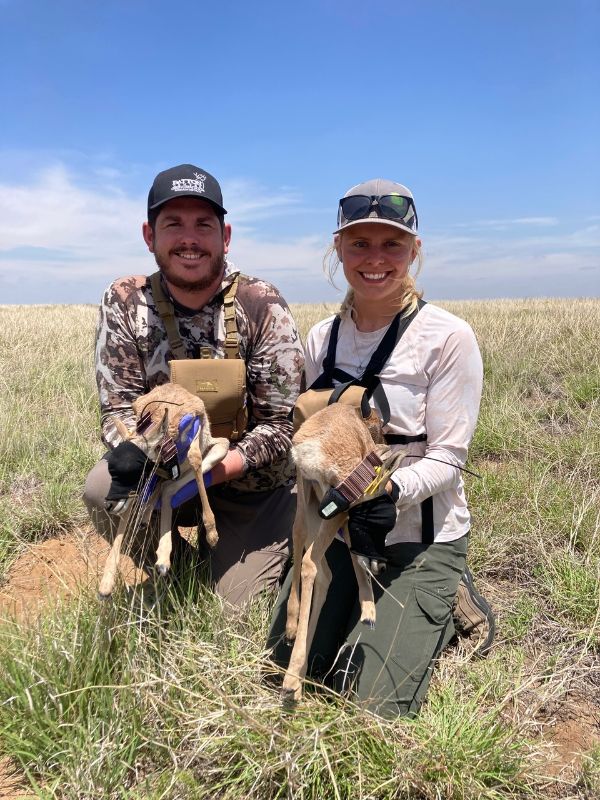
This research has been conducted for the Oklahoma Department of Wildlife Conservation (ODWC) by four graduate students supervised by faculty at Oklahoma State University and Texas A&M - Kingsville, essentially training future wildlife management professionals while simultaneously answering important questions on pronghorn biology.
Biologists and graduate students captured 130 fawns and 235 adult pronghorn over a three-year period, also using a net gun from a helicopter. They collected fecal matter to measure parasite loads and fitted animals with radio transmitters to follow movements and habitat selection over time.
Data from this research are still being analyzed. The results of this work will inform ODWC biologists on future management needs including habitat concerns and potential adjustments to hunting regulations.
Pittman-Robertson funds are used in virtually all of the western states, from the Great Plains states and westward over the Rockies, for the benefit of pronghorn and the people who enjoy seeing or hunting them.
—Craig Springer, for the USFWS, Office of Conservation Investment