
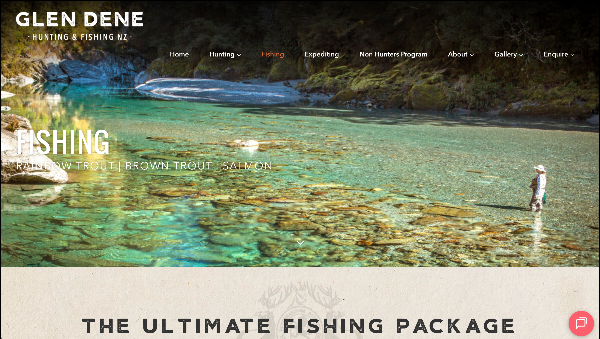
I’ve been to Glen Dene Station in New Zealand, and I didn’t fish.
There. That’s probably the most important thing I should tell you before I write another word about fishing at Glen Dene.
I went there to hunt. That’s what I knew Glen Dene for, and frankly, that’s what was on my mind. Red stag, tahr, chamois, mountains and all the other things that convince a hunter to spend a ridiculous amount of time on airplanes to get to the other side of the world.
Trout weren’t really part of the equation.
Apparently, that was a mistake.
I started talking with Richard Burdon, owner of Glen Dene Station, about the fishing around the property, and pretty quickly realized there was an entire part of the place I had missed.
“The fishing around Glen Dene is truly world-class,” Burdon told me. “We have access to an incredible variety of waters, from crystal-clear mountain streams and spring creeks to large rivers and alpine lakes. What makes it special is the quality of the fish, the stunning scenery, and the fact that much of the fishing takes place in relatively untouched environments. It’s common to spend an entire day on the water without seeing another angler.”
I believe the last part.
I can’t tell you how good the fishing is because, again, I didn’t fish. But I’ve seen the country. I’ve been in those mountains and valleys, and untouched is a pretty good way to describe some of it.
It’s big country. Beautiful country. The kind of place where you stop occasionally and just look around because you’re trying to convince yourself you’re actually there. I most certainly did that on numerous occasions while I hunted Glen Dene.
I just apparently wasn’t looking in the right direction. I spent most of my time looking up. Maybe I should have looked down.
The funny thing is that the more Richard told me about New Zealand trout fishing, the less it sounded like the fishing I had pictured in my head and the more it sounded like hunting.
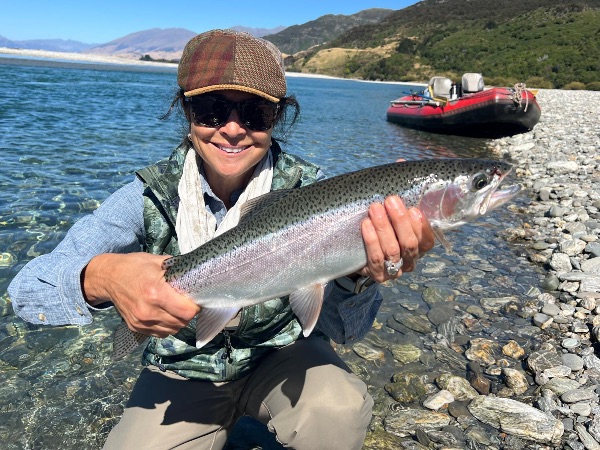
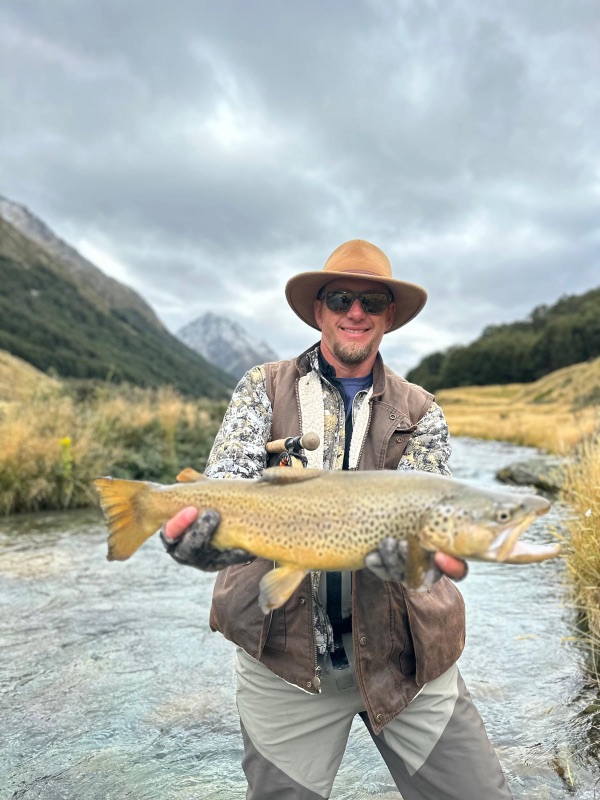
“Brown trout are generally larger, more cautious, and highly challenging to catch,” Burdon said. “They thrive in our clear waters and often require careful stalking and accurate presentations. Rainbow trout tend to be more aggressive and acrobatic, putting on spectacular displays once hooked. Many anglers enjoy targeting both species during their stay, as each provides a completely different experience.”
He had me at stalking. That’s a word I understand.
I’m not going to suddenly pretend to be some accomplished New Zealand fly fisherman here. I’m not. Put a rifle in my hands and point toward a mountain and I’ll at least have a reasonable idea of what I’m supposed to do. But hand me a fly rod and tell me there’s a giant brown trout somewhere in a clear New Zealand river and, well Im a fish out of water so to speak
When Richard started explaining how they actually fish for these trout, I understood the appeal almost immediately.
“Many anglers arrive expecting to cast frequently and cover water quickly,” Burdon said. “In New Zealand, it’s often the opposite. We spend a lot of time spotting fish, planning our approach, and making one or two precise casts. Long leaders, light presentations, and patience are often far more important than distance casting.”
Are we talking about fishing or hunting here? Maybe both.
You find the animal before it finds you. You watch it for a while. You figure out how you’re going to get closer. You try not to make noise. You try not to do something dumb. Then, after spending all that time getting yourself into exactly the right place, you get an opportunity.
Maybe.
That sounds familiar.
“New Zealand trout live in incredibly clear water and are entirely wild,” Burdon explained. “They haven’t been stocked, and they see very little fishing pressure compared to many fisheries around the world. Anglers often spot the fish before casting, which means every approach, cast, and drift must be perfect. The challenge is what makes the reward so satisfying.”
Every approach, cast and drift must be perfect.
Well, now Richard is starting to make me nervous about a fishing trip I haven’t even taken yet.
But I get it.
Hunters understand the strange attraction of doing something that’s difficult and then becoming slightly obsessed with doing it precisely because it’s difficult. If success were guaranteed, most of us probably wouldn’t be nearly as interested.
Sometimes the stories we tell the longest aren’t even about the animals we got. They’re about the ones that made fools out of us.
I’ve got a few of those - and you've read them.
New Zealand may have contributed one or two.
That’s why the idea of sight fishing really caught my attention.
“Sight fishing is at the heart of the New Zealand trout experience,” Burdon said.“Success often depends on spotting fish before they spot you. Good observation skills, patience, stealth, accurate casting, and the ability to present a fly naturally are all important. Fortunately, our guides are excellent teachers and can help anglers of all experience levels improve quickly.”
Fortunately. That’s the word in Richard’s answer I’m hanging onto. I can already imagine a guide pointing into perfectly clear water and telling me there’s a trout right there. I won’t see it. He’ll point again. Still won’t see it.
Eventually something will move and I’ll say, “Oh, that fish.” (Ive said the same for turkeys and elk - and mouflon) Then I’ll probably make a cast that causes the trout to immediately reconsider whatever decisions led it to that particular section of river.
Maybe I’m underselling myself. Maybe not. Either way, Burdon says sight fishing for a big brown trout in a mountain river is about as good as it gets.
“It’s hard to go past sight fishing to large brown trout in a clear mountain river,” he said. “Spotting a fish, planning your approach, making the cast, and then watching the trout take your fly is an experience most anglers never forget. It perfectly captures what New Zealand fishing is all about.”
I wish I had known that when I was there. And that’s really why I’m writing this. A lot of American hunters probably look at Glen Dene the same way I did. We know about the red stag. We know about the tahr and chamois. We see pictures of the mountains and immediately start thinking about rifles, boots, optics and how badly our knees are going to hurt.
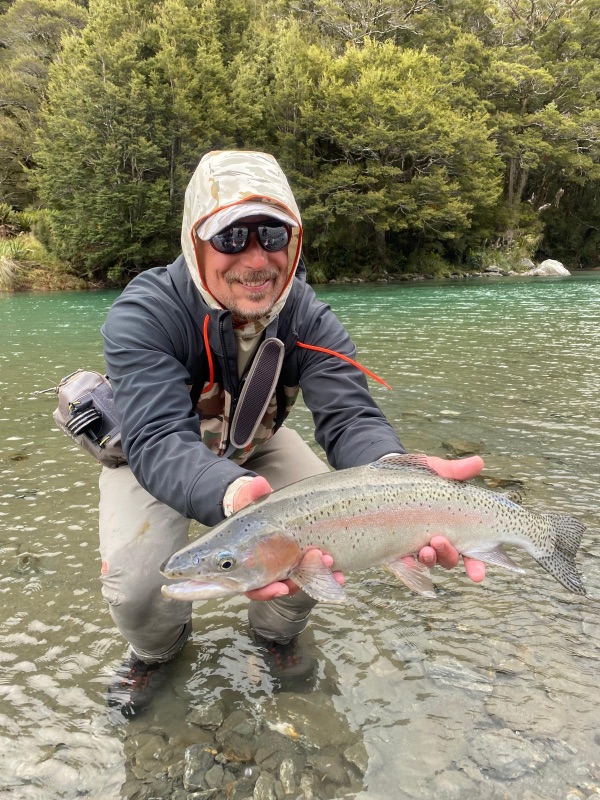
Fishing can become an afterthought. It shouldn’t.
“Many guests come for a hunting adventure and quickly realize the fishing opportunities are too good to pass up,” Burdon said. “It’s not uncommon for hunters to spend a few days pursuing red stag or tahr before adding a drift boat trip, river fishing excursion, or lake fishing experience. The combination of hunting and fishing creates a truly unique New Zealand adventure.”
That makes a lot of sense to me now.
Getting to New Zealand isn’t a casual trip for most Americans. It’s a long way from home, and there’s a good chance you’ll spend more time getting there than you normally spend getting to your favorite hunting camp.
Most of us aren’t going to New Zealand every year. Some of us may only go once. So if you’re already there, why not fish?
Spend a few days chasing red stag or climbing after tahr. Then put the rifle away, grab a fly rod and go find out whether you’re any better at fooling a trout than you were at fooling whatever you were chasing in the mountains.
There’s also something else about these fish that appeals to me.
They’re wild.
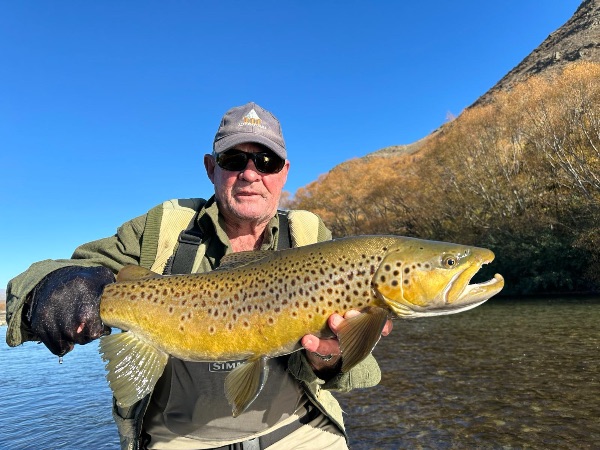
“New Zealand places a strong emphasis on protecting fish habitat and maintaining healthy waterways,” Burdon said. “Many fisheries are managed with strict regulations, limited harvest, and a strong catch-and-release culture. Protecting water quality and preserving natural spawning habitat are key factors that help maintain the quality of our fisheries for future generations.”
I like that.
We sometimes use so many complicated words when we talk about conservation that we forget what we’re actually trying to accomplish.
We want these places to still matter tomorrow.
We want someone else to stand where we stood and see what we saw. Maybe we even want to come back years later with somebody we care about and find that the place is still mostly the way we remember it.
Richard told me about one angler who had dreamed about catching a New Zealand brown trout for decades.
“One of the most memorable moments was guiding an angler who had dreamed of catching a New Zealand brown trout for decades,” Burdon recalled. “After spending the morning stalking fish in a remote valley, he landed a beautiful brown trout in a crystal-clear stream. What made the moment special wasn’t just the fish, it was the setting, the journey, and the realization that he had fulfilled a lifelong dream.”
I understand that better than I understand fly fishing.
At some point in our lives, the fish or the animal stops being the entire reason we go. Maybe it never really was.
We go because we want to see what’s over there. We go because we want another story. We go because somebody we care about is going with us. Sometimes we go because we’ve been thinking about a particular mountain, animal, river or fish for 20 years and finally get the chance to find out whether reality looks anything like the picture we’ve been carrying around in our head.
And sometimes we get there and realize we forgot to do something. Like fish.
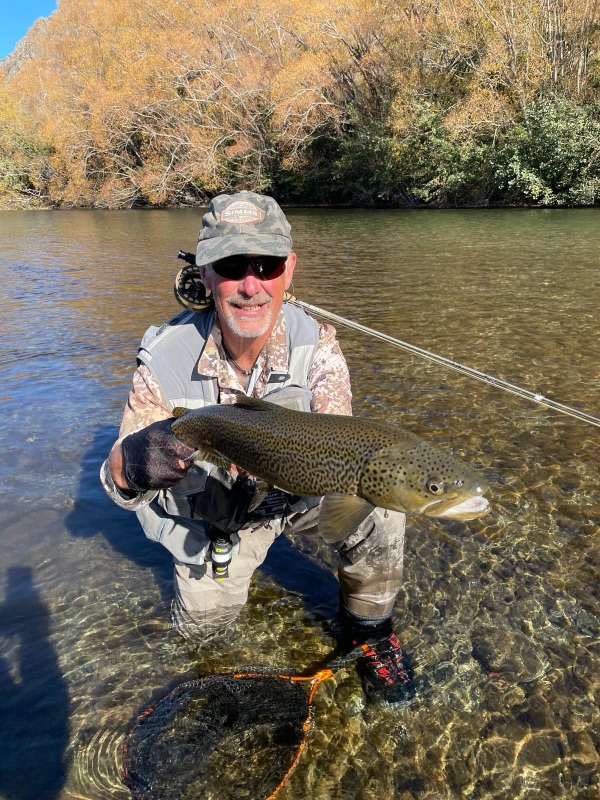
“What excites me most is that the experience remains authentic,” Burdon said. “New Zealand still offers wild fish, breathtaking landscapes, and genuine adventure. For anglers seeking more than just numbers of fish, it’s a destination that combines challenge, beauty, and unforgettable memories. Every angler should experience New Zealand at least once in their lifetime.”
Richard has convinced me. Not that I needed much convincing to go back to New Zealand.
If I ever get back to Glen Dene, I’m still going to spend a lot of time looking up. It’s impossible not to. There are red stag, tahr and chamois up there, and I’m still a hunter.
But I’ll do one thing differently. I’ll look down occasionally. Because apparently there were world-class trout swimming around down there the entire time. And I somehow missed them.
– Jay Pinsky