
We’ve all heard conversations regarding the imminent threat of robotic hunting, the use of technology to hunt without any concept of fair chase.
Robotic hunting is already here. It’s routinely practiced in 48 states and all over Canada, in conjunction with drones, hidden wildlife cameras night vision, and IR technology.
And I’m wholeheartedly in favor of It. Because this hunting isn’t concerned with fair chase because it’s concerned with some hunters’ lack of ethics.
This robotic hunting isn’t chasing trophy animals, it’s chasing hunters. The particular variety who routinely shoot game out of season, use spotlights at night, hunt from vehicles along highways or even from boats. Those kinds of hunters are poachers.
The robots used to hunt them are hyper-realistic robots, foam-covered frames with the skins of actual animals, animated to give them just enough realistic movement to cause one of these “hunters” to take a shot at them.
At that point, real, live game officers swoop in to make arrests.
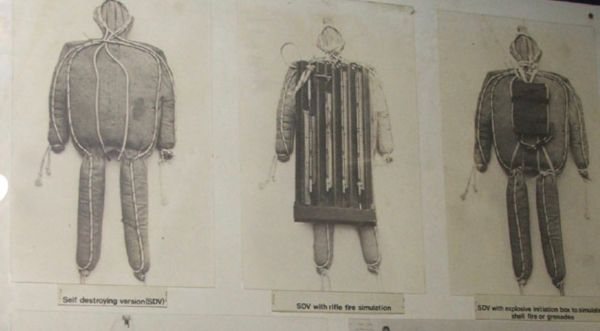
They’re not like the man-hunting robots of science fiction or modern warfare. They’re more closely akin to the Ruperts - burlap and straw paradummies - Allied forces dropped as part of Operation Titanic, the diversion that drew German troops and artillery away from the actual invasion beaches and paratroop landing zones of D-Day.

Today, companies like Custom Robotic Wildlife produce these lifelike decoys for law enforcement or retailers looking for specialty market displays. They’ve been in the business of combining taxidermy skills with animation for more than 30 years.
Their work is designed to protect wildlife from irresponsible hunting practices by giving law enforcement officers better tools to catch poachers only concerned with taking game
That’s a far cry from the kind of hunting that’s more akin to drone warfare, wildlife robotic hunting.
In wildlife robotic hunting, hunters aren’t in the woods, they’re online, hunting via computer, using a camera, motorized mount and firearm remotely via the internet.
The idea emerged - briefly- in the early 2005 when Live-Shot.com, a Texas company offered the opportunity to use their remote hunting setups in a high fence operation.
Live-Shot users would pay a fee, log in to the website and use their web browser to aim a camera-mounted gun, then they could click their mouse to fire. Live-Shot owner John Lockwood said his high-fence operation offered people with severe physical disabilities “an outdoor experience.”
Neither hunters nor game agencies bought the argument.
Following protests from from outdoor writers to state game agencies, hunter’s organizations; and the Humane Society (HSUS), Live-Shot.com was shut down.
In response, 42 states passed either specific laws or administrative regulations prohibiting remote-controlled or computer-assisted hunting. Federal officials introduced the Computer-Assisted Remote Hunting Act to prohibit the idea nationwide.
That doesn’t mean computer-assisted equipment for hunting (and fishing) isn’t already in “wide use”.
Virtually anything from maps to hunting education can be accessed online. Fish and game agencies use web portals for checking game harvest, synching digital tags and sales of licenses. Remote game cams regularly send images and videos to hunters to help with their scouting. Hunters increasingly use gun and hunting-blind mounted cameras to record - and share- their harvests with other hunters. And computer-assisted scopes and binoculars calculate ballistics to enable hunters to take -and make- shots on game at increasingly further distances.
Despite all that technology, the idea of triggering the shot that harvests animals -remotely- is still a bridge too far for legislators, hunters and the general public.
The same public that shares, likes and readily consumes videos showing remote military equipment being deployed to eliminate humans.
From MQ-9 Reapers to CROWS and PROTECTOR remote warrior systems, advanced fire-control systems allow pilots and gunners to engage targets from the relative safety of an armored vehicle or remote command center. Remote weapon systems is already a $13.65 billion business worldwide. It’s projected to grow as much as $3.9 billion in 2026.
It seems reasonable the same returning veterans who operated those systems will see the civilian applications of those technologies as not only reasonable, but prudent.
In competition fishing, longtime competitors often complain they’re losing tournaments -and big money- to tech-savvy young anglers they complain are “playing video games, not fishing.” In response, some competitions forbid the use of advanced fish finding technologies.
What does that portend for hunting? Probably nothing for the next decade or two. But the immediate implications for personal security may be more immediate.
A Miami resident in 1986, I remember when Prentice Rasheed, a shopkeeper in Miami’s Liberty City neighborhood got tired of being robbed. After all, it had been robbed eight times (including four times in a two-week span). He gained international notoriety when he took steps to protect his business.
Rasheed rigged a booby trap in his store’s ceiling by installing a metal grille and plugging it into a wall socket. Rasheed’s Miami welcome mat electrocuted “habitual burglar” Odell Hicks. Rasheed was subsequently charged with manslaughter. But a Dade County grand jury refused to indict him on the charges, despite reminding citizens that Florida law expressly prohibited use of deadly force or lethal booby traps solely to protect unoccupied property.
Hunting animals remotely is, as it should be, illegal.
But the idea of a Ring doorbell that can do more than alert you to unwanted intruders isn’t nearly so unpalatable. As an old warning sign on posted property used to warn:
“No trespassing. Trespassers will be shot. Survivors will be shot again.”
Just something to think about.
As always, we’ll keep you posted.
—Jim Shepherd