
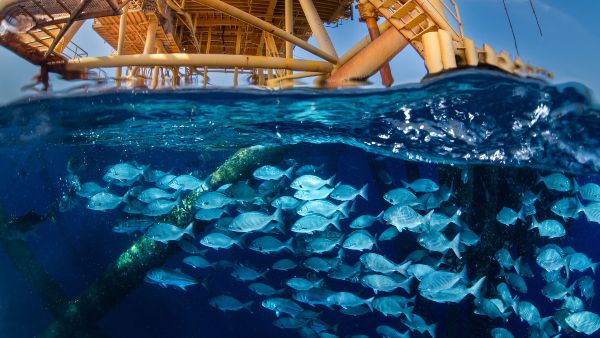
For anyone who fishes the Gulf of America—few sights inspire more confidence than the silhouette of an offshore oil or gas platform rising from blue water. Pulling up-current of a rig can turn a long, expensive run into a cooler full of snapper, amberjack, grouper, and the satisfaction that comes from knowing you’re fishing a place that holds life.
But more anglers are now experiencing the opposite. They run 30 or 40 miles to a waypoint that’s produced fish for decades, only to find an empty horizon and a flat screen on the sonar. No legs. No crossbeams. Just mud and sand. That scene is playing out with increasing frequency across the Gulf.
Thanks to Chris Horton who is the Senior Director of Fisheries Policy for the Congressional Sportsmen’s Foundation (CSF), this issue is front and center this month after his editorial in the billfish magazine, In the Bite.
Since the late 1940s, roughly 7,000 offshore platforms have been installed in Gulf waters. Built to extract oil and gas, they were never intended as fish habitat. Yet it didn’t take long for anglers, divers, and scientists to notice that these steel structures functioned like underwater skyscrapers, creating vertical relief in an otherwise featureless seafloor. Over time, they became some of the most productive marine habitats anywhere in the region.
They not only attract bottom fish and bait, they also draw pelagic giants in—white and blue marlin, sails, wahoo, yellowfin tuna and other high-value targets cruise steadily around the rigs.
What began as incidental structure evolved into essential habitat. Algae, corals, sponges, and barnacles colonized the steel. Baitfish followed. Predators weren’t far behind. For generations of Gulf anglers, rigs became reliable producers—and in many cases, the only meaningful structure for miles.
That reality has fueled a long-running debate: do artificial structures merely attract fish from surrounding areas, or do they actually increase overall fish production? While some aggregation is inevitable, a growing body of research points to the latter.
A 2020 study by the Bureau of Ocean Energy Management found that as much as 48 percent of the Gulf’s greater amberjack stock is associated with offshore oil and gas infrastructure. The authors warned that large-scale removals were likely to have “significant adverse impacts on local fisheries,” particularly off Louisiana and Mississippi.
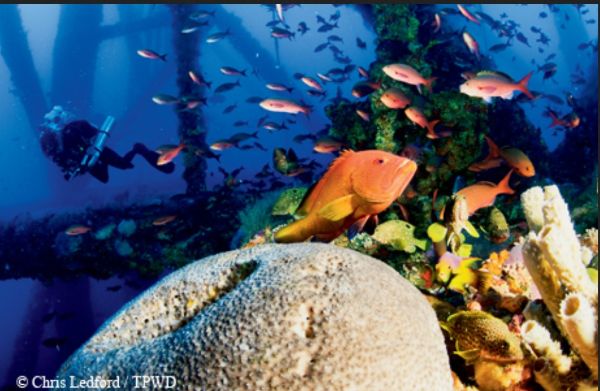
Even more striking findings came earlier. A 2014 paper published in the Proceedings of the National Academy of Sciences reported that oil and gas platforms off California produced more secondary fish biomass per unit area of seafloor than any other marine habitat studied. In plain terms, these structures don’t just gather fish—they help make more of them.
Despite that, federal habitat policy offers little protection for these accidental reefs. The NOAA Office of Habitat Conservation focuses primarily on natural habitats, with limited emphasis on the biological value of aging offshore platforms. Today, about 1,050 platforms remain in the Gulf, and roughly half sit on terminated leases. By law, most are slated for removal in the coming years.
That’s where Rigs-to-Reefs enters the picture.
Under approved Rigs-to-Reefs programs, states can partner with platform owners to convert obsolete structures into permanent artificial reefs. The wells must be permanently sealed, just as they would be for full removal, but instead of hauling the structure to shore for scrap, it’s left in place or reefed nearby under state management.
The concept works. It saves money, preserves habitat, and keeps productive fishing grounds intact. But in practice, it’s an uphill climb. With as many as five federal agencies involved in permitting and approvals, the process can take two to four years per platform. As a result, far more structures are removed than reefed, even as hundreds more line up for decommissioning.
Location complicates things further. If a platform isn’t already within a U.S. Army Corps of Engineers–approved reef planning area, it must be towed to one. That added expense discourages participation and often destroys the very corals and encrusting organisms that took decades to develop.
Recognizing the problem, the CSF worked with members of Congress to introduce the Marine Fisheries Habitat Protection Act (H.R. 5745). Sponsored by Reps. Mike Ezell of Mississippi, Marc Veasey of Texas, and Troy Carter of Louisiana, the bill would provide more time to transition decommissioned platforms into state reef programs and allow qualifying structures to be reefed in place.
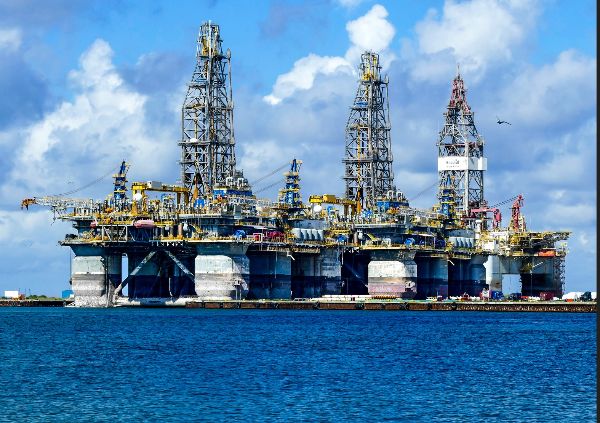
For anglers and conservationists alike, that last provision matters. Reefing in place preserves habitat, reduces costs, and avoids turning living reefs into scrap piles. The window, however, is closing quickly. Platforms are being removed now, and once they’re gone, so are the ecosystems they supported.
To help illustrate what’s at stake, the Congressional Sportsmen’s Foundation partnered with Arena Energy on the documentary Steel to Sanctuary: The Rigs-to-Reef Story. The film makes the case that these structures represent one of the most successful large-scale habitat experiments ever conducted—albeit by accident—and that losing them wholesale would be a self-inflicted wound for Gulf fisheries.
For anglers, the issue is simple. Today’s hot spots shouldn’t become tomorrow’s ghost spots. With thoughtful policy and timely action, the rigs that built Gulf fisheries can continue doing so long after their last barrel of oil is pumped.
– Frank Sargeant, Editor of The Water Wire
Frankmako1@gmail.com