
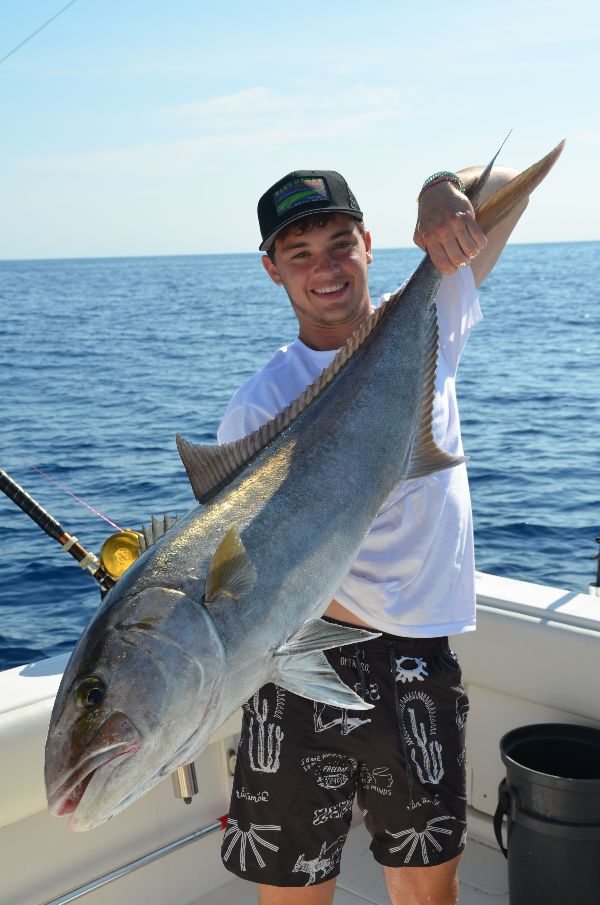
When Congress funded the Great Red Snapper Count several years ago, many fisheries scientists expected a more refined estimate of Gulf red snapper abundance compared to the rather disappointing estimates NOAA had been providing. Few anticipated just how different that estimate would be.
Using underwater video, acoustic imaging and extensive field sampling instead of relying primarily on harvest data and mathematical models, researchers concluded there were far more red snapper in the Gulf than previous federal assessments indicated. That work ultimately reshaped the conversation surrounding one of the nation's most economically important recreational fisheries and boosted state management of fish red snapper populations, to apparent great success.
Now history may be repeating itself.
The recently completed Greater Amberjack Count headed by Dr. Sean P. Powers at the University of South Alabama, working alongside a team of 20 scientists from more than a dozen research institutions and NOAA Fisheries collaborators. estimates roughly 3.2 million greater amberjack in the Gulf, more than twice the 1.5 million fish estimated by the current federal stock assessment.
The $11.7 million project was funded by Congress through NOAA Fisheries and the National Sea Grant College Program. Interestingly, the same study found its estimates for the South Atlantic population closely matched NOAA's assessment, suggesting the new methodology isn't simply producing higher numbers across the board.
For years, Gulf anglers questioned increasingly restrictive amberjack seasons because their experiences on the water often didn't match the picture painted by stock assessments. Charter captains, private anglers and tournament fishermen routinely reported encountering abundant fish while regulations continued tightening.
Anecdotal observations are never enough to manage a fishery, of course. Fishermen naturally spend their time where fish are concentrated, so they’re likely to think there are more fish than there actually are. But when those observations begin lining up with independent scientific surveys, they deserve careful examination.
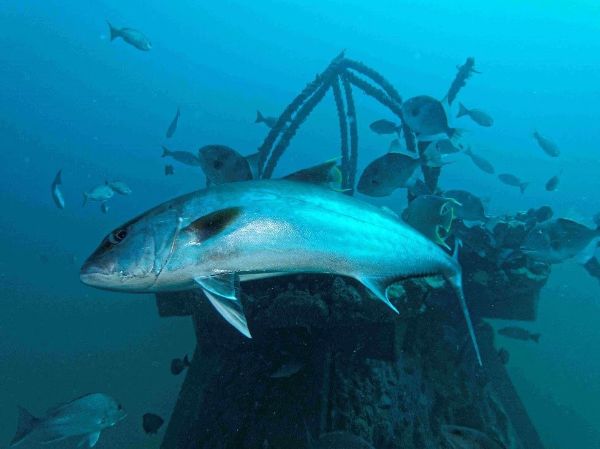
Dr. Powers and his research team—ably reported on by David Rainer, Alabama’s respected resident DCNR reporter, approached the question from a different direction. Instead of starting with harvest estimates and working backward through a series of assumptions about population size, they went directly to the reefs.
Using underwater video where visibility allowed and acoustic cameras in the turbid waters of the western Gulf, researchers sampled artificial reefs and natural hard-bottom habitat across the region. Combined with habitat mapping and extensive statistical sampling, those observations produced a population estimate based on fish that were actually observed rather than inferred.
Traditional assessments remain highly valuable because they incorporate age structure, recruitment, growth rates, fishing mortality and other biological information that simple counts cannot provide. Direct observation has limitations as well. Fish move, habitat changes, and no survey can sample every acre of the Gulf.
While neither approach is likely to be sufficient by itself, the opportunity lies in combining direct observation with traditional stock assessments so each strengthens the other.
High-definition underwater cameras, sonar imaging, autonomous vehicles, habitat mapping and machine-learning software can now collect enormous amounts of information that simply wasn't available even twenty years ago. Together, those technologies can validate—or challenge—the assumptions built into traditional assessment models.
The amberjack study shows how that process might work. Rather than dismissing either estimate, researchers are working with NOAA Fisheries to reconcile the differences and determine which elements of each approach produce the most accurate picture of the stock.
The Gulf Fishery Management Council and the South Atlantic Fishery Management Council face the same challenge: establishing harvest limits that protect fisheries while providing reasonable opportunities for the public to enjoy abundant marine resources.
If population estimates are too low, seasons become unnecessarily restrictive, reducing recreational opportunity and costing coastal communities and the fishing and boating industry millions of dollars in economic activity. If estimates are too high, overharvest becomes a real risk. Neither outcome benefits anglers, conservation or coastal businesses.
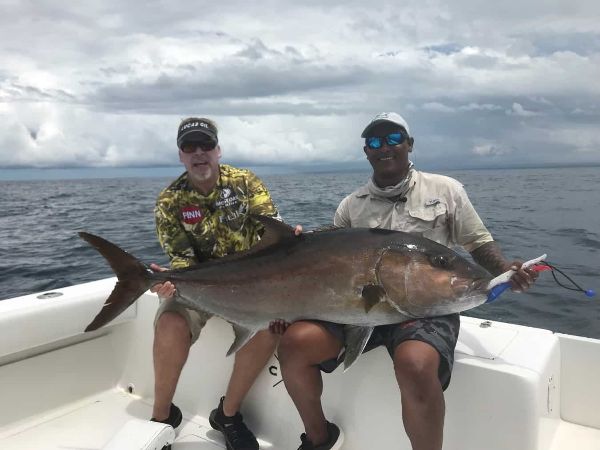
AJ’s are relatively slow growing—they take 3 to 5 years to start spawning, so overharvest can quickly cause population problems that take a long time to fix. Also, taking too many young fish means fewer trophies—the species is said to live up to 17 years, with only the females becoming the coveted “reef donkey” giants that anglers love to battle.
As fisheries science evolves, it makes sense for managers to take advantage of every reliable source of information. Independent visual surveys, acoustic imaging, electronic tagging, environmental DNA, artificial intelligence-assisted image analysis and improved habitat mapping all have the potential to strengthen future assessments.
Red snapper and amberjack are obvious candidates because of their economic importance and the questions surrounding their current assessments. Triggerfish, grouper and other reef species could eventually benefit from similar approaches.
Fisheries management has always involved uncertainty. The Gulf covers more than 600,000 square miles, and no process can count every fish. But today's technology allows us to reduce the uncertainty far more than was possible even a decade ago.
That's good for the fish, good for anglers, and ultimately good for the future of the industry.
– Frank Sargeant, Editor of The Water Wire