
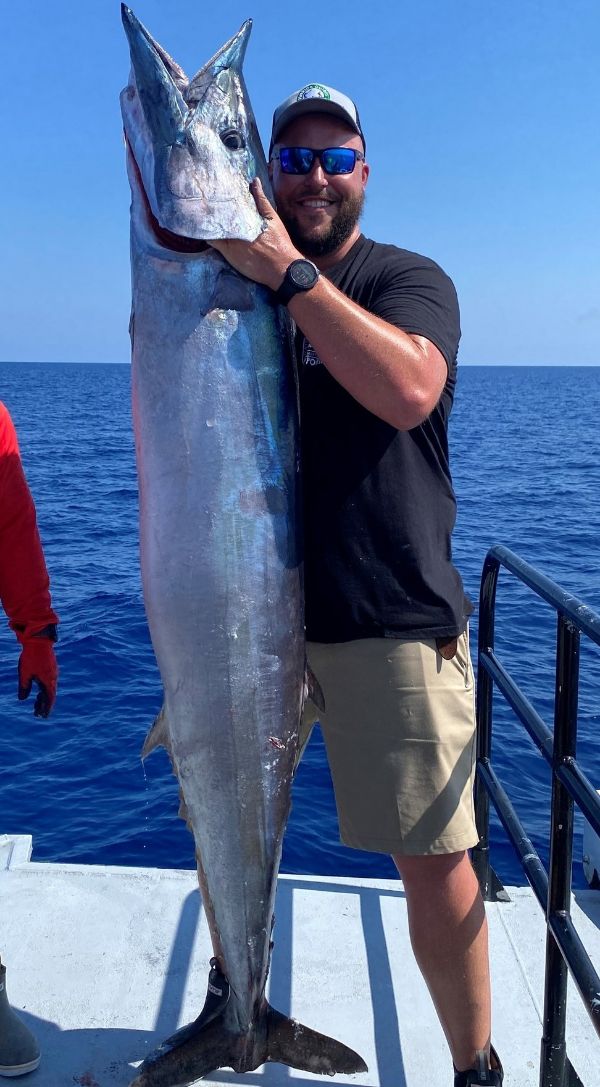
Florida’s Fish and Wildlife Commission quietly reversed course on its decision to eliminate online sales of short-term nonresident fishing licenses, restoring both the 3-day and 7-day options after a sharp and immediate backlash from guides, charter operators, and visiting anglers.
The turnaround came after a highly visible push by Captain Dylan Hubbard, a well-known radio and television fishing personality and owner of what is widely regarded as the state’s largest party-boat fleet at Treasure Island, on the Gulf Coast. Hubbard launched a public petition and made the issue impossible to ignore within the charter, for-hire, and tourism communities.
It’s notable that Hubbard’s own customers, fishing aboard his large offshore boats, don’t need the license because they’re covered by a blanket license paid for by his company. He stepped up to assist anglers who fish on their own, as well as to support fresh water fishing guides, whose customers must buy licenses separately.
After several weeks of taking a beating on-line as well as on radio and TV, the FWC gave in. They issued a formal announcement that online sales of the 3-day and 7-day nonresident saltwater and freshwater licenses were restored effective May 21.
The agency said licenses are again available online through GoOutdoorsFlorida, as well as at more than 700 in-person outlets statewide, including big-box retailers, bait-and-tackle shops, and county tax collector offices.
FWC characterized the original removal of short-term licenses from online sales as an effort to “keep online purchasing simple and streamlined” by emphasizing annual licenses, while still supporting fisheries through license revenue. The commission stressed that all fishing license purchases—short-term or annual—feed directly into conservation and management programs, including habitat restoration, fisheries research, boating access improvements, and enforcement.
The statement also thanked members of the Florida Legislature, FWC commissioners, and stakeholders for their engagement, noting that the agency continues to look for long-term, sustainable funding solutions for fisheries management and conservation.
What the statement does not say—but what many in the industry readily acknowledge—is that the initial decision created immediate friction with Florida’s tourism-driven fishing economy. For visiting anglers and the guides who serve them, short-term licenses are not a convenience item; they are essential infrastructure. The rapid restoration of online sales reflects that reality, and underscores how quickly policy can shift when on-the-water businesses push back in force, particularly if they are given voice by a strong media personality like Dylan Hubbard.
****
There’s a particular kind of regulatory nonsense that only becomes visible when an angler tries to buy a basic piece of gear online and is told it cannot be shipped to his state. A Rapala Fishing Multitool— Line threader, hook eye cleaner, bottle opener and retractable braid scissors—triggers shipping restrictions in a growing list of states, not because it is illegal to own or use, but because no one is quite sure how to classify it under decades-old knife laws.
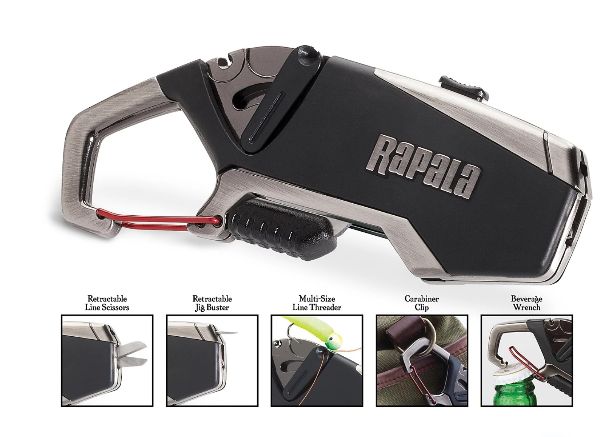
The issue has nothing to do with fishing and everything to do with legal caution. Most multitools include a short blade or shears intended for one purpose: cutting fishing line. Anyone who has tangled heavy braid around a finger or tried to free a snagged lure understands why. Yet once a blade is present, the product is often treated by compliance software as a regulated knife rather than sporting equipment.
That distinction exists almost entirely on paper.
In practice, these tools are legal to purchase in local tackle shops across the same states where online retailers refuse to ship them. Walk into a sporting goods store in California, New York, Illinois, or Massachusetts and you can buy fillet knives, bait knives and fishing multitools without controversy. The restriction appears only when the transaction crosses state lines, where vague statutes, outdated definitions, and lingering local ordinances create enough uncertainty that sellers decide it is safer to say no.
The laws driving these decisions were not written with anglers in mind. Many knife restrictions date back decades and were aimed at concealable weapons associated with street crime, not a basic fishing tool that lives in a tackle bag. Unfortunately, the statutes rarely distinguish between a weapon and a tool, and online retailers are left to interpret language that was never designed for modern e-commerce.
Faced with that uncertainty, companies make rational business decisions. Rather than attempt to parse blade length limits, locking mechanisms, carry definitions, and exemptions that may differ by city or county, they impose blanket shipping bans. The risk of a civil lawsuit or regulatory action outweighs the revenue from selling a multitool to an angler who simply wants to cut line or remove hooks.
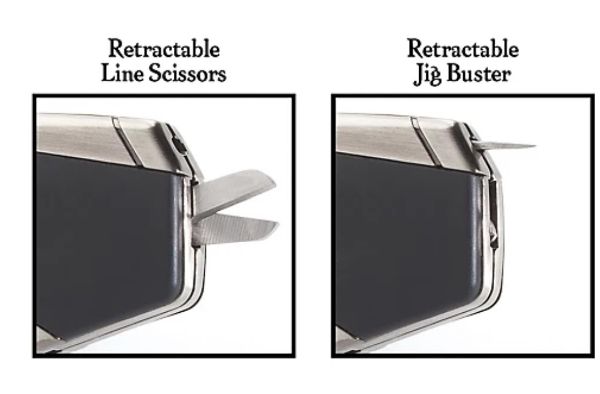
What results is a legal contradiction that only regulators could tolerate. The same product can be lawful to own, lawful to sell in person, and lawful to use on the water, while being treated as too risky to ship. The law has not changed; only the method of commerce has. Online sales have exposed how poorly these rules fit the reality of outdoor recreation.
A fishing multitool is not a public threat, and preventing its shipment does not reduce crime.
There is an obvious fix, should lawmakers choose to pursue it. Knife statutes could be modernized to clearly exempt sporting and fishing tools. Legislatures could acknowledge the difference between a weapon designed to harm people and a tool designed to handle fish safely and humanely. Clear language would benefit retailers, consumers, and enforcement agencies alike.
Until that happens, anglers will continue to encounter checkout screens that make little sense, and retailers will continue to protect themselves by erring on the side of over-restriction. The result is not safer communities, but a regulatory environment so detached from reality that a line clipper can be treated like a deadly weapon, depending entirely on where it is being mailed.
– Frank Sargeant
Frankmako1@gmail.com